• Recipes
  • Supper Club
  • Blog
  • Shop
  • About Me
  • Subscribe
menu icon
go to homepage
  • Recipes
  • Supper Club
  • Blog
  • Shop
  • About Me
  • Subscribe
subscribe
search icon
Homepage link
  • Recipes
  • Supper Club
  • Blog
  • Shop
  • About Me
  • Subscribe
×
Home

Bright and Creamy Seasonal Beet & Kumquat Salad for Spring

July 1, 2025 by Taylor @ Cain Kitchen Leave a Comment

This Salad Is a Show-Off (and I'm Okay with That)

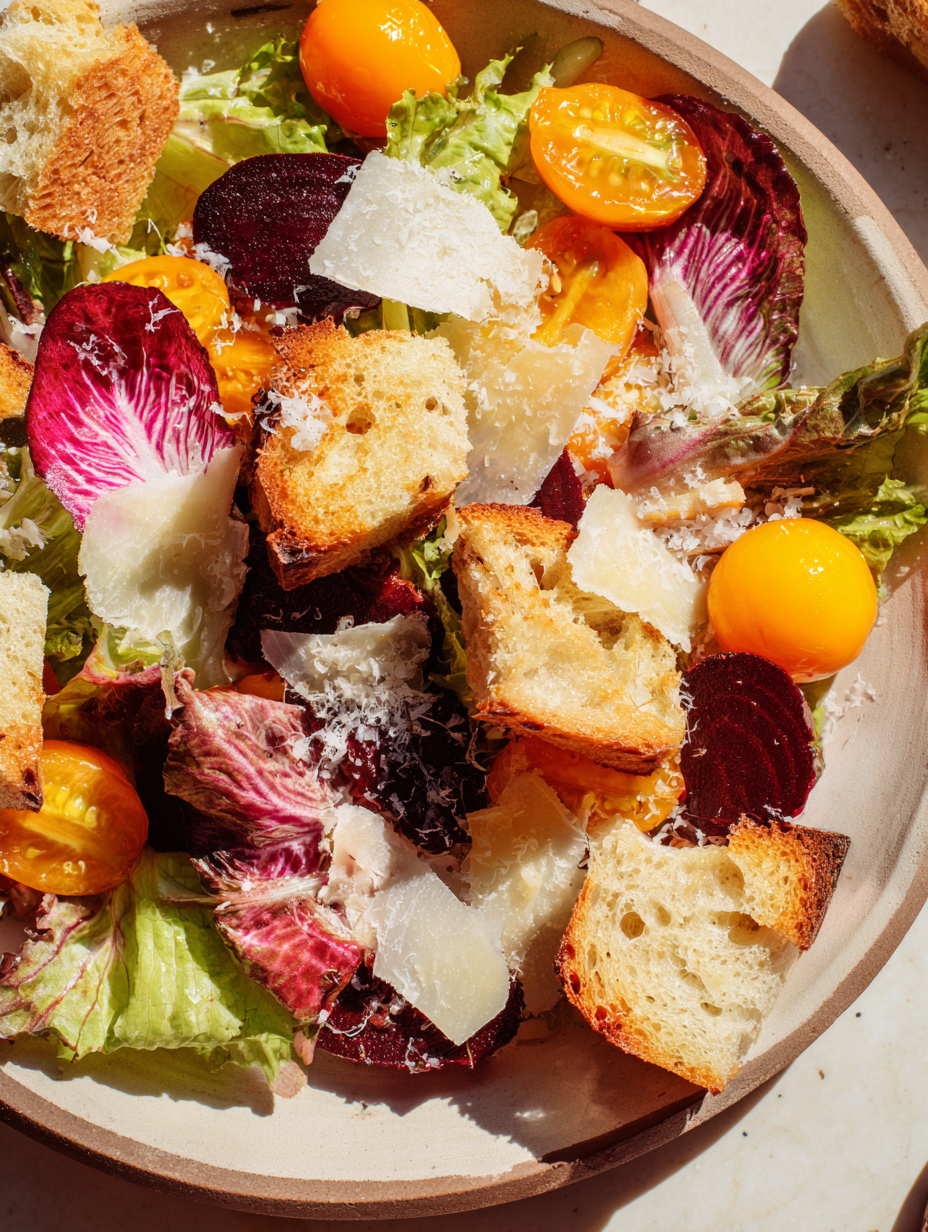
Some salads are meant to be side pieces. This one? She's center stage, bathed in golden garlic oil and absolutely not playing it cool. This seasonal beet & kumquat salad's here to stay.

Let's just take a second to appreciate what's going on here: juicy roasted beets confited in garlic until they're basically edible velvet, crisp butter lettuce and torn radicchio doing their color-blocking thing, creamy curls of Tomme cheese (more on that mysterious beauty in a minute), and poppable kumquats bringing juicy little explosions of citrus drama.

Then there's the dressing-creamy, lemony, garlicky magic-made from the same confit oil the beets were bathed in. And because we're grown-ups who know better, we're not skipping the focaccia croutons.

Honestly, it's almost too pretty to eat. Almost.

But you should, because all that color? It comes with flavor. And if you follow the method (yes, we toss the greens before the dressing because we respect lettuce around here), you're looking at a spring salad that's bold, balanced, and kind of a show-off-in the best way.
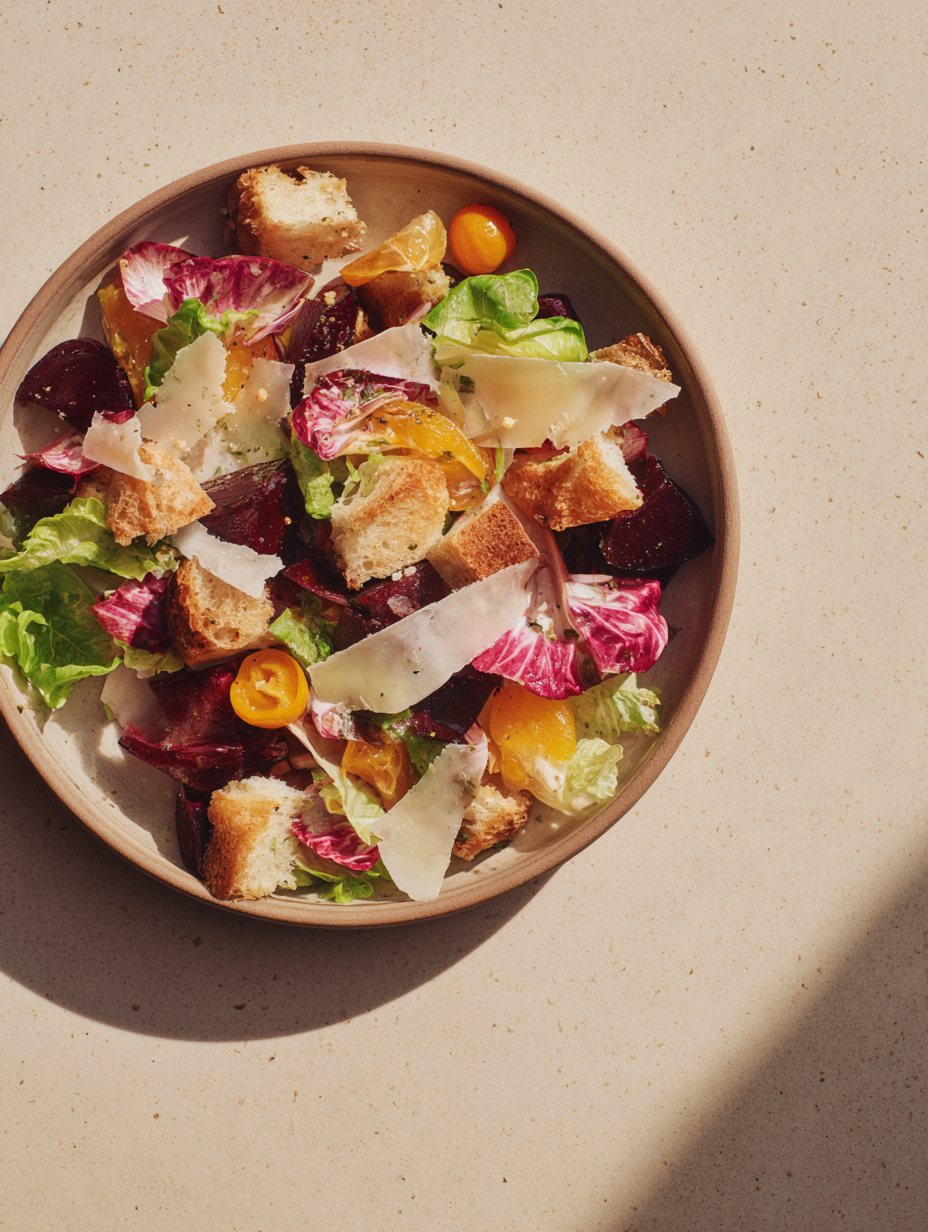
Spring salad with garlic confit beets, halved kumquats, torn butter lettuce, pink radicchio, Tomme cheese, and focaccia croutons on a stone plate

This seasonal beet & kumquat salad was born out of a serious flavor memory-one I can't stop thinking about. I had a dish at Husk in Nashville that completely reset how I think about pairing roots, dairy, and citrus. It featured roasted beets nestled into a swoop of tangy Greek yogurt, topped with buttery biscuit chips (yes, really), lavender, lemon zest, and creamy Tomme cheese. It was earthy, bright, floral, and rich all at once-unexpected, but in that genius way that makes you jealous you didn't come up with it first. This salad isn't a copy, but it carries that same spirit: bold contrasts, fresh seasonal ingredients, and enough creamy-crunchy-tangy action to keep every bite interesting.

Why It's on Repeat

This salad has officially earned its spot in my weekly dinner rotation-and not just because it's pretty (though, let's be honest, she's stunning). It hits all the marks: fresh, balanced, easy to prep ahead, and wildly satisfying without feeling heavy. I've been serving it alongside a simply seared salmon filet-crispy skin, medium-rare center-and the combo sings. The richness of the fish plays off the citrus and garlic, while the cheese and croutons give it just enough heft to hold its own as a main dish. It's one of those meals that feels kind of fancy… but takes almost no effort once your components are ready.

A Chef's Trick: Keep That Dressing Creamy

If you want your creamy garlic dressing to stay silky and emulsified (instead of breaking after ten minutes in the fridge), add a pinch-seriously, a tiny pinch-of xanthan gum while blending. It acts like culinary glue, keeping the oil and acid bonded without changing the flavor. You'll find it at most specialty or health food stores, or online. A little goes a long way, and it makes a huge difference for that restaurant-level consistency at home.

[feast_advanced_jump_to]

Ingredients

Spring salad with garlic confit beets, halved kumquats, torn butter lettuce, pink radicchio, Tomme cheese, and focaccia croutons on a stone plate

For the Garlic Confit Beets

  • 2 medium red beets, scrubbed (no need to peel)
  • 6-8 garlic cloves, peeled
  • extra virgin olive oil (enough to cover)
  • diamond crystal kosher salt

Note: No peeling required up front. Once the beets are confited and cooled, the skins will slide right off with a gentle rub using a paper towel. Less mess, more flavor, and that deep roasted color stays intact.

Okay, chef… WTF is a Tomme?

So you're halfway through reading this recipe and thinking,
"Okay… beets, kumquats, garlic confit... I'm with you.
But Tomme cheese? What even is that and where do I find it-between the Kraft Singles and the shredded cheddar at Kroger?"

Valid question. Here's the scoop:

Tomme (pronounced tuhm, like you're trying to say "tummy" with a French accent but gave up halfway) is a rustic, semi-firm cow's milk cheese that's buttery, earthy, and just funky enough to be interesting. It's not stinky, it's not gooey, it's the cheese equivalent of wearing linen pants and knowing how to pair wine with snacks-casual but effortlessly cool.

The kind I use? Thomasville Tomme from Sweet Grass Dairy in Georgia. It's made with raw cow's milk, aged just enough to develop flavor but still slice and shave like a dream. Think of it as a Southern riff on an Alpine classic.

And no, I don't get a commission or affiliate cut-I just genuinely love what this local, family-run creamery is doing. Supporting small dairies means more good cheese in the world and fewer sad plastic bricks in your fridge. Everyone wins.

Where to buy it:

  • Check your local specialty cheese shop or co-op
  • Order directly from Sweet Grass Dairy online
  • At the grocery store, look in the fancy cheese section-you know the one with the weird rinds and tiny wheels that cost more than your gym membership.

Home cook hack: If you can't find Tomme, go with a young Manchego, mild Gruyère, or even a creamy Havarti in a pinch. You want something sliceable with a buttery finish that won't fight the citrus or garlic.

Now go forth, and cheese like you mean it.

For the Creamy Garlic Dressing

  • all confit garlic cloves from recipe (6-8 cloves)
  • 9 tablespoon (just over ½ cup) garlic confit oil
  • juice of 3 whole lemons (about 6 tablespoon total) - reserve the zest to finish the salad
  • 1 tablespoon whole grain dijon mustard
  • 1 tablespoon local raw honey, or more to taste
  • pinch, of xanthan gum (optional, to emulsify and stabilize)
  • diamond crystal kosher salt and freshly cracked black pepper, to taste
  • splash of water, as needed for consistency

Olive Oil Matters (but not all oils do the same job)

When you're confiting the beets and garlic, use a decent-but not precious-extra virgin olive oil. You want good flavor and stability, but don't waste the fancy stuff on a 75-minute bake. Save your good EVOO for the final seasoning and dressing drizzle.

For finishing, I love Laudemio Fattoria San Michele a Torri-it's grassy, punchy, and absolutely sings with lemon and greens. You can find it online (yes, even on Amazon). I don't get a commission-I just like shouting out great olive oil when I taste it.

For the Salad

  • 1 head butter lettuce, leaves torn
  • 1 small head pink radicchio, leaves torn (not shredded)
  • ¼ cup kumquats, halved
  • 2 oz tomme cheese, shaved or grated
  • 1 cup focaccia croutons (see method below)
  • fresh lemon zest
  • cracked black pepper
  • diamond crystal kosher salt
  • fine extra olive oil
  • wine vinegar

Market‑Fresh Prep Notes

Beets: Pick firm, fresh beets without soft spots. Scrub under cold water.

Lettuce & Radicchio: Soak whole leaves in cold water to remove grit. Lift gently, spin or pat dry. If the radicchio tastes overly bitter, a brief ice‑water soak (10 minutes) can mellow it without dulling the color.

Kumquats: Slice each in half-big enough to be bold, small enough to keep bite balanced. Rinse first and remove seeds.
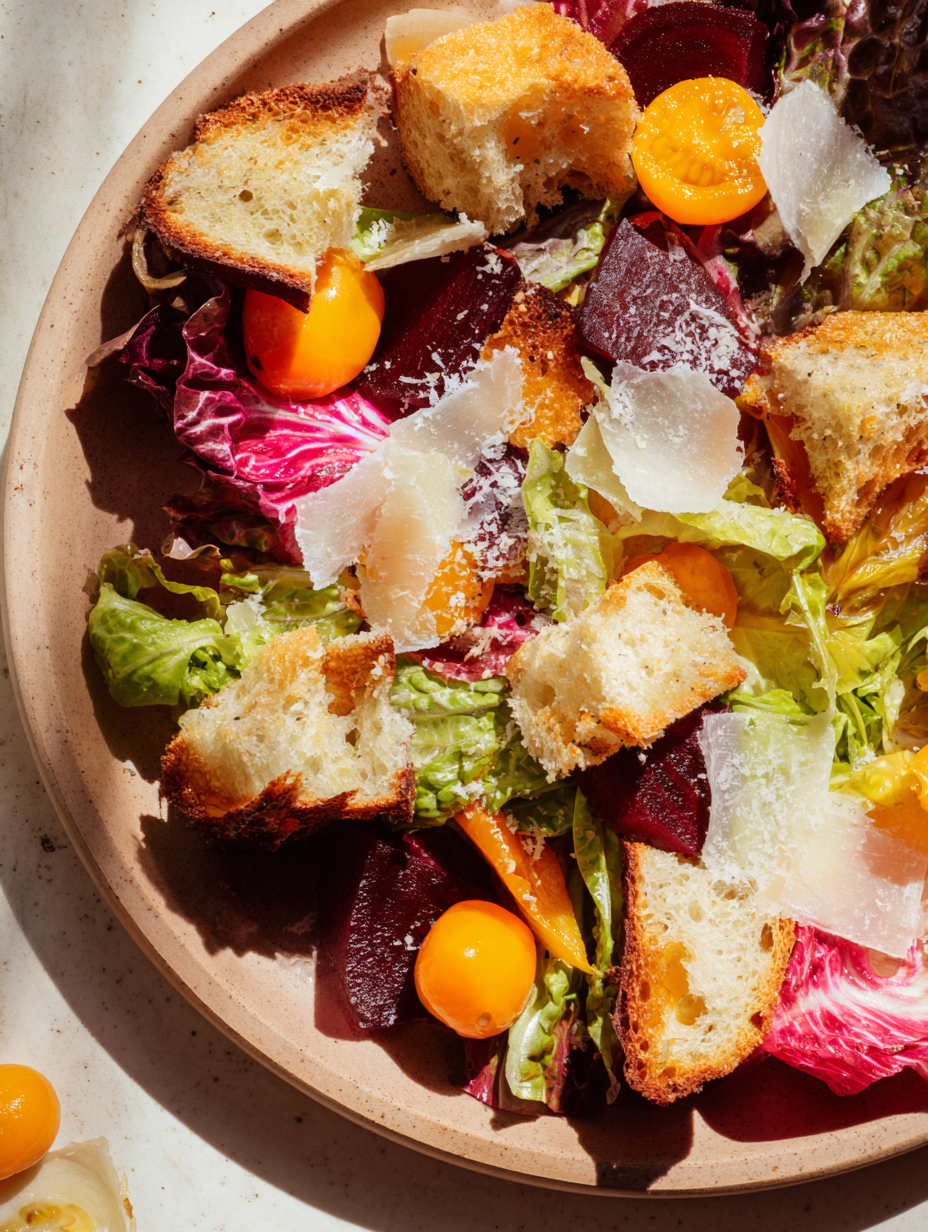

Spring salad with garlic confit beets, halved kumquats, torn butter lettuce, pink radicchio, Tomme cheese, and focaccia croutons on a stone plate

Instructions

Make the Garlic Confit Beets

Place whole, scrubbed beets and garlic cloves in a small saucepan. Cover with salt and enough medium-quality extra virgin olive oil to submerge.
Set over low heat and cook uncovered for 60-75 minutes, maintaining a gentle bubble-think lazy champagne fizz, not a fry. Turn the beets occasionally for even cooking.

Once tender and garlic is golden, remove from heat and let cool in the oil. Rub skins off the beets with a paper towel, then quarter them just before plating.

Chef's Note: Stovetop confit gives you real-time control-no preheating, no hot kitchen, and you can smell when it's getting good. Just watch the heat-too high and you're frying, not confiting.

How to Confit - Yes, It's a Verb

Confit (pronounced con-FEE) is a fancy French word for "cook something low and slow in fat until it becomes magic." Traditionally it's done with duck, but garlic and beets are absolute show-offs when treated the same way.

Here, we submerge whole beets and peeled garlic cloves in olive oil and let them roast gently in the oven until soft, jammy, and ridiculously flavorful. No browning, no boiling-just a slow bath in oil that transforms simple produce into something luxurious.

It's not deep frying and it's not roasting. It's confit. And once you do it, you'll want to confit everything.

Make the Croutons

Preheat oven to 375°F. Cut stale focaccia into 1-inch cubes. Toss with extra virgin olive oil and a pinch of salt.
Spread on a sheet tray and bake for 12-15 minutes, until golden.

Blend the Dressing

In a blender, combine all confit garlic cloves, confit oil, juice of 3 lemons, 1 tablespoon whole grain Dijon, 1 tablespoon local raw honey, and a pinch of xanthan gum (optional).
Blend until creamy. Taste. Season with salt and black pepper. Taste again. Add a splash of water to loosen if needed. If you want it more acidic add more lemon, a little sweeter add more honey. This is your dressing, make it how you like it.

Assemble the Salad

In a large bowl, toss torn butter lettuce and torn radicchio with your best extra virgin olive oil, a splash of wine vinegar, pinch of salt, and black pepper.
Add halved kumquats and toss again. Spoon in just enough dressing to coat-don't overdress.

Plate the greens. Top with quartered confit beets, shave the tomme right on top (if you don't have a cheese slicer, because who does really, you can use a y-peeler for this), and add the focaccia croutons. Finish with lemon zest-and some more cheese if you're me.


Substitutions

Look, we love a very specific ingredient list-but real life calls for flexibility. Here's how to swap without losing the magic:

Xanthan gum: Optional, but if you don't have it and your dressing breaks, just give it a quick shake before serving. Or embrace the rustic life.

Tomme cheese: Can't find it? Try a Manchego or mild Gruyère. You want something sliceable, buttery, and just funky enough to stand up to citrus and garlic.

Kumquats: Out of season? Use supremed Meyer lemons or paper-thin slices of orange peel. Quick-pickled shallots also bring a bright, acidic bite in a pinch.

Butter lettuce: Little Gem, Bibb, or even a tender mix of baby greens will work-just avoid anything too tough or too peppery (looking at you, arugula).

Radicchio: Treviso or Castelfranco if you can find them, otherwise swap in endive or even a small handful of red cabbage for color and crunch. If your radicchio is extra bitter, a quick ice bath helps take the edge off.

Focaccia croutons: Day-old sourdough or ciabatta does the trick. Just keep the cubes big and bake until golden with a chewy center.

Confit oil: If you didn't save the oil (first, why?), a good mild olive oil will work for the dressing. Just know the flavor won't be as layered.

Variations

This seasonal beet & kumquat salad's got range. If you've made it once and want to mix things up without reinventing the wheel, here's how to play:

  • Add protein: Top it with seared salmon (my go-to), grilled chicken thighs, or even a soft-boiled egg. The richness balances beautifully with the citrus and bitter greens.
  • Swap the greens: Sub the butter lettuce and radicchio for peppery watercress, frisée, or a mix of tender spring greens for something a little wilder.
  • Change the cheese vibe: Go tangy with a spoonful of whipped goat cheese or creamy burrata under the greens. Or shave parmesan over the top for a saltier punch.
  • Make it heartier: Toss in some farro or lentils for a salad that eats like a meal. Bonus points if you drizzle the dressing while everything's still warm.
  • Lean into the citrus: Add blood orange or cara cara segments for a sweeter, juicier finish. Even better if you've got fennel to slice in alongside.
  • Toast it up: Add roasted nuts (hazelnuts, pistachios, or almonds) for an extra layer of crunch and richness. Toast them in a dry pan to wake them up.

This isn't a fragile little side salad. It's built to flex with the season-and with whatever's rolling around in your fridge.

Equipment

You don't need a fancy setup-just a few solid tools to get this salad from market haul to plated perfection:

Microplane or zester - To finish with that final lemony flourish

Small heavy-bottomed saucepan - For stovetop garlic and beet confit (don't skimp-thin pans scorch oil)

Tongs or slotted spoon - For safely fishing out beets and garlic from hot oil

Paper towels - To rub the skins off those tender, confit beets like a pro

Fine mesh strainer - For saving and reusing that dreamy garlic oil

Blender or immersion blender - To whip your dressing into creamy magic

Large mixing bowl - Essential for tossing greens without bruising

Salad spinner or clean kitchen towel - Because wet lettuce is the enemy of flavor

Y-peeler or cheese plane - For shaving Tomme into buttery little curls

Sharp knife + sturdy cutting board - Always non-negotiable

Sheet pan - For baking up golden focaccia croutons

Storage

This seasonal beet & kumquat salad was created to highlight seasonal ingredients at their best, and its best when it's fresh-like, just-dressed-and-plated fresh. The citrus pops brighter, the greens stay crisp, and the cheese melts into that dreamy dressing just so. That said? I get busy too. Here's how to prep smart and keep it tasting like it was made ten minutes ago.

What to Store (and How):

  • Greens (lettuce + radicchio): Wash, dry thoroughly (like, spin it 'til you're dizzy), and store in a sealed container lined with paper towels. Keeps 2-3 days.
  • Beets + garlic confit: Store in a jar submerged in the confit oil. Refrigerate up to 1 week. Let come to room temp before plating for best texture and flavor.
  • Dressing: Store in a jar in the fridge for up to 1 week. Shake well before using-unless you added xanthan gum, in which case it'll stay perfectly emulsified like the little overachiever it is.
    • Croutons: Let them cool completely, then store in an airtight container at room temp for 2-3 days. Re-toast if needed for crunch (I don't use an airfryer often, but it works great for this).

Bottom line: Fresh is best. But prepped well, this salad can absolutely work on your time.


Top Tip

Season your greens before the dressing hits the bowl.
It's the chef move that most home cooks skip-but it changes everything. A drizzle of good olive oil, a splash of mild vinegar, a hit of salt and cracked black pepper-then you toss. This base layer wakes up the greens and gives the dressing something to hold onto.

FAQ

Can I make the whole salad ahead of time?

Not if you want it to look and taste fresh. But you can prep all the components in advance-see the storage tips above. Assemble and dress right before serving for the best texture and flavor.

Do I have to use Tomme cheese?

Nope-but don't just grab any random cheese. You want something buttery, semi-firm, and mild enough not to fight the kumquats. Think young Manchego, Fontina, or even a mellow Gruyère.

What if I can't find kumquats?

They're seasonal, so it happens. Try supremed Meyer lemons or thin slices of orange peel. Quick-pickled shallots can add a similar acidic pop.

Can I skip the xanthan gum?

Absolutely. It just helps the dressing stay creamy instead of separating. No big deal-just give it a good shake before each use.

Can I roast the beets instead?

Sure, but you'll lose that silky, olive oil-rich texture that makes this salad special. Roasting works in a pinch-but if you have the time, confit is worth it.

Is this gluten-free?

It can be! Just use GF bread for your croutons-or skip them and add toasted nuts for crunch.

Can I make this vegan?

Yes. Skip the cheese and use agave in place of the honey. You'll miss the creamy richness, but the garlic, citrus, and beets still bring it.

Pair It With: The Olio

This salad's got citrus, creaminess, and a little earthy drama-which means it begs for something crisp, botanical, and just a bit silky. Enter: The Olio-my olive oil-washed gin sour.

The gin's herbal backbone plays off the kumquats and bitter greens, the lemon echoes the dressing, and the olive oil wash adds this subtle, rounded mouthfeel that mirrors the confit richness in the beets. It's bright but balanced, with enough intrigue to hold up against a salad that's showing off.

Want to sip alongside? Here's how to make The Olio-a cocktail with clean lines, soft edges, and a vibe that says "I eat seasonal."

Related

Looking for other recipes like this? Try these:
  • Spring salad with garlic confit beets, halved kumquats, torn butter lettuce, pink radicchio, Tomme cheese, and focaccia croutons on a stone plate
    Bright and Creamy Seasonal Beet & Kumquat Salad for Spring
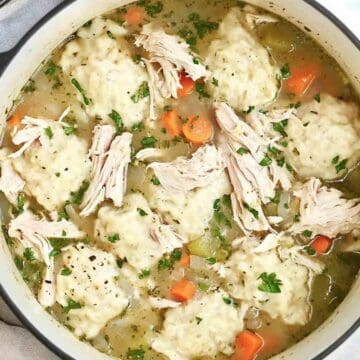
  • A Dutch oven filled with chicken and dumpling soup, featuring shredded chicken, fluffy dumplings, and carrots in a flavorful broth.
    Hearty Chicken and Dumpling Soup
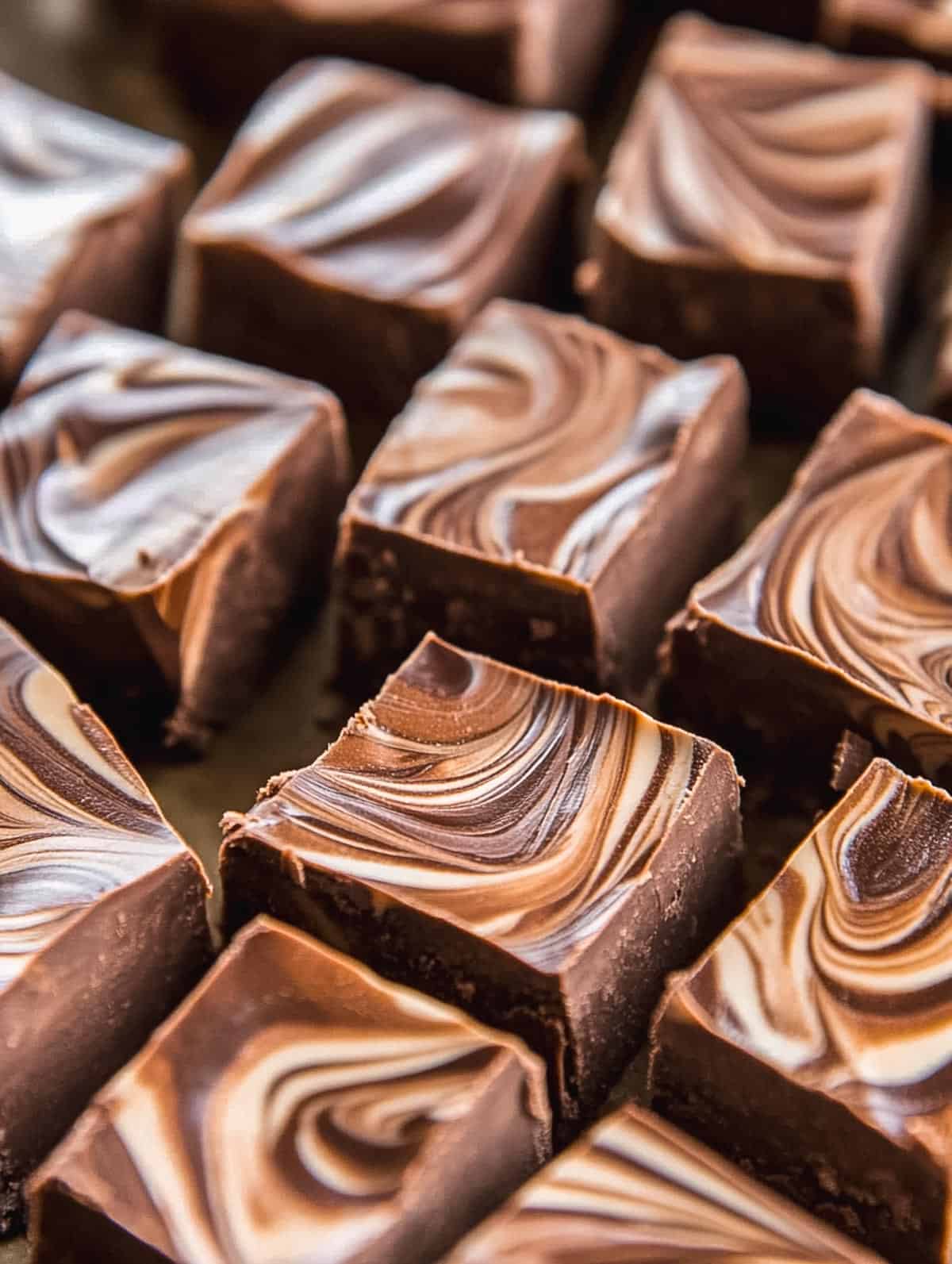
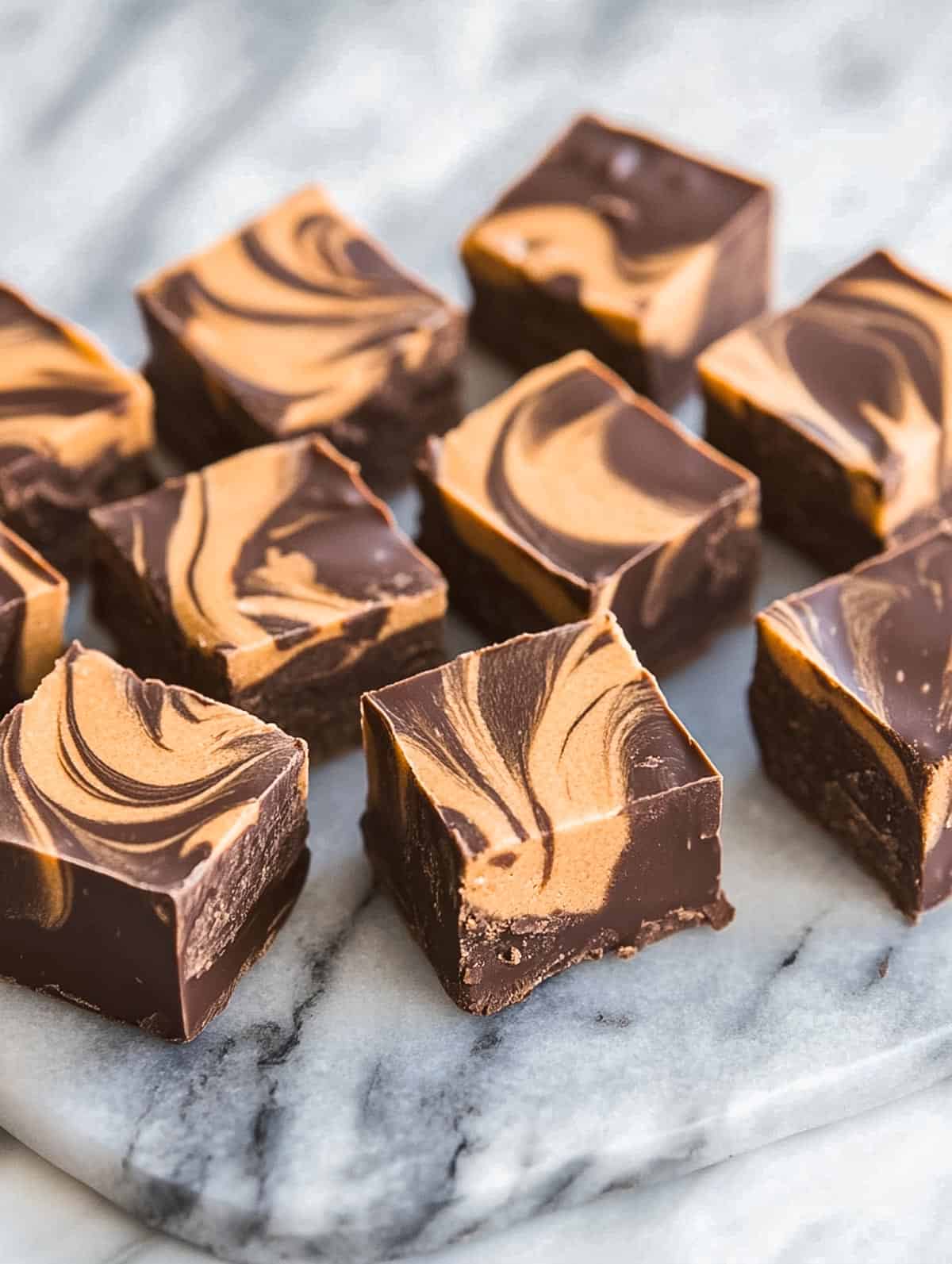
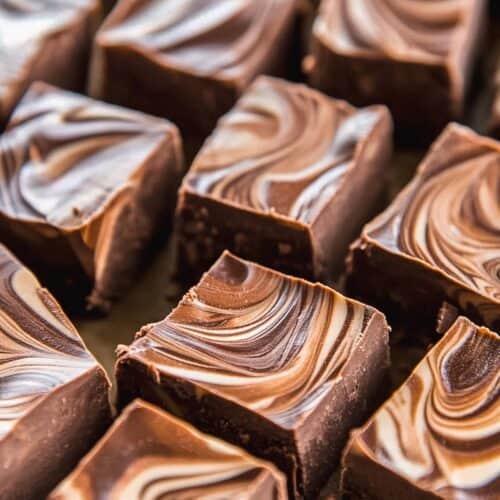
  • Swirled chocolate gingerbread fudge squares on a marble slab.
    Chocolate Gingerbread Fudge
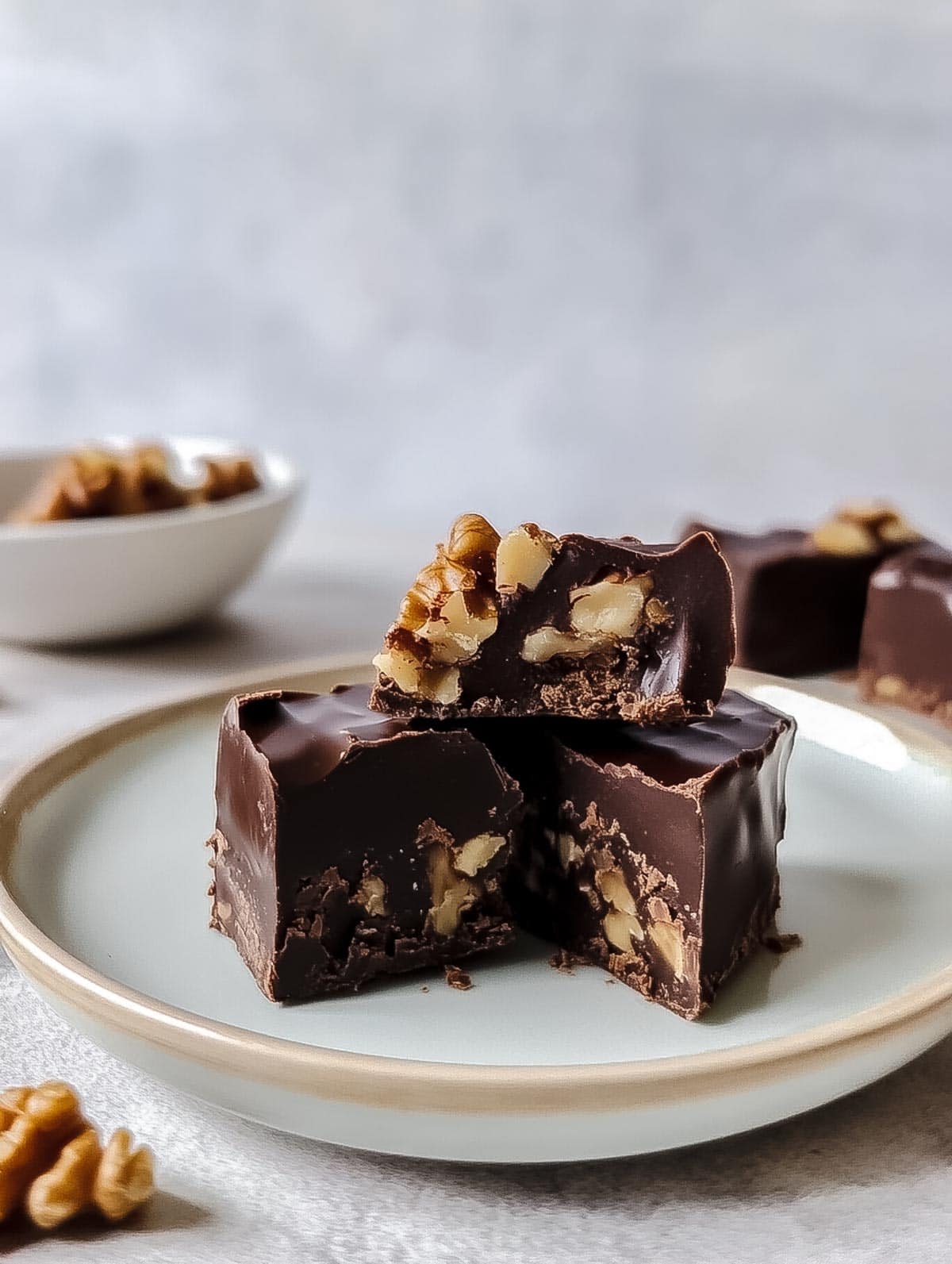
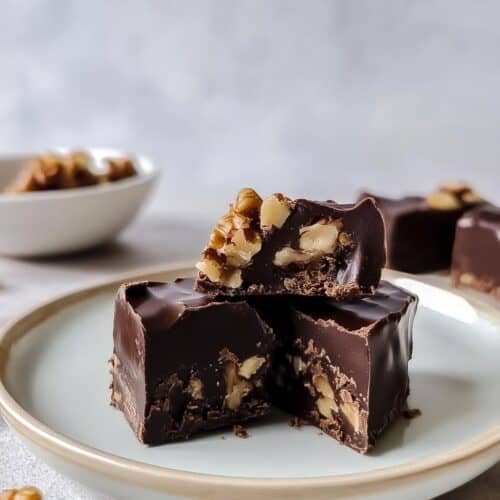
  • Chocolate walnut fudge stacked on a plate, showing walnut pieces inside.
    Best Homemade Chocolate Walnut Fudge Recipe

Pairing

These are my favorite dishes to serve with this Garlic Confit Beet Salad with Kumquats, Butter Lettuce & Tomme:

Spring salad with garlic confit beets, halved kumquats, torn butter lettuce, pink radicchio, Tomme cheese, and focaccia croutons on a stone plate

Seasonal Beet & Kumquat Salad With Creamy Lemon‑Garlic Dressing

Taylor @ Cain Kitchen
This vibrant spring salad is everything I want on a sunny, market-fresh weeknight: garlic confit beets, buttery butter lettuce, punchy pink radicchio, and juicy halved kumquats, all tossed in a silky lemon-garlic dressing made from that dreamy confit oil. Shaved Tomme cheese adds creamy funk, while golden focaccia croutons bring the crunch. It's bold, bright, and secretly meal-prep friendly.
Whether you serve it with a seared salmon filet or pair it with The Olio (my olive oil–washed gin sour), this salad earns its place on repeat.
Print Recipe Pin Recipe
Prep Time 15 minutes mins
Cook Time 1 hour hr
Total Time 1 hour hr 15 minutes mins
Course Salad
Cuisine Mediterranean
Servings 1

Equipment

  • small saucepan
  • tongs or slotted spoon
  • paper towels
  • fine mesh strainer
  • blender
  • large mixing bowl
  • cheese plane (or y-peeler)
  • sharp kniife
  • cutting board
  • sheet pan
  • zester

Ingredients
  

Garlic Confit Beets

  • 2 ea mediium red beets whole and scrubbed
  • 6-8 ea garlic cloves peeled
  • Diamond Crystal kosher salt to taste
  • medium-quality extra virgin olive oi enough to submerge

Croutons

  • 1 ea focaccia cut into 1-inch cubes
  • Olive oil for tossing
  • Diamond Crystal kosher salt to taste

Creamy Garlic Dressing

  • All confit garlic cloves from recipe 6-8 cloves
  • 9 tablespoon garlic confit oil
  • Juice of 3 lemons zest reserved for salad finish
  • 1 tablespoon whole grain Dijon mustard
  • 1 tablespoon local raw honey
  • ⅛ teaspoon xanthan gum optional
  • Diamond Crystal kosher salt to taste
  • Freshly cracked black pepper to taste
  • Splash of water if needed to thin

Salad

  • 1 head butter lettuce torn
  • 1 small head radicchio torn
  • ¼ cup kumquats halved and seeded
  • 2 oz tomme chees shaved
  • cracked black pepper to finish
  • Reserved lemon zest for garnish

For Tossing Greens

  • High-quality extra virgin olive oil such as Laudemio
  • Mild vinegar white wine or champagne
  • Diamond Crystal kosher salt
  • Cracked black pepper

Instructions
 

  • Place whole, scrubbed beets and garlic cloves in a small saucepan. Cover with salt and enough medium-quality extra virgin olive oil to submerge.
  • Set over low heat and cook uncovered for 60-75 minutes, maintaining a gentle bubble-think lazy champagne fizz, not a fry. Turn the beets occasionally for even cooking.
  • Once tender and garlic is golden, remove from heat and let cool in the oil. Rub skins off the beets with a paper towel, then quarter them just before plating.
  • Preheat oven to 375°F. Cut stale focaccia into 1-inch cubes. Toss with extra virgin olive oil and a pinch of salt.
  • Spread on a sheet tray and bake for 12-15 minutes, until golden.
  • In a blender, combine all confit garlic cloves, confit oil, juice of 3 lemons, 1 tablespoon whole grain Dijon, 1 tablespoon local raw honey, and a pinch of xanthan gum (optional).
  • Blend until creamy. Taste. Season with salt and black pepper. Taste again. Add a splash of water to loosen if needed. Adjust lemon or honey to your liking.
  • In a large bowl, toss torn butter lettuce and torn radicchio with your best extra virgin olive oil, a splash of wine vinegar, pinch of salt, and black pepper.
  • Add halved kumquats and toss again. Spoon in just enough dressing to coat-don't overdress.
  • Plate the greens. Top with quartered confit beets, shave the tomme right on top (use a cheese plane or a Y-peeler), and add the focaccia croutons.
  • Finish with lemon zest-and more cheese, if you're me.
Keyword beet and kumquat salad, creamy lemon garlic dressing, farmers market salad, garlic confit beet salad, salad with foccacia croutons, seasonal beet salad, spring salad recipe, tomme cheese

Top 10 Recipes

  • A detailed shot of assorted chocolates and confections and marbled chocolate bark, in a bakery display.
    Behind the Ingredients: Exploring Chocolate and Cocoa
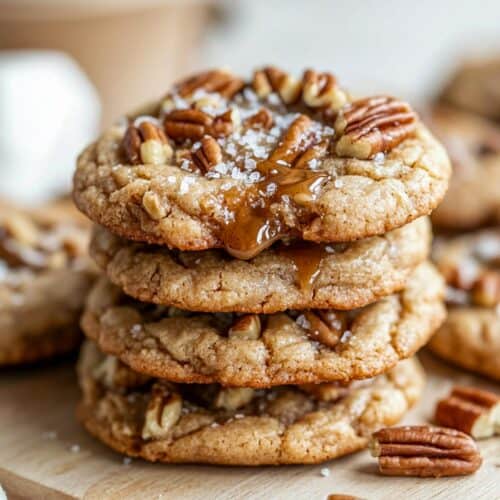
  • Maple brown sugar pecan cookies drizzled with caramel and sprinkled with sea salt, stacked on a wooden board.
    Maple Brown Sugar Pecan Cookies with Maple Fudge
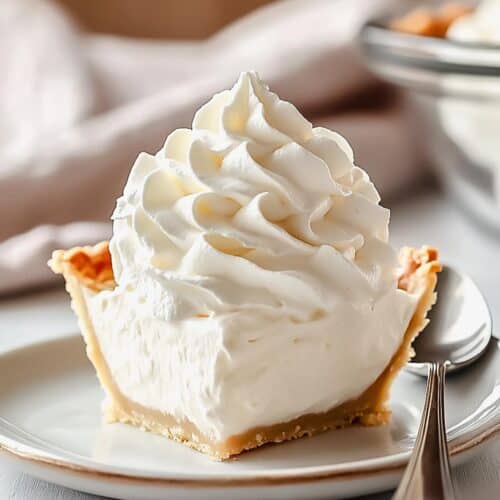
  • A slice of pie topped with a generous swirl of fresh whipped cream, served on a white plate with a spoon.
    Homemade Whipped Cream: Easy & Customizable
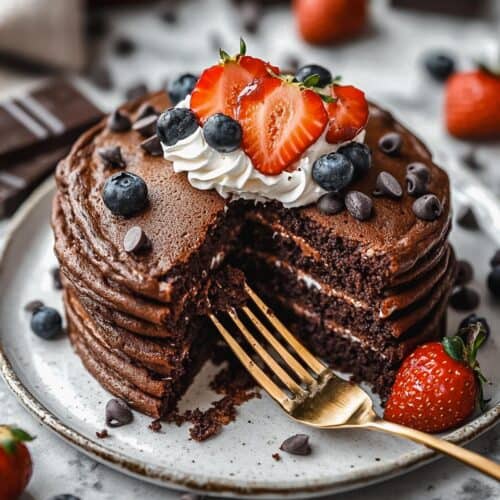
  • Sliced chocolate protein pancakes topped with berries, whipped cream, and chocolate chips.
    Chocolate Protein Pancakes
  • Maple syrup being poured over a stack of fluffy pancakes
    Fluffy Protein Pancakes: Better Than Box
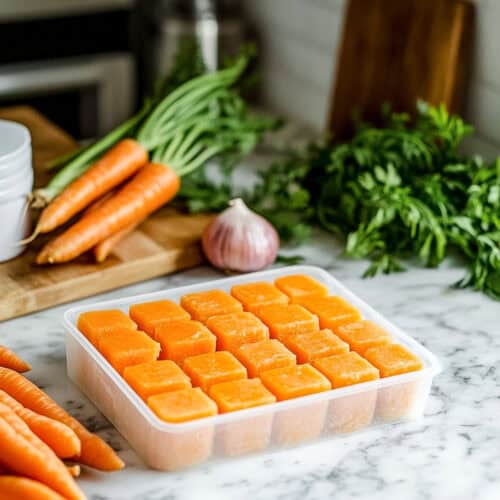
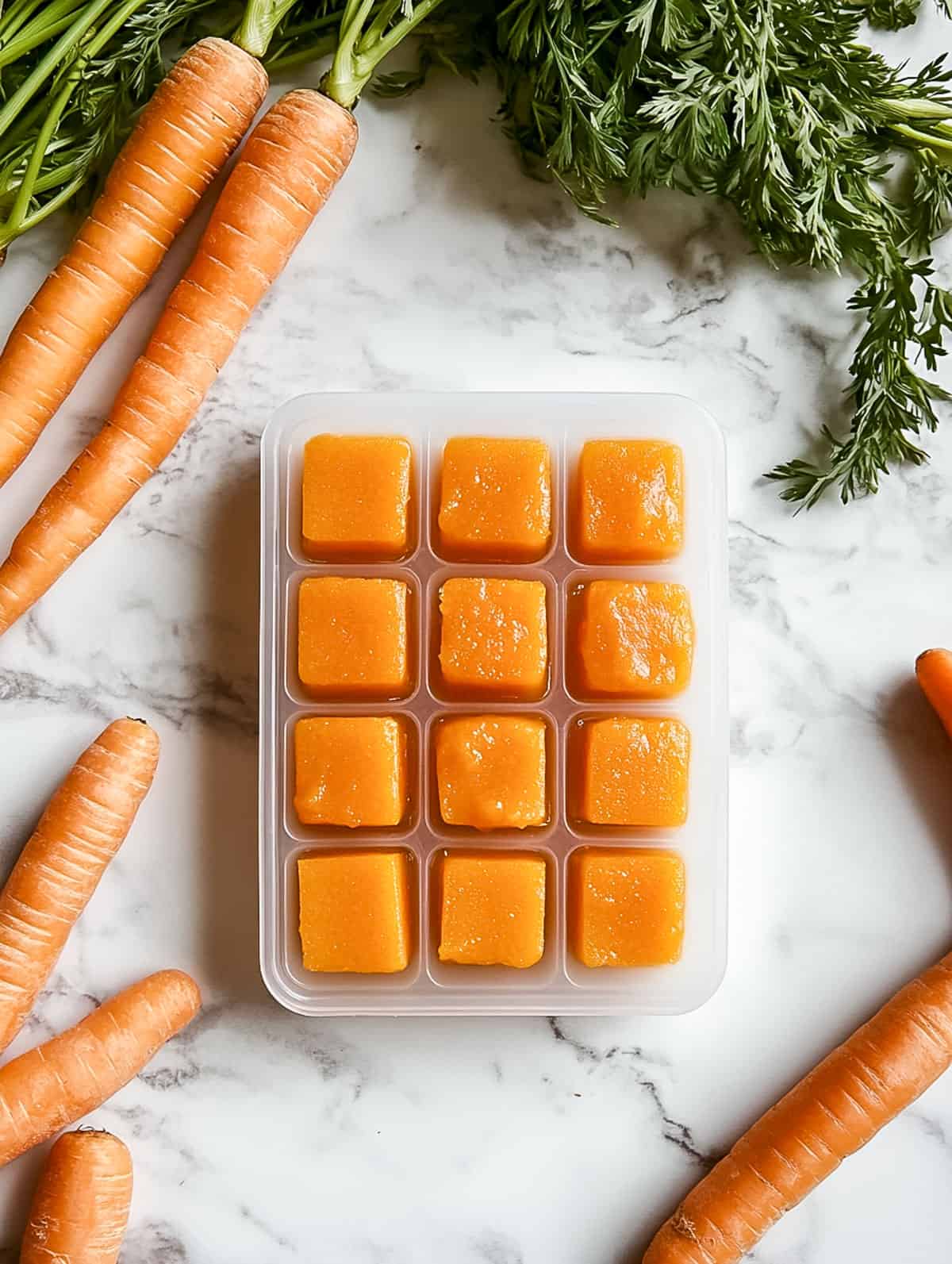
  • Frozen cubes of Hidden Veggie Carrot and Onion Puree in a container on a marble counter, surrounded by fresh carrots, garlic, and parsley.
    Hidden Veggie Carrot and Onion Puree
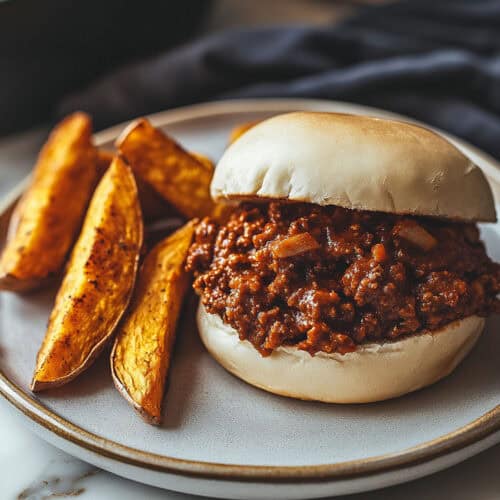
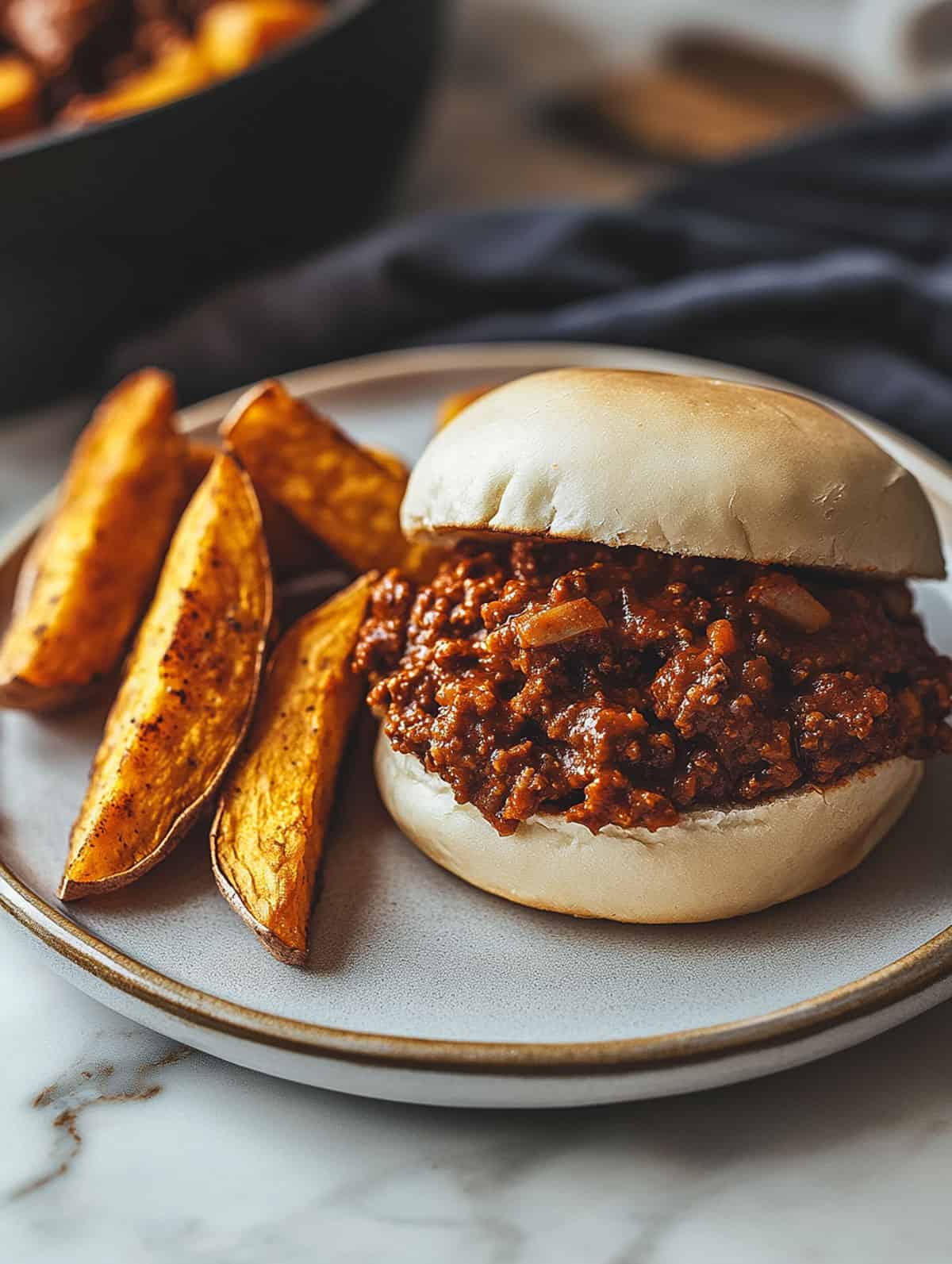
  • A close-up of a sloppy joe sandwich with a side of seasoned potato wedges on a ceramic plate.
    Homemade Sloppy Joes
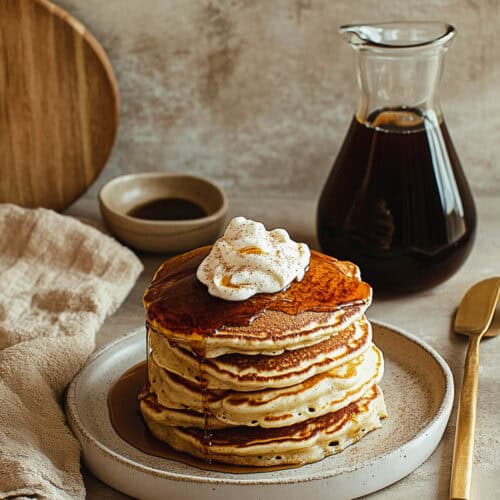
  • Stack of brown sugar protein pancakes topped with whipped cream and a drizzle of syrup on a ceramic plate
    Brown Sugar Protein Pancakes

Hearty Chicken and Dumpling Soup

October 1, 2024 by Taylor @ Cain Kitchen Leave a Comment

When it comes to comfort food, nothing beats a bowl of warm hearty chicken and dumpling soup. This recipe takes you through the classic flavors of homemade broth, tender chicken, and soft, fluffy dumplings. Whether you're battling cold weather or simply craving a cozy meal, this dish delivers comfort in every bite.

A Comforting Classic

This chicken and dumpling soup is not only rich in flavor, but it's also incredibly easy to make. Follow along, and I'll show you how to create this soul-soothing dish step by step.

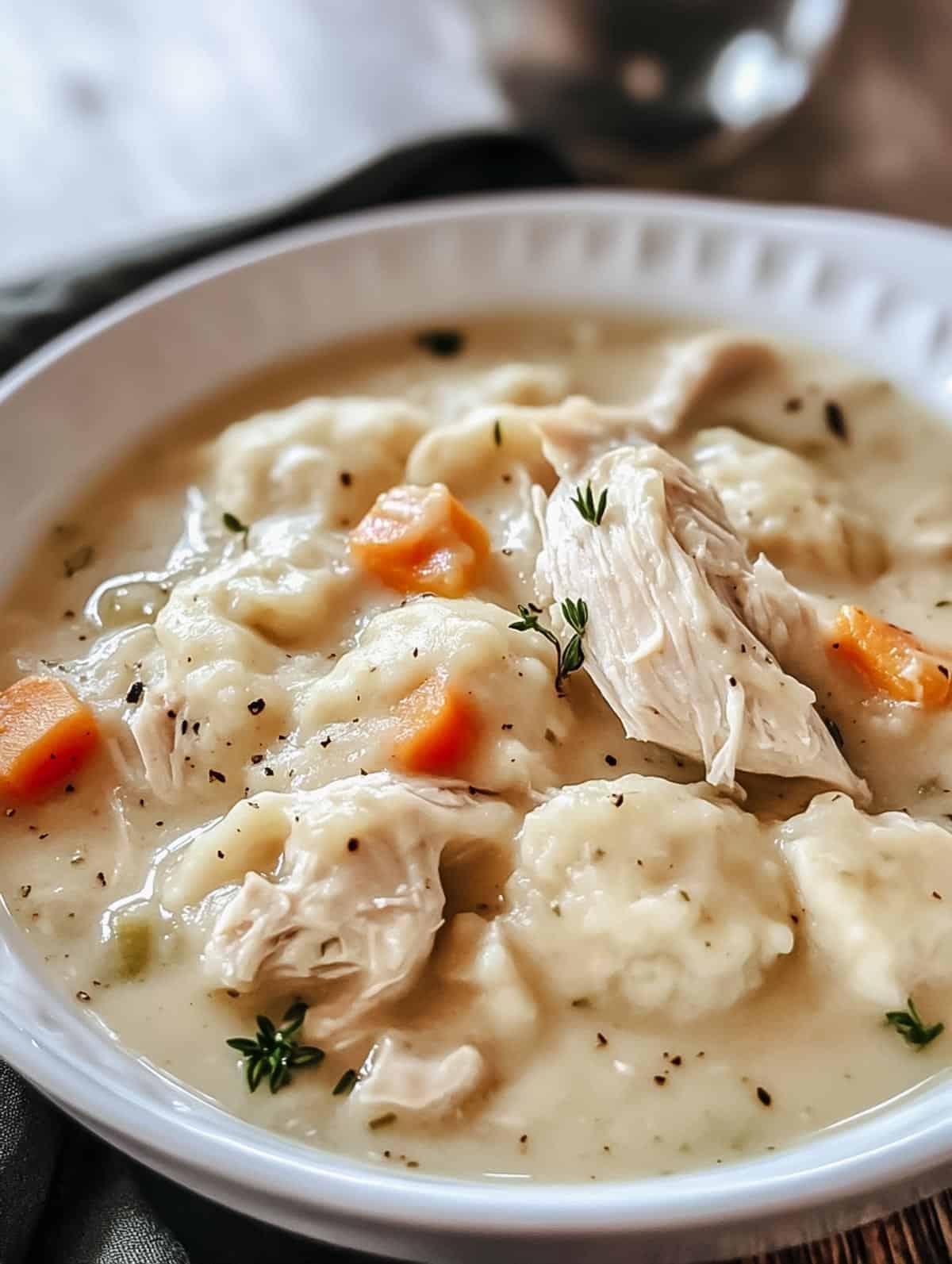
A close-up shot of chicken and dumpling soup with tender shredded chicken, fluffy dumplings, and vibrant carrots in a creamy broth.

From My Kitchen to Yours: Hearty Chicken and Dumpling Soup

Chicken and dumplings are more than just a meal; it's a tradition that carries the warmth and comfort of home with every bite. Growing up in Arkansas, this dish was a staple at family gatherings, especially during the cooler months when hearty, comforting meals became essential. The recipe has been passed down through generations in my family, and it is a true Southern classic that I've cherished for years. From my grandmother's kitchen to my own, chicken and dumplings are not just food-they are a reflection of Southern hospitality and tradition.

As a professional chef with years of experience in the kitchen, I've perfected the art of turning simple ingredients into unforgettable meals. This version of chicken and dumplings stays true to its roots while incorporating techniques to enhance flavor and texture, ensuring each bite is perfectly seasoned and satisfying. The broth is rich, the dumplings are light and fluffy, and the chicken is tender and juicy-everything you want in a fall comfort food. And let's not forget, this dish is perfect for leftovers, making it an ideal choice for busy families or meal prepping.

If you're looking for the ultimate fall staple, this recipe is for you. Not only is it delicious and nourishing, but it also brings with it the nostalgia of Southern cooking at its finest. Whether you're making it for Sunday dinner or saving it for a cozy night in, chicken and dumplings is a meal that never fails to deliver warmth and satisfaction.

[feast_advanced_jump_to]

Ingredients

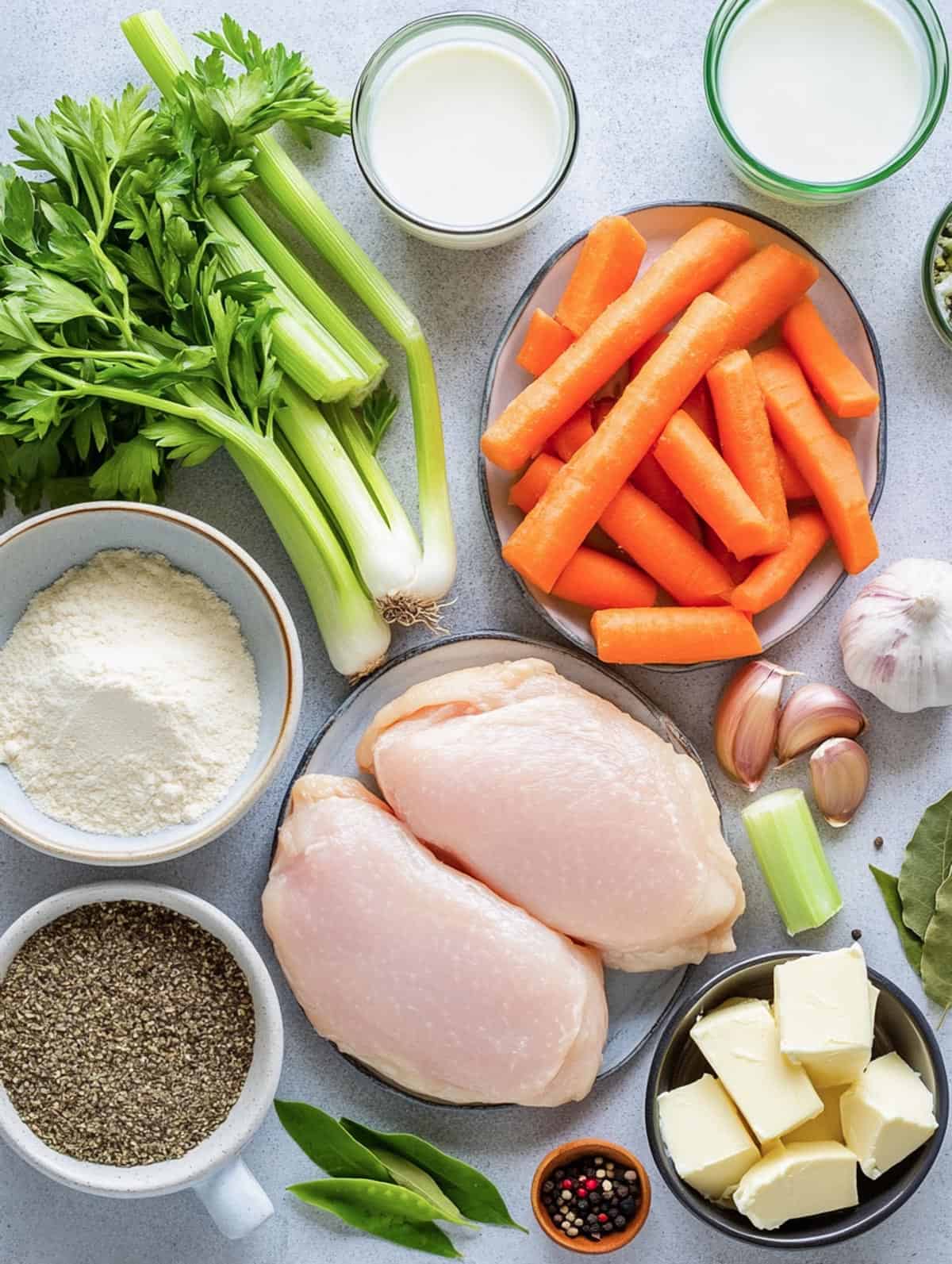
This chicken and dumpling soup recipe calls for simple, wholesome ingredients that you likely already have in your pantry. The mirepoix-a classic combination of carrots, onions, and celery-forms the flavorful base of the soup, while garlic adds a nice depth. Chicken stock or bouillon helps build a rich broth that carries the heart of this dish.

As for the herbs, I've chosen dried parsley, oregano, and basil for their convenience and long shelf life. While fresh herbs offer a bright, more delicate flavor, dried herbs are more concentrated, making them perfect for slow-cooked soups like this one. Toasting the herbs before adding them to the broth helps to release their essential oils, bringing out even more flavor and aroma. The fennel, coriander, and black peppercorns provide a subtle warmth and complexity that elevate this southern classic without overshadowing its comforting simplicity.

No need for any fancy ingredients-just a perfect blend of familiar, comforting flavors!

A colorful array of ingredients for chicken and dumpling soup, including fresh celery, carrots, chicken breasts, butter, garlic, and spices.
  • Carrots
  • Onion
  • Celery
  • Garlic
  • Butter
  • Chicken Stock or Chicken Bouillon
  • Dried parsley
  • Dried oregano
  • Dried basil
  • Bay leaf
  • Fennel seeds
  • Coriander seeds
  • Black peppercorns
  • Salt
  • Chicken breasts
  • All-purpose flour
  • Baking powder
  • Freshly cracked black pepper
  • Salt
  • Dried thyme
  • Whole milk
  • Cold butter

See the recipe card for quantities.

Instructions

Preparing the Broth

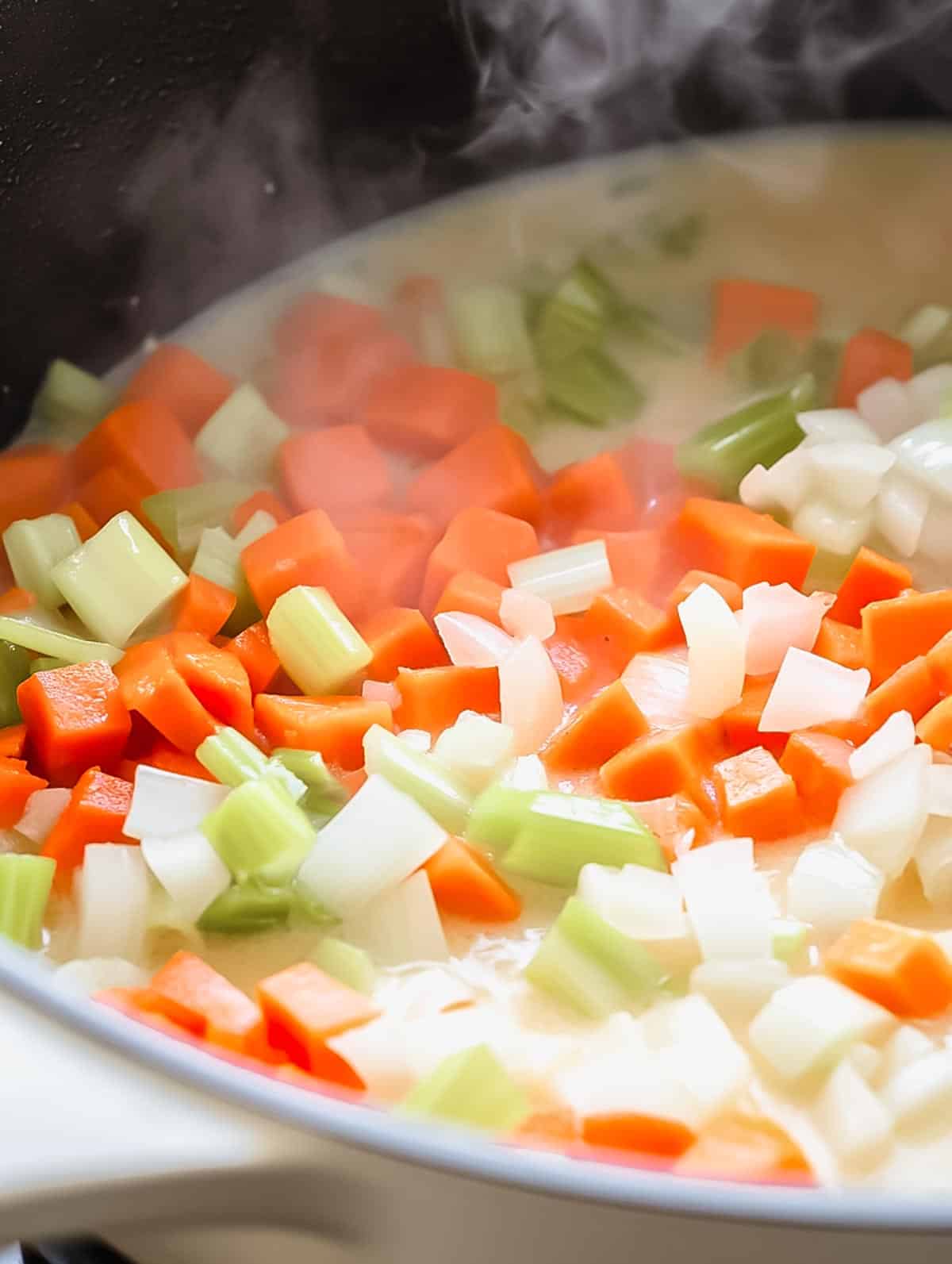
A pot filled with sautéed carrots, celery, and onions, with steam rising as the vegetables soften.
  1. Sauté the Mirepoix: Start by melting 2 tablespoons of butter in a large pot or Dutch oven over medium heat. Once the butter is hot, add the chopped carrots, onion, celery (your mirepoix), and pressed garlic. Cook until the onions become translucent and soft, about 5-7 minutes.
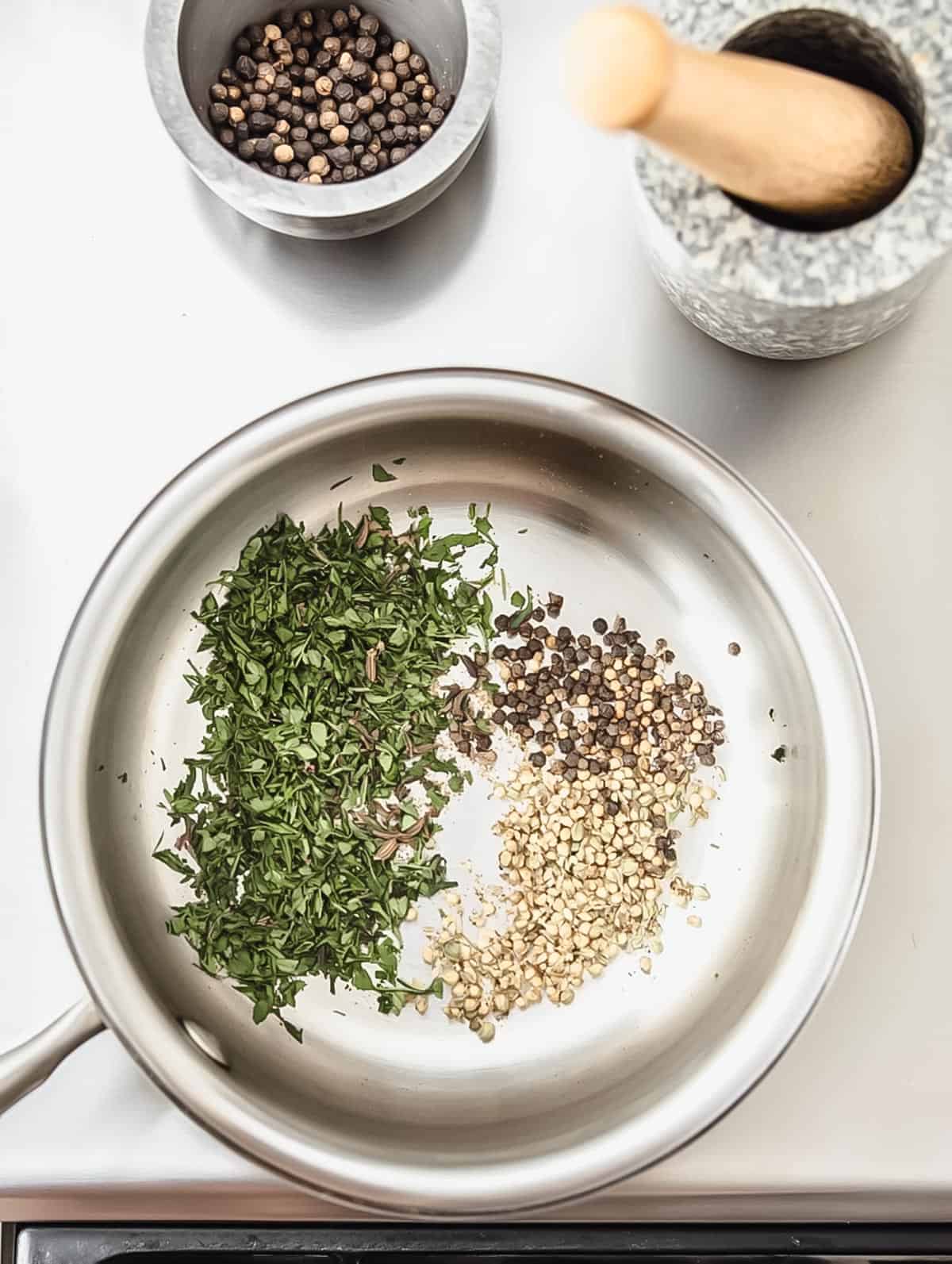
Herbs and spices being toasted in a pan, with a mortar and pestle nearby.
  1. Build the Broth: Add 2 quarts of chicken stock or water and chicken bouillon to the pot. While the broth heats, lightly toast the dried parsley, oregano, basil, bay leaf, fennel seeds, coriander seeds, and crushed black peppercorns in a dry pan over medium heat until fragrant, about 2-3 minutes. Transfer the toasted spices to a mortar and pestle, grind into a powder, and add to the pot. Stir well and bring the broth to a boil.
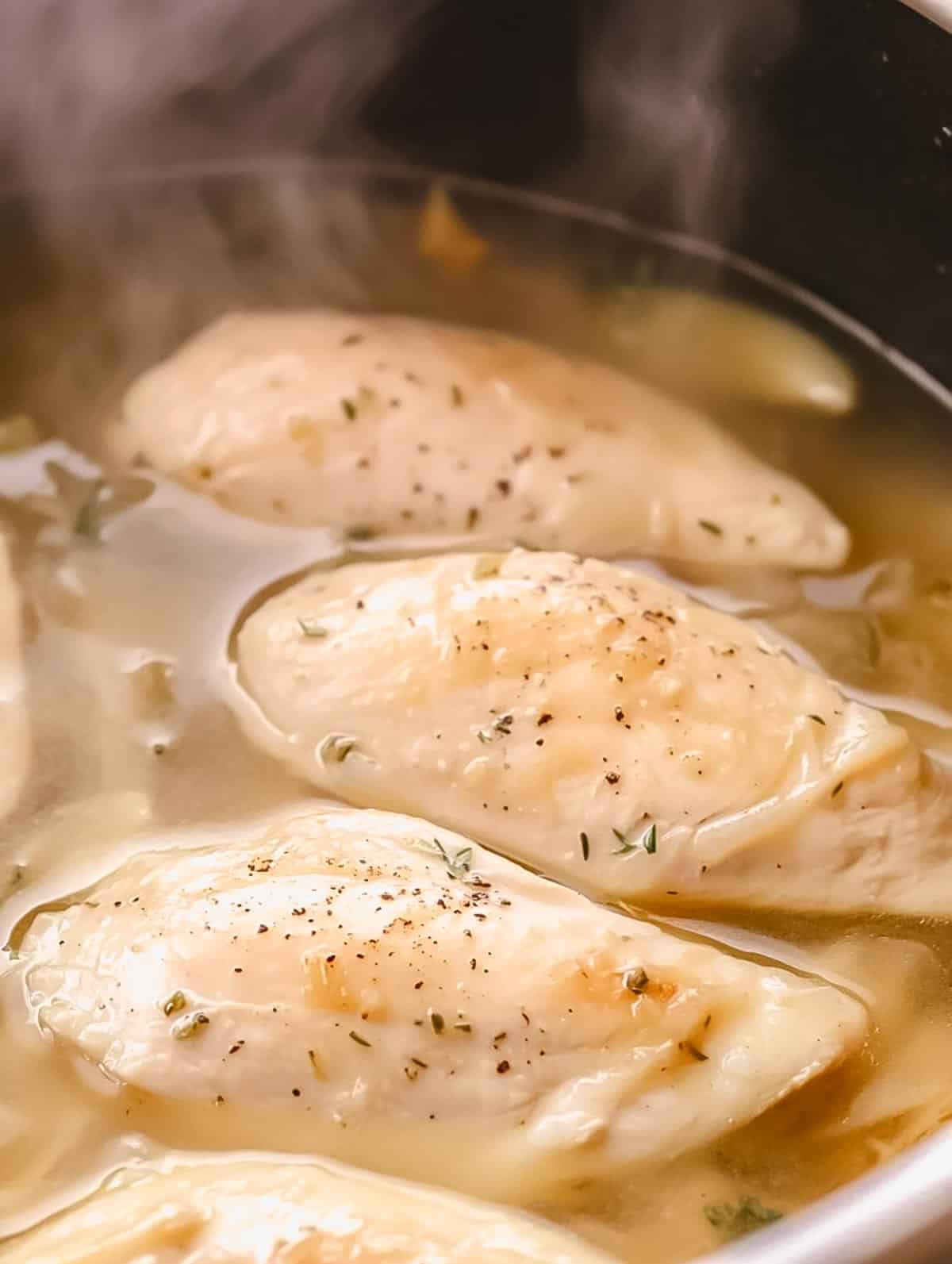
Chicken breasts simmering in a pot of seasoned broth.
  1. Cook the Chicken: Once the broth is boiling, carefully drop the chicken breasts into the pot. Cook for about 10 minutes or until the internal temperature of the chicken reaches 135°F. The chicken will still be slightly undercooked at this point-don't worry, it will finish cooking later. Remove the chicken from the broth, shred it coarsely using an electric mixer or by hand, and cover. Place the shredded chicken in the fridge while you move on to the next steps.
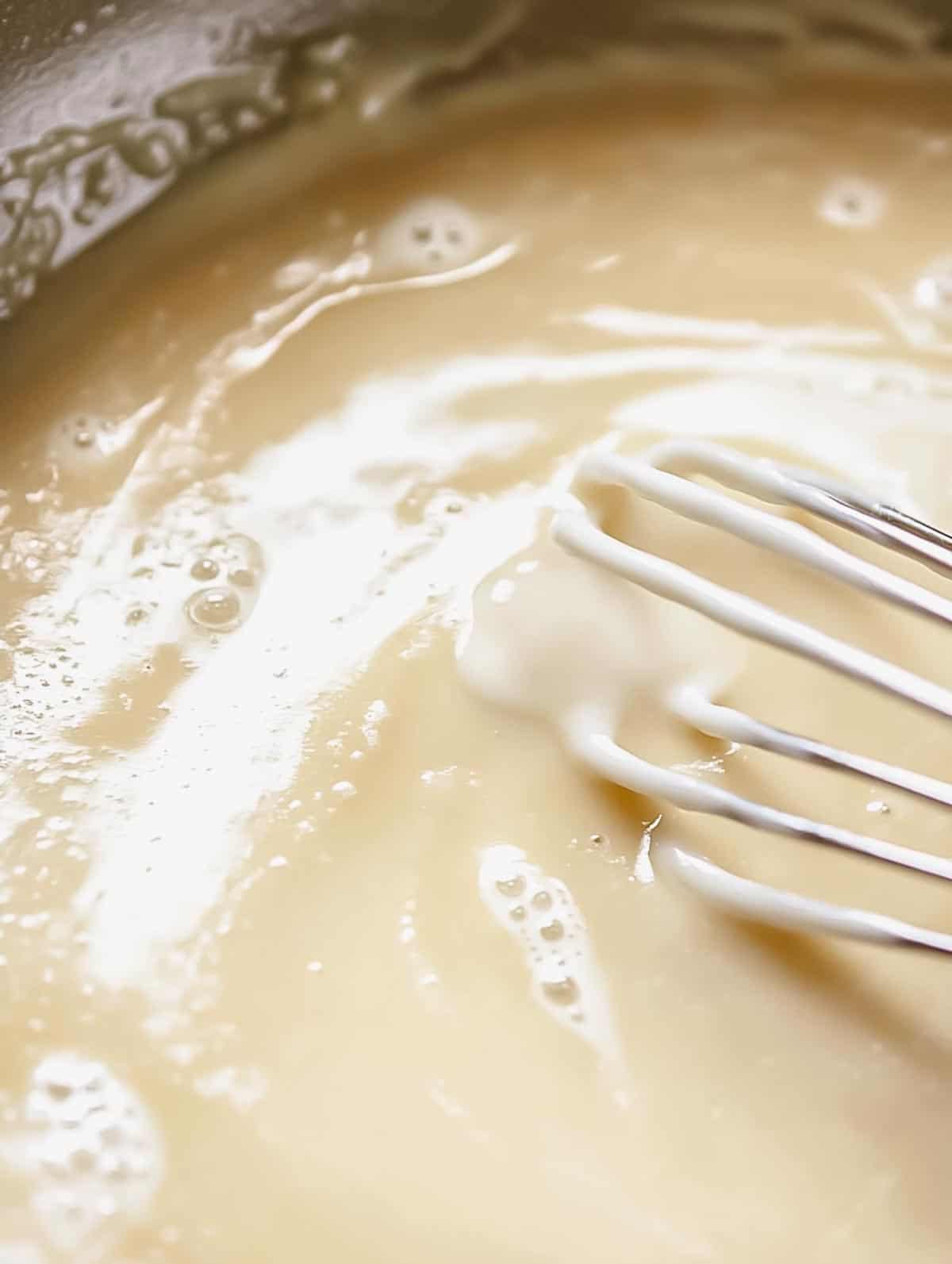
A smooth and creamy roux being whisked in a saucepan.
  1. Thicken the Broth with a Roux: In a small pan, melt butter (about 2 ounces or 4 tablespoons). Once melted, add an equal weight of flour (2 ounces, or just under ½ cup). Cook the roux over medium heat for about 5 minutes, stirring constantly, until it becomes fragrant and develops a nutty aroma. Slowly add a ladle of hot broth from the pot into the roux, whisking vigorously to avoid lumps. Gradually whisk in more broth until the mixture turns into a smooth, thick sauce. Pour this thickened sauce back into the pot, stirring it into the broth. Let the soup boil for 20 minutes, skimming off any impurities that rise to the surface.

How to Skim the Broth:

While the broth simmers, you may notice impurities rising to the surface in the form of froth or small clumps. These are coagulated proteins and other particles from the chicken and vegetables. To skim, use a spoon or a fine mesh skimmer to gently remove these impurities as they gather on the surface. This will result in a clearer, more refined broth.

Finishing the Soup

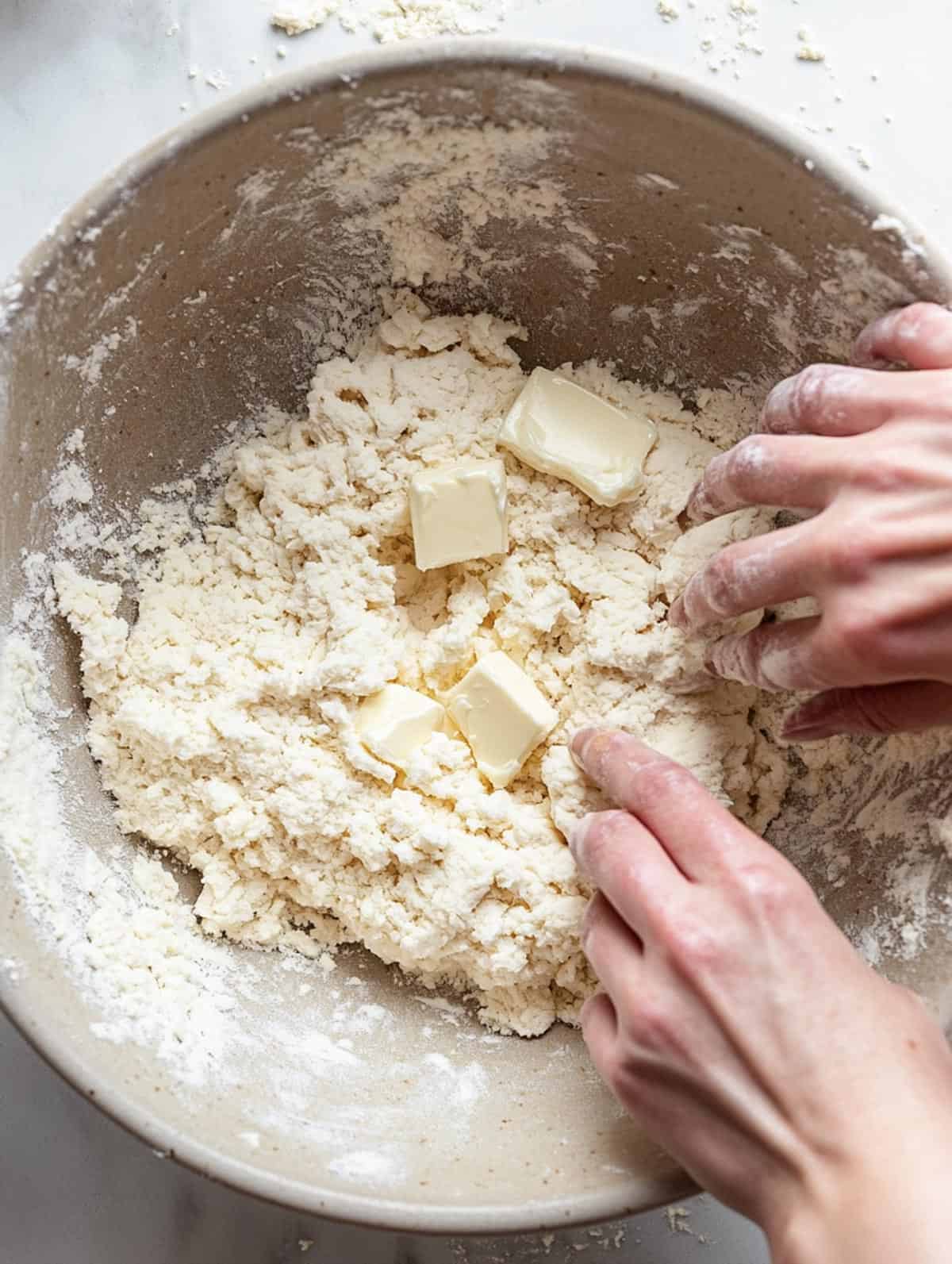
Hands mixing cold butter into flour while preparing dumpling dough.
  1. Make the Dumplings: While the broth simmers, it's time to make the dumplings. In a large bowl, whisk together the flour, baking powder, black pepper, salt, and dried thyme. Shred the cold butter into the flour mixture (just like making biscuits). Using your hands or a fork, work the butter into the flour until the mixture resembles coarse crumbs. Slowly add the milk, mixing with a fork until a soft dough forms. Be careful not to overmix-you want cold lumps of butter to remain in the dough for light, fluffy dumplings.
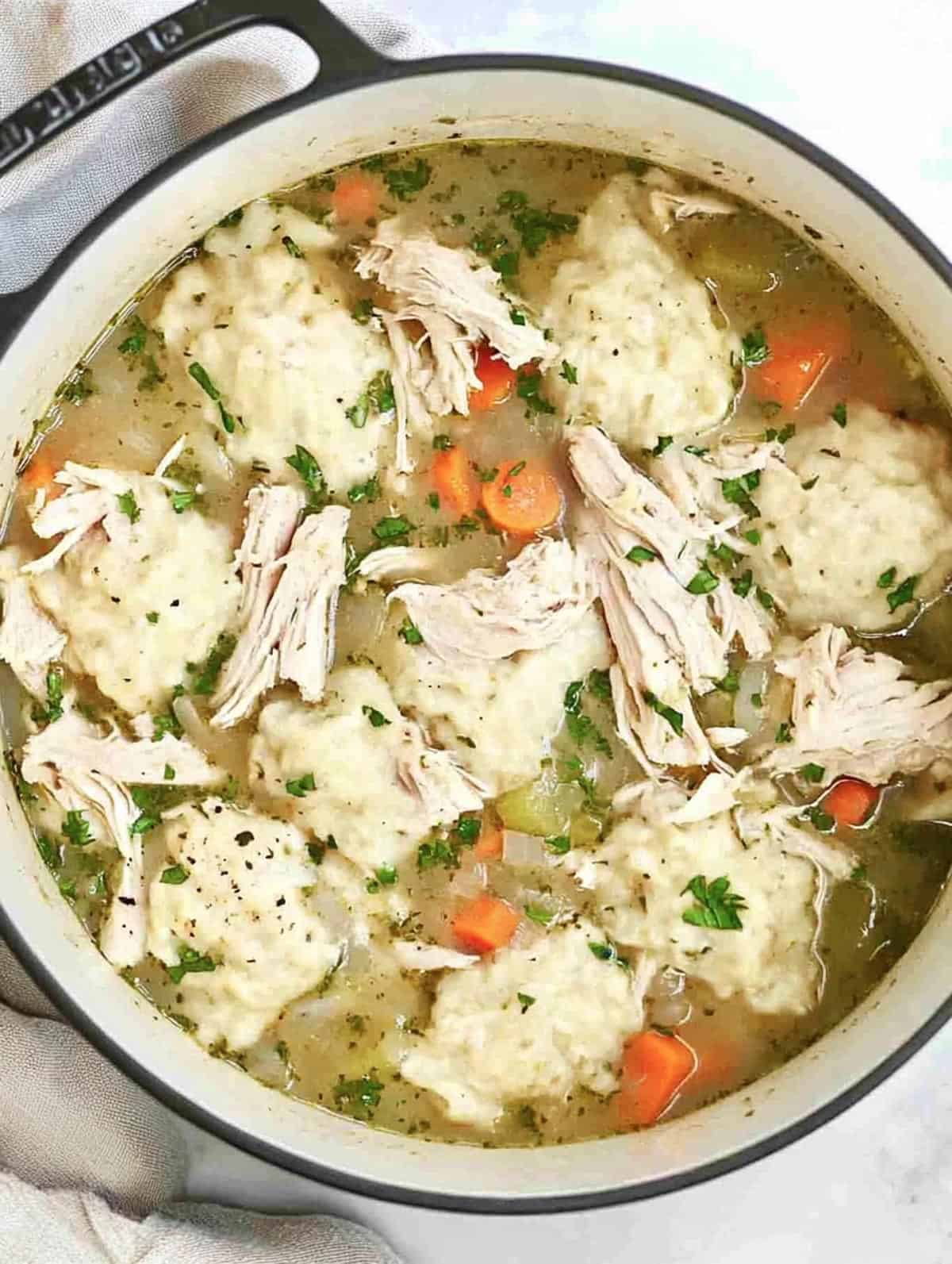
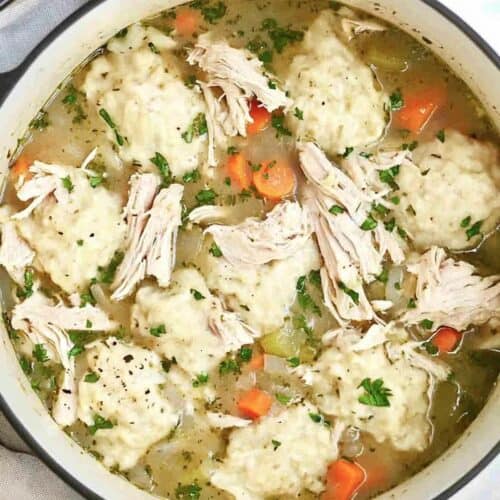
A Dutch oven filled with chicken and dumpling soup, featuring shredded chicken, fluffy dumplings, and carrots in a flavorful broth.
  1. Cook the Dumplings: Once the broth has thickened, gently drop the dumpling dough into the pot using a small 1 oz scoop or a spoon. Be careful not to splash yourself! Stir gently to ensure the dumplings don't stick together. Reduce the heat slightly, cover the pot, and steam the dumplings for 15 minutes. Avoid lifting the lid while they steam-this ensures the dumplings cook evenly.
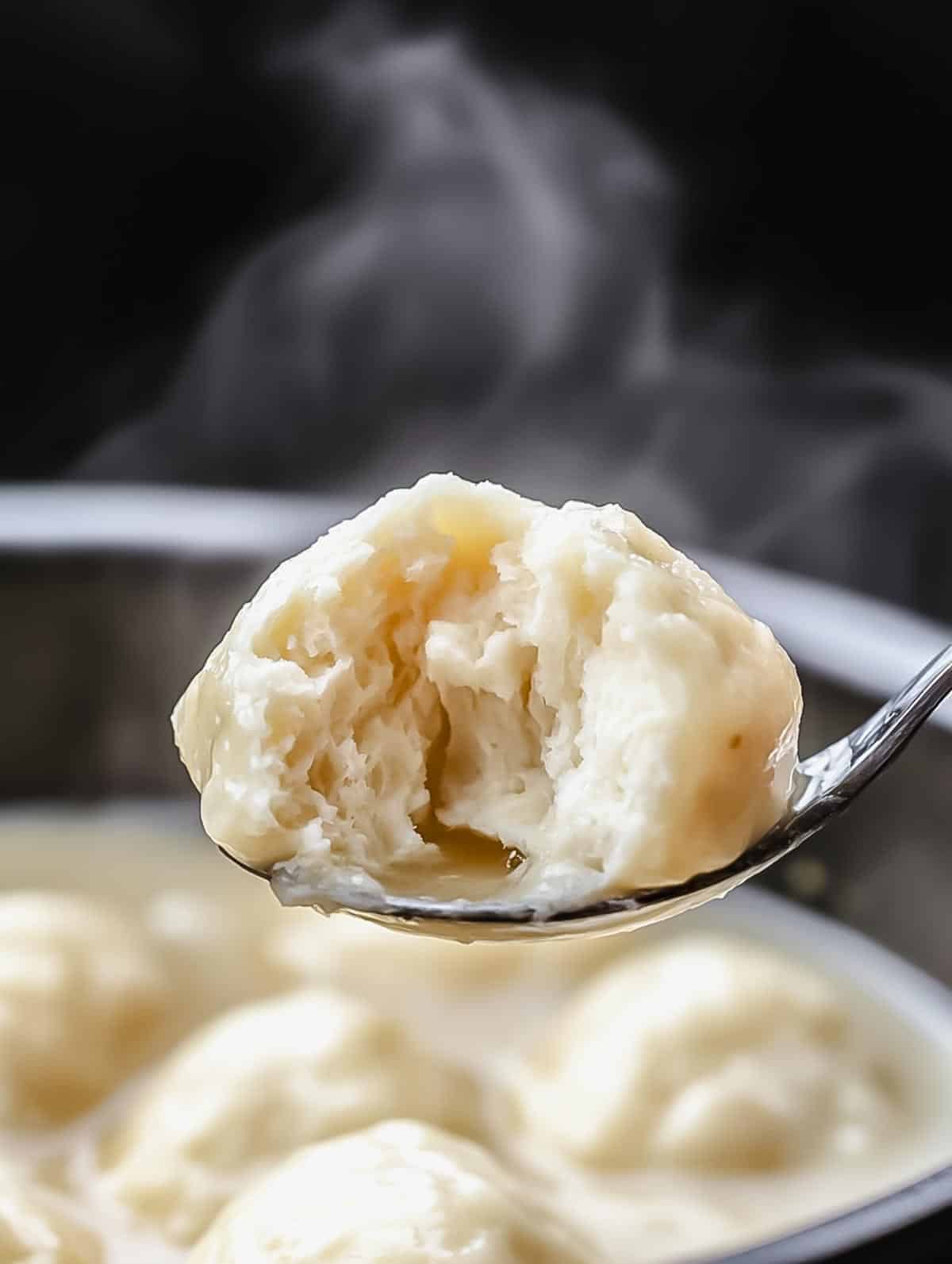
A close-up of a perfectly cooked dumpling with a fluffy interior, held on a spoon above the soup.
  1. Add the Chicken and Finish Cooking: After 15 minutes, uncover the pot, stir the dumplings gently, and add the shredded chicken back into the soup. Cover the pot again and cook for an additional 5 minutes. To check if the dumplings are done, cut one in half-it should be fully cooked through like a mini biscuit. If not, cover and cook for another 5 minutes until the dumplings are light and fluffy inside.
A close-up shot of chicken and dumpling soup with tender shredded chicken, fluffy dumplings, and vibrant carrots in a creamy broth.
  1. Serve: Once everything is cooked, turn off the heat and ladle your hearty chicken and dumpling soup into bowls. Serve immediately and enjoy!

Hint:

For perfectly tender dumplings, make sure your butter stays cold when mixing it into the flour. Cold butter creates pockets of steam as the dumplings cook, making them light and fluffy. Also, resist the urge to peek while the dumplings steam-keeping the lid on traps the steam and ensures they cook evenly!

Substitutions

If you'd like to make a few swaps in this recipe, there are plenty of options! First, you can easily substitute chicken thighs for chicken breasts if you prefer a richer flavor and more tender meat.

Additionally, if you're dairy-free, you can replace the butter with coconut oil or plant-based butter-just be sure to keep it cold to maintain the dumplings' fluffy texture. For those looking to cut out dairy entirely, lactose-free whole milk is the best option, though it's important to note it may alter the taste a little.

Similarly, if gluten is a concern, you can swap the all-purpose flour for a 1:1 gluten-free flour blend while ensuring your baking powder is also gluten-free.

Finally, if you're out of chicken stock, vegetable stock makes a great alternative, offering a lighter broth while still delivering a hearty and comforting base for the soup.

Variations

This chicken and dumpling soup recipe is versatile, allowing you to customize it to your preferences.

For a heartier twist, you can add diced potatoes or parsnips to the mirepoix, giving the soup extra body and flavor. For a fresh twist, toss in some fresh peas, green beans, or even corn during the last 10 minutes of cooking for a pop of sweetness.

If you're a fan of spice, consider adding a pinch of cayenne pepper or a few dashes of hot sauce to give the soup a little heat.

Lastly, to create a more rustic dish, you can use bone-in chicken thighs or legs, simmering them longer in the broth to impart even more flavor before shredding. These variations allow you to tweak the soup to suit your tastes while still enjoying its comforting, classic foundation.

Equipment

Equipment

To make this chicken and dumpling soup, you'll need a few essential tools to ensure the process goes smoothly:

  • A large Dutch oven or heavy-bottomed pot for even heat distribution and slow cooking. I recommend this one.
  • A pan for toasting the spices and making the roux.
  • A mortar and pestle to grind the toasted spices to perfection. This one works great. If you don't have one, a rolling pin and ziplock bag will do in a pinch.
  • An electric mixer with a paddle attachment is ideal for quick and easy shredding of the chicken. Here's the one I use. If you prefer, you can also shred the chicken by hand with two forks.
  • A 1 oz cookie dough scoop for evenly portioning the dumplings, ensuring they all cook at the same rate. Grab yours here. Alternatively, a tablespoon works well too.
  • A meat thermometer to check the internal temperature of the chicken for safe cooking.
  • A fine mesh skimmer or spoon to skim impurities off the top of the broth as it simmers, resulting in a clearer soup.

These tools make the process straightforward and hassle-free, ensuring the best results with minimal effort!

Storage

For best results, I recommend storing the dumplings and broth separately to maintain their texture. Once the soup has cooled, transfer the broth and chicken to an airtight container and store in the refrigerator for up to 3 days. Store the dumplings in a separate container, also in the fridge. When you're ready to enjoy the leftovers, reheat the broth on the stovetop over low heat until warmed through, then add the dumplings in for the last few minutes to gently reheat without overcooking them.

If freezing, it's even more important to keep the broth and dumplings separate. The broth can be frozen in an airtight container for up to 3 months, but dumplings tend to lose their fluffy texture when frozen. To enjoy the soup later, simply thaw the broth in the refrigerator overnight and reheat it on the stove. You can make fresh dumplings when reheating for a perfect, hearty meal.

Top Tip

To get the most flavor out of your spices, always toast them before grinding. Toasting releases the essential oils, intensifying their aroma and flavor, which makes a big difference in your broth. Just be sure to keep an eye on them while toasting-they can burn quickly!

FAQ

Why are my dumplings dense and not fluffy?

Dense dumplings are usually the result of overmixing the dough or using warm butter. When making the dumpling dough, be sure to mix it just until it comes together and keep the butter cold. Overworking the dough can cause the dumplings to be tough, while cold butter creates steam pockets during cooking, resulting in light, fluffy dumplings.

What do I use to thicken my broth

To thicken the broth, use a roux made from equal parts butter and flour by weight (not volume). The roux is cooked until it reaches a nutty aroma, then slowly whisked with hot broth to form a smooth, thickened base for the soup.

Can I use water instead of chicken broth?

Yes, you can use water instead of chicken broth, but the flavor will be less rich. If you choose to use water, I recommend adding chicken bouillon or stock concentrate to enhance the flavor of the soup.

Why are my dumplings falling apart?

Dumplings can fall apart if they are overcooked. Be sure to steam them for 15-20 minutes with the lid on, without lifting the lid during cooking. If they are left in the broth for too long after steaming, they can begin to break down and lose their structure.

Related

Looking for other recipes like this? Try these:
Pairing

These are my favorite dishes to serve with Hearty Chicken and Dumpling Soup:

A Dutch oven filled with chicken and dumpling soup, featuring shredded chicken, fluffy dumplings, and carrots in a flavorful broth.

Hearty Chicken and Dumpling Soup

Taylor @ Cain Kitchen
Warm up with this classic chicken and dumpling soup recipe! Featuring tender chicken, fluffy homemade dumplings, and a rich, flavorful broth, this comforting dish is perfect for fall. Easy to follow and ideal for leftovers!
Print Recipe Pin Recipe
Prep Time 35 minutes mins
Cook Time 1 hour hr
Total Time 1 hour hr 35 minutes mins
Course Main Course
Cuisine American
Servings 6 servings
Calories 225 kcal

Equipment

  • dutch oven
  • small skillet
  • mortar & pestle or spice grinder
  • electric mixer with a paddle attachment
  • 1oz portion scoop
  • meat thermometer
  • fine mesh skimmer

Ingredients
  

For the Soup:

  • 3 whole carrots chopped
  • 1 onion chopped
  • 1 bunch of celery chopped
  • 4 cloves garlic pressed
  • 2 tablespoon butter
  • 2 quarts chicken stock
  • or Chicken bouillon as per package instructions for 2 quarts of liquid
  • 2 tablespoon dried parsley
  • 2 tablespoon dried oregano
  • 1 tablespoon dried basil
  • 1 bay leaf
  • 2 teaspoon fennel seeds
  • 1 teaspoon coriander seeds
  • 2 tablespoon crushed black peppercorns
  • 3 tablespoon salt
  • 2 chicken breasts

For the Roux:

  • 2 oz butter about 4 tablespoons
  • 2 oz flour scant ½ cup

For the Dumplings:

  • 2 cups all-purpose flour
  • 4 teaspoon baking powder
  • 1 teaspoon freshly cracked black pepper
  • 1 teaspoon salt
  • 1 teaspoon dried thyme
  • ¾ cup whole milk
  • 4 tablespoon cold butter

Instructions
 

Sauté the Mirepoix

  • Begin by melting the butter in a large pot or Dutch oven over medium heat. Add the chopped carrots, onion, celery, and pressed garlic. Cook for 5-7 minutes, stirring occasionally, until the onions are translucent.

Build the Broth

  • Add 2 quarts of chicken stock (or water) and the chicken bouillon to the pot. Stir to combine. While the broth heats, toast the dried parsley, oregano, basil, fennel seeds, coriander seeds, and crushed black peppercorns in a dry pan over medium heat until fragrant, about 2-3 minutes. Transfer the toasted spices to a mortar and pestle, grind them into a fine powder, and add to the broth along with the salt and bay leaf. Bring the mixture to a boil.

Par-Cook the Chicken

  • Once the broth is boiling, gently add the chicken breasts. Cook for about 10 minutes, or until the internal temperature of the chicken reaches 135°F. At this point, the chicken will be slightly undercooked-don't worry, it will finish cooking later. Remove the chicken from the broth, shred it coarsely using an electric mixer or by hand, and set it aside in the fridge while you finish the soup.

Thicken the Broth with a Roux

  • In a small pan, melt butter (about 2 ounces or 4 tablespoons) over medium heat. Add an equal weight of flour (2 ounces, or just under ½ cup), and cook the roux for about 5 minutes, stirring continuously until it takes on a nutty aroma.
  • Slowly whisk in a ladleful of hot broth from the pot into the roux, ensuring it remains smooth and lump-free. Gradually add more broth, whisking after each addition, until the mixture forms a thick sauce. Pour this back into the main pot and stir to incorporate. Allow the broth to boil for 20 minutes to let it thicken fully.

How to Skim the Broth:

  • While the broth simmers, you may notice impurities rising to the surface in the form of froth or small clumps. These are coagulated proteins and other particles from the chicken and vegetables. To skim, use a spoon or a fine mesh skimmer to gently remove these impurities as they gather on the surface. This will result in a clearer, more refined broth.

Make the Dumplings

  • While the broth continues to simmer, it's time to prepare the dumplings. In a large bowl, whisk together the flour, baking powder, black pepper, salt, and dried thyme. Shred the cold butter into the flour mixture (similar to how you would make biscuits). Use your hands or a fork to work the butter into the flour until the mixture resembles coarse crumbs. Slowly add the milk, stirring with a fork until a soft dough forms. Be careful not to overmix-you want the butter to stay in cold lumps for tender dumplings.

Cook the Dumplings

  • Using a small 1 oz scoop or spoon, gently drop the dumpling dough into the simmering broth. Be cautious of splashing! Stir gently to prevent the dumplings from sticking together. Lower the heat slightly, cover the pot, and allow the dumplings to steam for 15 minutes. Do not lift the lid during this time, as the steam is essential for cooking the dumplings evenly.

Add the Chicken and Finish Cooking

  • After the dumplings have cooked for 15 minutes, uncover the pot and gently stir. Add the shredded chicken back into the soup. Cover the pot again and let it simmer for an additional 5 minutes. Check the dumplings by cutting one open-it should have a fluffy, biscuit-like interior. If they are still doughy in the center, cover the pot and cook for another 5 minutes, or until the dumplings are fully cooked.

Serve

  • Once the dumplings are cooked and the chicken is heated through, turn off the heat. Serve your chicken and dumpling soup in bowls and enjoy the hearty flavors of this southern classic!
Keyword Chicken and dumpling soup, Chicken broth soup, Chicken dinner ideas, Chicken soup recipe, Comfort food recipe, Dutch oven soup recipe, Easy dumpling recipe, Fall soup recipe, Family dinner recipe, Hearty soup recipe, Homemade dumplings, Southern chicken and dumplings, Traditional Southern recipe

Chocolate Gingerbread Fudge

September 30, 2024 by Taylor @ Cain Kitchen Leave a Comment

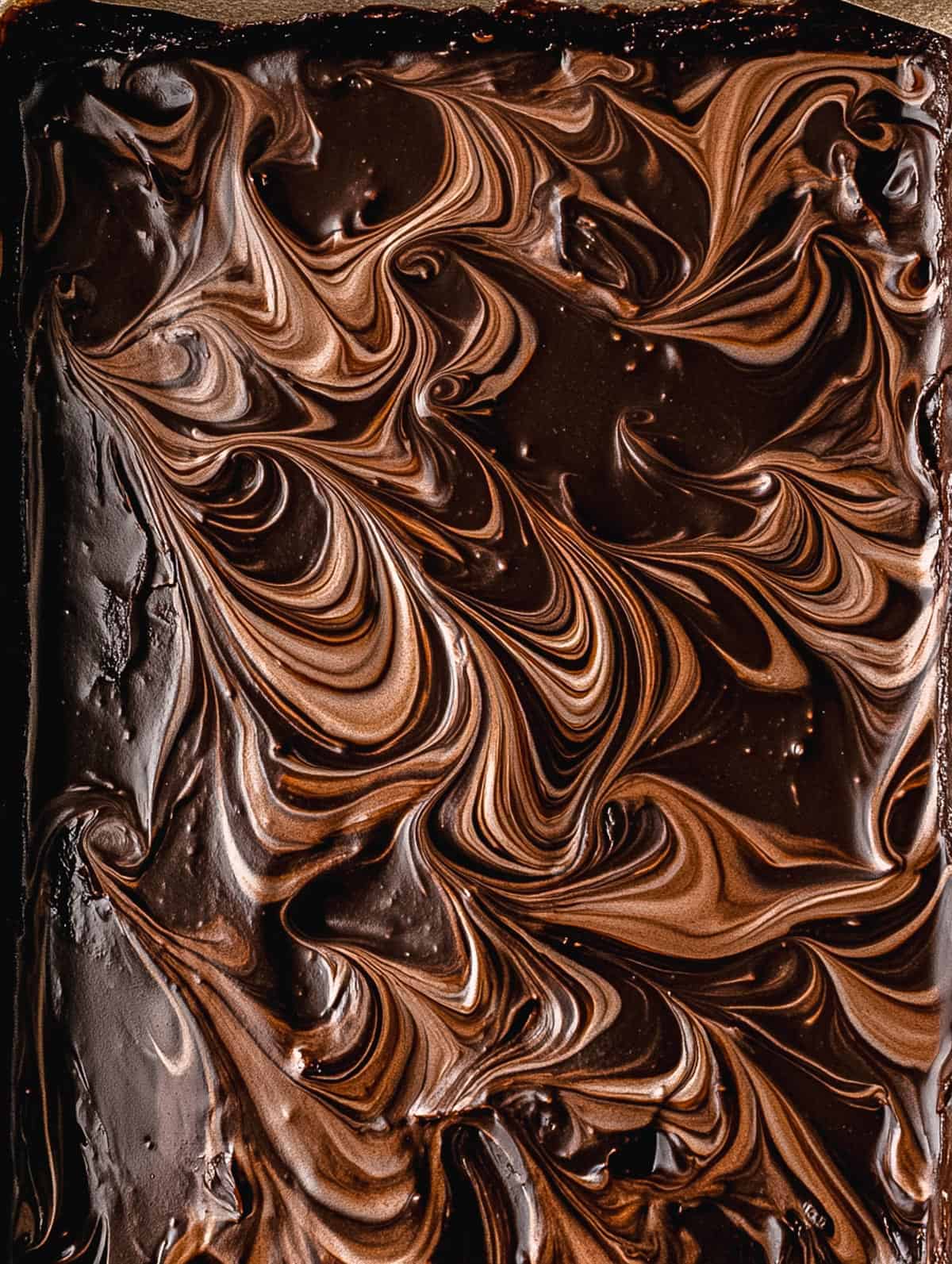
This Chocolate Gingerbread Fudge combines the richness of classic chocolate fudge with the cozy, spiced warmth of gingerbread. The result is a beautifully swirled, festive treat that's perfect for holiday gatherings or as a homemade gift. With its marbled layers of chocolate and gingerbread flavors, this fudge not only looks stunning but also tastes like a bite of holiday cheer.

Swirled chocolate gingerbread fudge squares on a marble slab.

At Cain Kitchen, I focus on creating approachable, delicious recipes for home cooks. While I'm not a trained pastry chef, my experience in the kitchen has led me to experiment with all kinds of flavors, and this Chocolate Gingerbread Fudge is one of my favorite twists on a classic. I test every recipe to ensure it's simple enough for anyone to make while delivering rich, indulgent flavors that feel special for the

A Perfect Holiday Gift or Shareable Treat

Homemade fudge makes the perfect holiday gift, and this Chocolate Gingerbread Fudge is no exception. Its blend of rich chocolate and warm gingerbread spices makes it an ideal treat to share with family and friends. Simply wrap it up in festive packaging for a thoughtful, personal gift.

If you're planning a holiday dessert spread, this fudge will stand out alongside other favorites, like my Best Homemade Chocolate Walnut Fudge or the indulgent Hazelnut Praline Chocolate Fudge. For a bit of seasonal flair, you might want to add the creamy Pumpkin White Chocolate Fudge or the festive Christmas Peppermint Fudge. Together, they make a delicious assortment of holiday sweets perfect for gifting or sharing with loved ones.


[feast_advanced_jump_to]

Ingredients

In this Chocolate Gingerbread Fudge, a few key ingredients are used not only for flavor but to ensure the perfect texture and consistency. Corn syrup, for instance, plays a vital role in preventing sugar crystallization, which helps keep the fudge smooth and creamy instead of grainy. If you've ever had a fudge that feels gritty, it's because the sugar crystallized during cooking-corn syrup helps avoid that.

Molasses is another unique ingredient in the gingerbread layer, providing that deep, rich sweetness essential to the gingerbread flavor. It's a syrupy byproduct of sugarcane processing and brings a bold, earthy sweetness that pairs perfectly with warm spices like cinnamon, ginger, nutmeg, and cloves. These spices, often associated with holiday baking, turn this fudge into a festive treat. If you've never worked with molasses before, you'll find it adds a distinctive, slightly smoky sweetness that enhances the gingerbread experience.

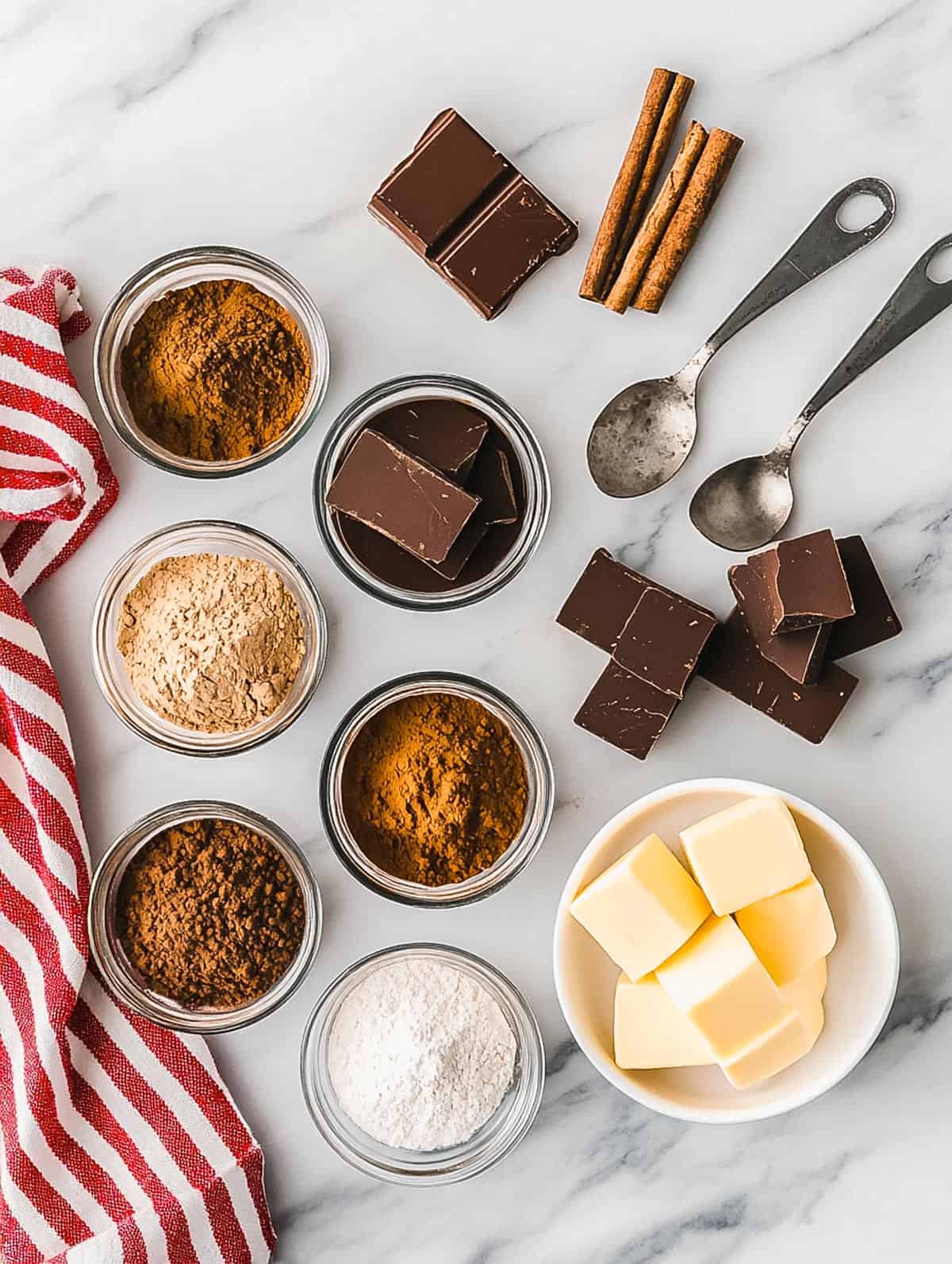
Assorted baking ingredients on a marble countertop.
  • For the Chocolate Layer:
  • Sugar
  • Heavy cream
  • Corn syrup
  • Unsweetened baking chocolate, chopped
  • Unsalted butter, room temperature
  • Vanilla extract
  • Salt
  • For the Gingerbread Layer:
  • Sugar
  • Heavy cream
  • Milk chocolate baking chocolate, chopped
  • Unsalted butter, room temperature
  • Molasses
  • Vanilla extract
  • Ground cinnamon
  • Ground ginger
  • Ground nutmeg
  • Ground cloves
  • Salt

See recipe card for quantities.

Instructions

Steam rising from a saucepan on the stove.
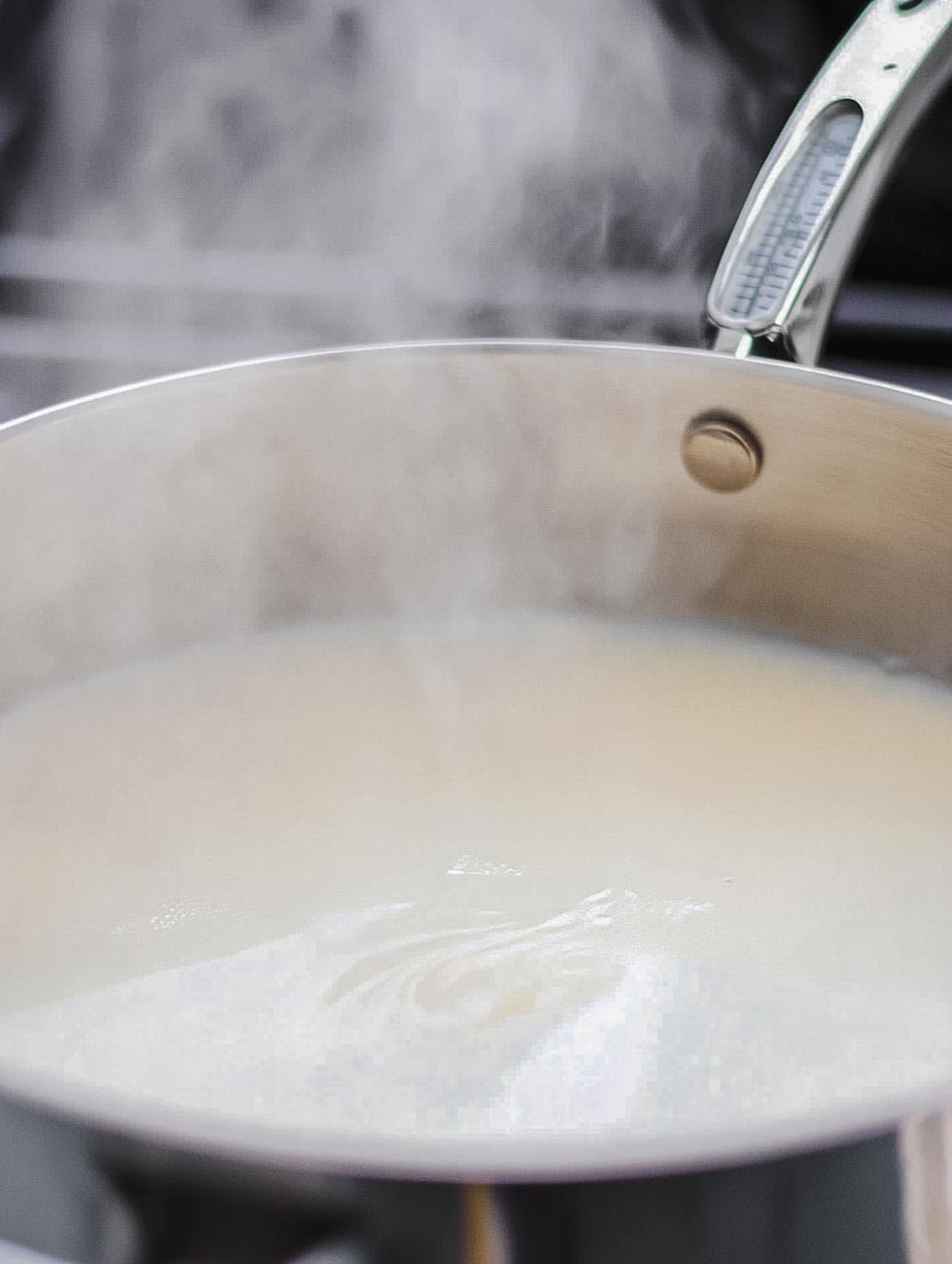
  1. Heat and Dissolve the Sugar: In a medium saucepan, combine the heavy cream, sugar, and corn syrup for the chocolate layer. Heat over medium, gently swirling the pan to dissolve the sugar evenly into the cream, preventing crystallization. Heat until the mixture reaches 240°F (hard-ball stage), using a candy thermometer. If it bubbles too much, briefly remove it from the heat, then return it to the burner.
Melted chocolate being stirred in a bowl.
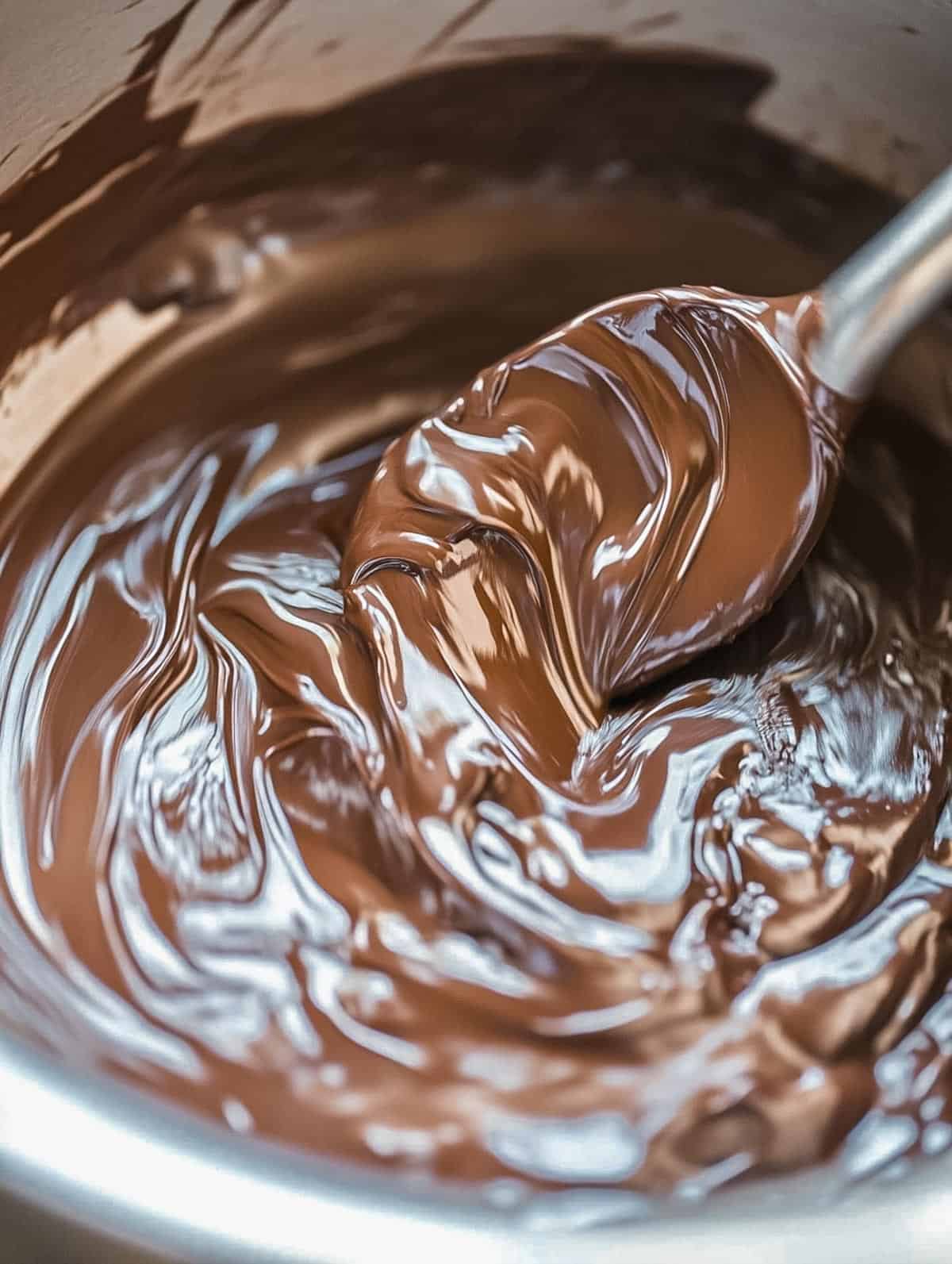
  1. Add Chocolate and Cool: Remove the saucepan from heat and stir in the chopped unsweetened chocolate until fully melted and smooth. Let the mixture cool undisturbed to 110°F to avoid graininess. Repeat these steps for the gingerbread layer, substituting molasses for corn syrup, and using milk chocolate instead of unsweetened chocolate.
Pouring melted chocolate fudge into a lined baking pan.
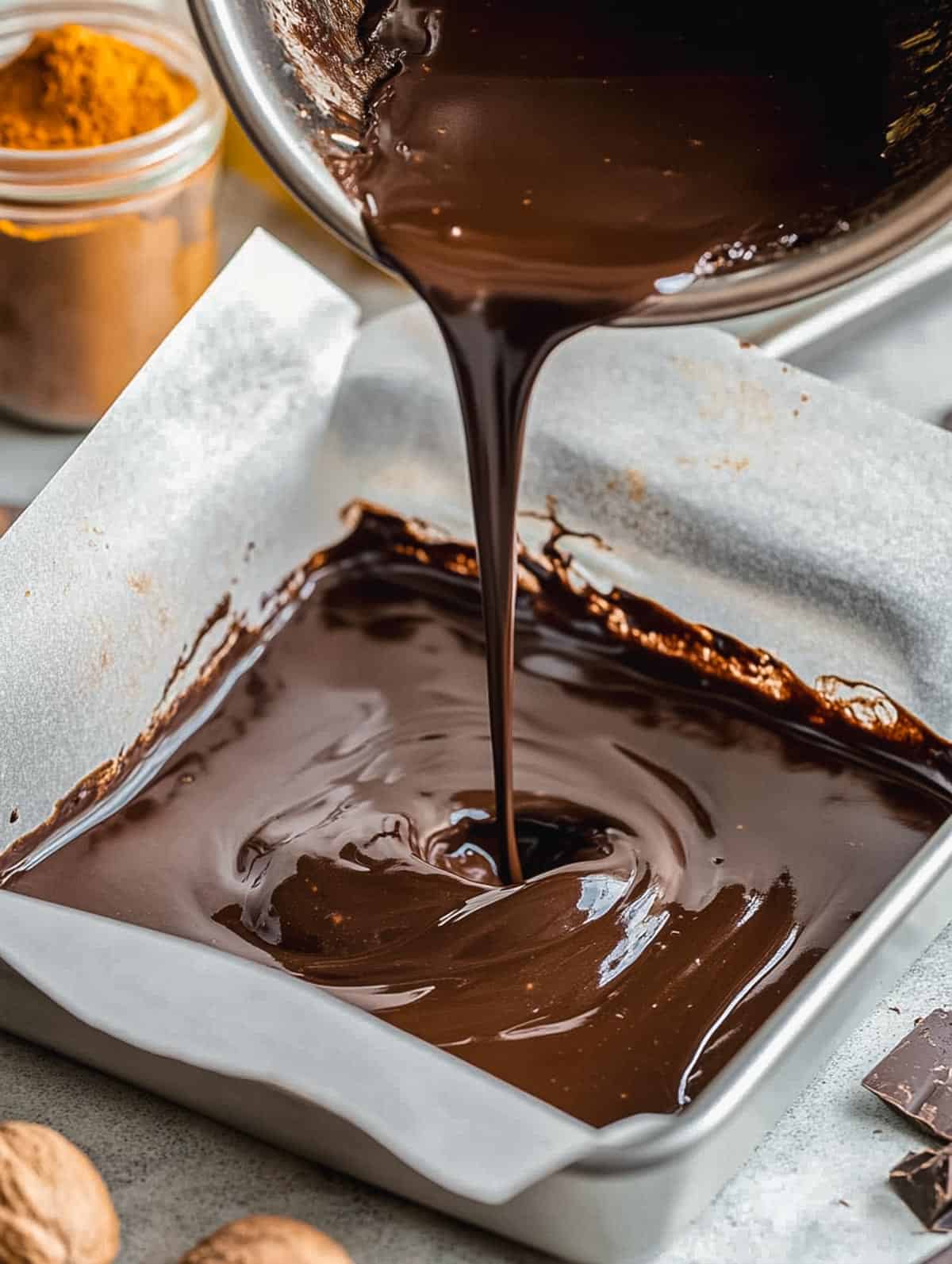
  1. Add Butter, Spices, and Aerate: After both fudge mixtures have cooled to 110°F, transfer each to separate mixing bowls. For the chocolate fudge, add room-temperature butter, vanilla extract, and salt, then mix on low speed until the fudge thickens and turns matte (about 5-8 minutes). For the gingerbread fudge, mix in the butter, vanilla, spices (cinnamon, ginger, nutmeg, cloves), and salt. Finally, aerate the gingerbread fudge the same way until it thickens and loses its shine.
Hand swirling chocolate and gingerbread fudge with a toothpick.
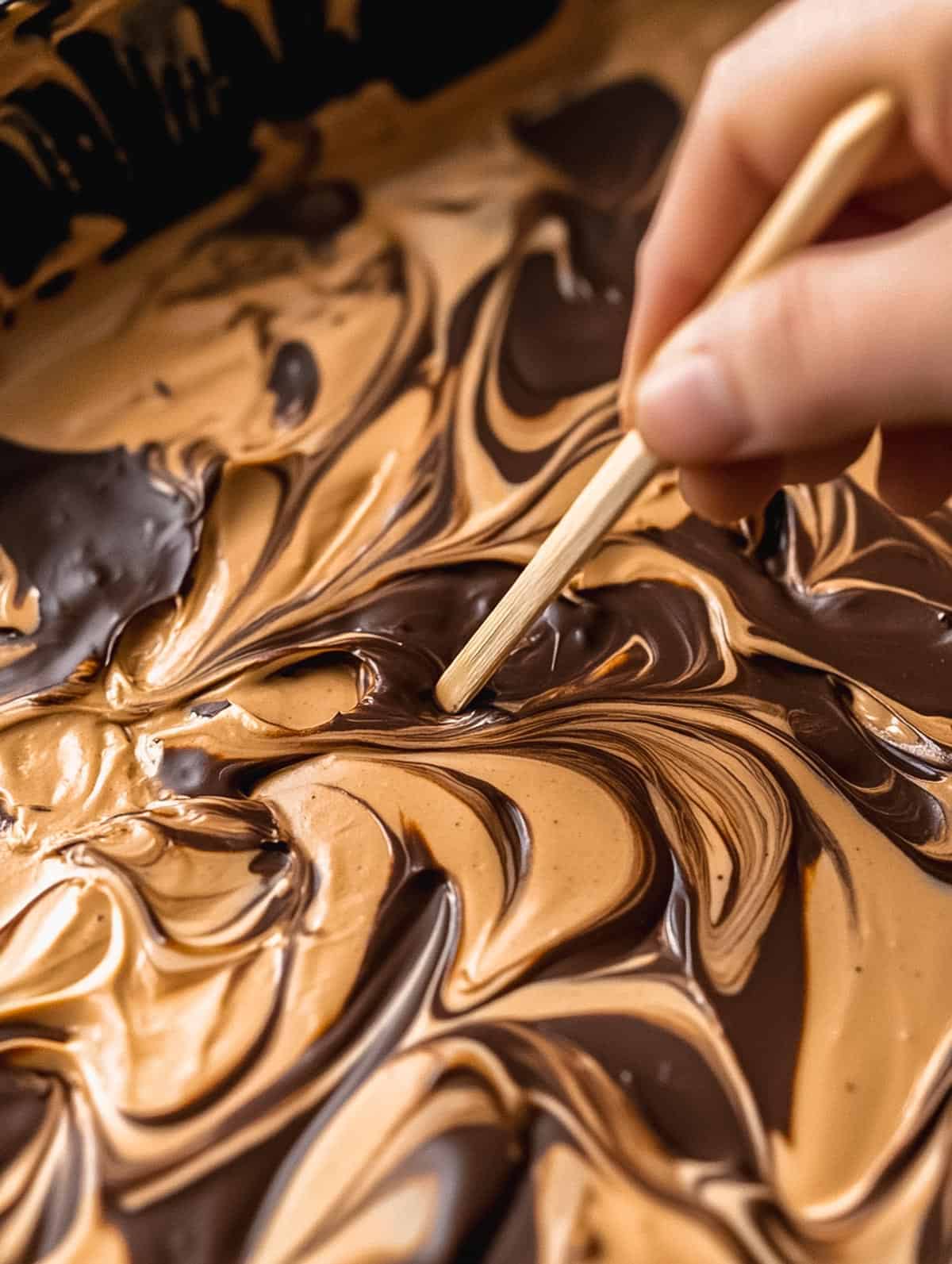
  1. Swirl the Layers: Line an 8x8-inch baking pan with parchment paper, leaving an overhang for easy removal. Pour a thin layer of the aerated chocolate fudge into the pan, spreading it evenly. Next, drop spoonfuls of both the remaining chocolate and gingerbread fudges over the base layer, then swirl them together using a toothpick or skewer to create a marbled effect.
Swirled chocolate gingerbread fudge in a baking tray.
  1. Set the Fudge:
    Let the fudge sit at room temperature for 2-3 hours until fully set. Avoid refrigerating, as this can make the fudge too firm or grainy.
Squares of swirled chocolate and gingerbread fudge on a marble slab.
  1. Slice and Serve:
    Once set, lift the fudge out of the pan using the parchment overhang. Cut into squares with a sharp knife, warming the knife slightly for clean edges. Store any leftovers in an airtight container at room temperature for up to two weeks.

Hint:

For a cleaner swirl and more distinct marbling, try not to overmix when swirling the chocolate and gingerbread layers. A few gentle swirls with a toothpick will give you beautiful, defined patterns. Over-swirling can blend the layers too much and lose the striking contrast!

Substitutions

For a vegan version of Chocolate Gingerbread Fudge, you can easily replace the heavy cream with full-fat coconut milk and substitute the butter with coconut oil. These changes will still provide a rich, creamy texture; however, they will also impart a mild coconut flavor, slightly altering the overall taste of the fudge.

When substituting heavy cream with full-fat coconut milk, use an equal amount-½ cup of coconut milk for ½ cup of heavy cream. It's important to use the thick, creamy part of the coconut milk for the best texture. This ensures the fudge maintains its smooth consistency while also adding a subtle tropical note that pairs well with the warm spices in the gingerbread layer.

Similarly, for the unsalted butter, you can substitute an equal amount of coconut oil. You can choose refined coconut oil if you prefer a more neutral flavor or opt for unrefined coconut oil if you want a more pronounced coconut taste. The coconut oil will help keep the fudge soft and creamy, just like butter, but with the coconut essence becoming more noticeable, especially when combined with the coconut milk.

Overall, keep in mind that these substitutions will slightly alter the flavor profile, giving the fudge a delicate coconut undertone. While it's not an exact match for the traditional version, it's still a delicious alternative for those seeking a dairy-free or vegan option.

Variations

For a Nutty Delight, you can add ½ cup of toasted nuts like pecans, hazelnuts, or almonds to either the chocolate or gingerbread layer. Toasting the nuts brings out their rich flavor and adds a satisfying crunch. If you're a fan of nutty treats, you might also enjoy my Best Homemade Chocolate Walnut Fudge, which incorporates walnuts for added texture.

Looking for a little heat? Try a Spicy Kick by adding a pinch of cayenne pepper or black pepper to the gingerbread layer. The subtle heat plays off the sweetness of the fudge and the warmth of the spices. For a festive twist with a different flavor profile, check out my Christmas Peppermint Fudge, which offers a cool and minty take on holiday fudge.

Equipment

To make this chocolate gingerbread fudge, you'll need some essential equipment. Start with a medium saucepan to heat the sugar and cream. For accuracy, a candy thermometer is key-this traditional version clips to the edge of the pan, or try the digital option for faster readings. A mixing bowl with a paddle attachment will help achieve that creamy texture. Use a spatula to transfer the fudge into an 8x8-inch baking pan lined with parchment, and toast your walnuts in an oven preheated to 350°F.

Storage

To store your chocolate gingerbread fudge, keep it in an airtight container at room temperature for up to two weeks. Avoid refrigeration, as it can cause the fudge to harden or become grainy. If you need to store it longer, wrap the fudge tightly in plastic wrap and place it in a freezer-safe bag. It can be frozen for up to three months. When ready to enjoy, allow the fudge to come to room temperature for the best texture and flavor.

Top Tip

For perfectly creamy fudge, make sure to let the mixture cool undisturbed to 110°F before mixing. This step stabilizes the sugar, preventing unwanted crystallization and ensuring a smooth, melt-in-your-mouth texture. Skipping or rushing this cooling phase can lead to grainy fudge, so patience is key!

FAQ

What can I use instead of molasses in the gingerbread layer?

If you don't have molasses, dark corn syrup or maple syrup can be used as substitutes, though the flavor will be slightly different.

Can I make this recipe dairy-free or vegan?

Yes, you can make a dairy-free or vegan version by replacing the heavy cream with full-fat coconut milk and the butter with coconut oil. See the Substitutions section for more details.

What's the best way to swirl the layers together?

After pouring the base layer, drop spoonfuls of the remaining chocolate and gingerbread fudges randomly on top. Use a toothpick or skewer to gently swirl the two layers together. Be careful not to over-swirl, as that can blend the layers too much and reduce the marbled effect.

Related

Looking for other recipes like this? Try these:
Pairing

These are my favorite dishes to serve with chocolate gingerbread fudge:

Swirled chocolate gingerbread fudge squares on a marble slab.

Chocolate Gingerbread Fudge

Taylor @ Cain Kitchen
A delicious holiday treat combining rich chocolate fudge with a warm, spiced gingerbread swirl.
Print Recipe Pin Recipe
Cook Time 10 minutes mins
Resting Time 20 minutes mins
Total Time 30 minutes mins
Course Dessert
Cuisine American
Servings 24 pieces
Calories 250 kcal

Equipment

  • 2 medium saucepan
  • 2 spatula
  • 1 Electric Mixer with Paddle Attachement
  • 1 8x8 pan or dish
  • parchment paper
  • measuring spoons

Ingredients
  

For the Chocolate Layer:

  • 1 cup sugar
  • ½ cup heavy cream
  • 1 tablespoon corn syrup
  • 1 cup unsweetened baking chocolate chopped
  • ¼ cup unsalted butter room temperature
  • 1 teaspoon vanilla extract
  • ½ teaspoon salt

For the Gingerbread Layer:

  • ½ cup sugar
  • ½ cup heavy cream
  • 1 cup milk chocolate baking chocolate chopped
  • ¼ cup unsalted butter room temperature
  • 2 tablespoon molasses
  • 1 teaspoon vanilla extract
  • 1 teaspoon ground cinnamon
  • ½ teaspoon ground ginger
  • ¼ teaspoon ground nutmeg
  • ¼ teaspoon ground cloves
  • ½ teaspoon salt

Instructions
 

Heat and Dissolve the Sugar:

  • In a medium saucepan, combine the heavy cream, sugar, and corn syrup for the chocolate layer. Heat over medium, gently swirling the pan to dissolve the sugar evenly into the cream, preventing crystallization. Heat until the mixture reaches 240°F (hard-ball stage), using a candy thermometer. If it bubbles too much, briefly remove it from the heat, then return it to the burner.
    1 cup sugar, ½ cup heavy cream, 1 tablespoon corn syrup

Add Chocolate and Cool:

  • Remove the saucepan from heat and stir in the chopped unsweetened chocolate until fully melted and smooth. Let the mixture cool undisturbed to 110°F to avoid graininess. Repeat these steps for the gingerbread layer, substituting molasses for corn syrup, and using milk chocolate instead of unsweetened chocolate.
    1 cup unsweetened baking chocolate, ½ cup sugar, ½ cup heavy cream, 2 tablespoon molasses, 1 cup milk chocolate baking chocolate

Add Butter, Spices, and Aerate:

  • Once both fudge mixtures have cooled to 110°F, transfer each to separate mixing bowls. For the chocolate fudge, add room-temperature butter, vanilla extract, and salt, then mix on low speed until the fudge thickens and turns matte (about 5-8 minutes). For the gingerbread fudge, mix in the butter, vanilla, spices (cinnamon, ginger, nutmeg, cloves), and salt. Aerate the gingerbread fudge the same way, until it thickens and loses its shine.
    ¼ cup unsalted butter, 1 teaspoon vanilla extract, ½ teaspoon salt, ¼ cup unsalted butter, 1 teaspoon vanilla extract, 1 teaspoon ground cinnamon, ½ teaspoon ground ginger, ¼ teaspoon ground nutmeg, ¼ teaspoon ground cloves, ½ teaspoon salt

Swirl the Layers:

  • Line an 8x8-inch baking pan with parchment paper, leaving overhang for easy removal. Pour half of the aerated chocolate fudge into the pan, spreading it evenly. Drop spoonfuls of both the remaining chocolate and gingerbread fudges over the base layer, then swirl them together using a toothpick or skewer to create a marbled effect.

Set the Fudge:

  • Let the fudge sit at room temperature for 2-3 hours until fully set. Avoid refrigerating, as this can make the fudge too firm or grainy.

Slice and Serve:

  • Once set, lift the fudge out of the pan using the parchment overhang. Cut into squares with a sharp knife, warming the knife slightly for clean edges. Store any leftovers in an airtight container at room temperature for up to two weeks.
Keyword Best homemade fudge, Creamy fudge recipe, Easy fudge recipe, Fudge without grainy texture, Smooth chocolate fudge, Traditional fudge recipe

Best Homemade Chocolate Walnut Fudge Recipe

September 29, 2024 by Taylor @ Cain Kitchen Leave a Comment

Looking for the ultimate homemade fudge? This classic chocolate walnut fudge recipe creates a smooth, creamy texture with the perfect nutty crunch. Whether you're a novice or an expert, this easy-to-follow guide will help you make an indulgent, melt-in-your-mouth fudge that's ideal for gifting or enjoying at home.

Chocolate walnut fudge stacked on a plate, showing walnut pieces inside.
Neatly cut squares of chocolate walnut fudge on a marble surface, topped with whole walnuts, showcasing the rich texture and nutty topping.

Why Chocolate Walnut Fudge

Though my background is primarily in savory cooking, my experience in pastry and my understanding of food chemistry have shaped this detailed guide to making classic chocolate walnut fudge. I've combined my knowledge of recipe development with practical techniques to help you avoid common pitfalls and ensure a creamy, smooth texture every time. This recipe reflects my passion for experimenting in the kitchen and offers a foolproof approach to creating an indulgent homemade treat.

Chocolate walnut fudge is a timeless classic, loved for its rich, smooth texture and satisfying crunch from roasted walnuts. This recipe is designed to guide you step-by-step, ensuring your fudge turns out creamy, decadent, and perfectly set. Whether you're preparing treats for the holidays, a special occasion, or just a sweet indulgence for yourself, this chocolate walnut fudge recipe will become your go-to for impressing friends and family.

This chocolate walnut fudge recipe is perfect for seasonal gifting or sharing. Its rich, creamy texture and festive appeal make it an ideal homemade treat for the holidays. Whether you're packaging it in a decorative tin for a thoughtful gift to a teacher, dropping it off at the local firehouse as a heartfelt thank you, or sharing it with friends and family, this fudge is sure to spread joy. It's a comforting, crowd-pleasing sweet that shows just how much you care during the holiday season.

More from Cain Kitchen

If you love this classic chocolate walnut fudge, you'll definitely want to explore more indulgent fudge and cookie recipes. For a delightful pairing, try our Maple Brown Sugar Pecan Cookies with Maple Fudge. Looking for more fudge inspiration? Check out Chocolate Gingerbread Fudge, Earl Grey Fudge, or the crunchy goodness of Honeycomb Fudge with Pistachio Crumble. For something rich and bold, Espresso Fudge with Baileys and Hazelnut Praline Chocolate Fudge are sure to impress. Seasonal favorites like Pumpkin White Chocolate Fudge, Christmas Peppermint Fudge, or the indulgent Salted Caramel Bourbon Banana Fudge are perfect for holiday celebrations!

[feast_advanced_jump_to]

Ingredients

For this classic chocolate walnut fudge, we're using simple yet essential ingredients that come together to create the perfect balance of rich, creamy chocolate and crunchy walnuts. The base starts with sugar, corn syrup, and heavy cream, which create a smooth texture while preventing unwanted crystallization. Baking chocolate adds the rich cocoa flavor, while unsalted butter enhances the creaminess. Vanilla extract brings a subtle warmth, and a pinch of salt balances the sweetness. Finally, roasted walnuts add a delightful crunch, making this fudge irresistible!

Corn syrup is a thick, sweet syrup derived from cornstarch. It contains glucose, which makes it different from regular table sugar (sucrose). This glucose component is key in candy-making because it interferes with the crystallization of sucrose, which can cause grainy textures. In fudge, adding corn syrup ensures that the sugar dissolves smoothly into the mixture, giving it that creamy, melt-in-your-mouth consistency. While it doesn't contribute much in terms of flavor, its role is crucial for achieving the perfect fudge texture.

When making fudge, unsweetened baking chocolate is ideal because it offers pure cocoa flavor without added sugar. This allows you to control the sweetness of your fudge and ensures a deep, rich chocolate taste. Its smooth melting properties make it easy to incorporate into the mixture, providing a creamy, indulgent texture. By using unsweetened baking chocolate, you get the best balance between intense cocoa flavor and the creamy sweetness of fudge. If you want to learn more about how I choose which chocolate to use in my recipes, check out Behind the Ingredient: Exploring Chocolate and Cocoa.

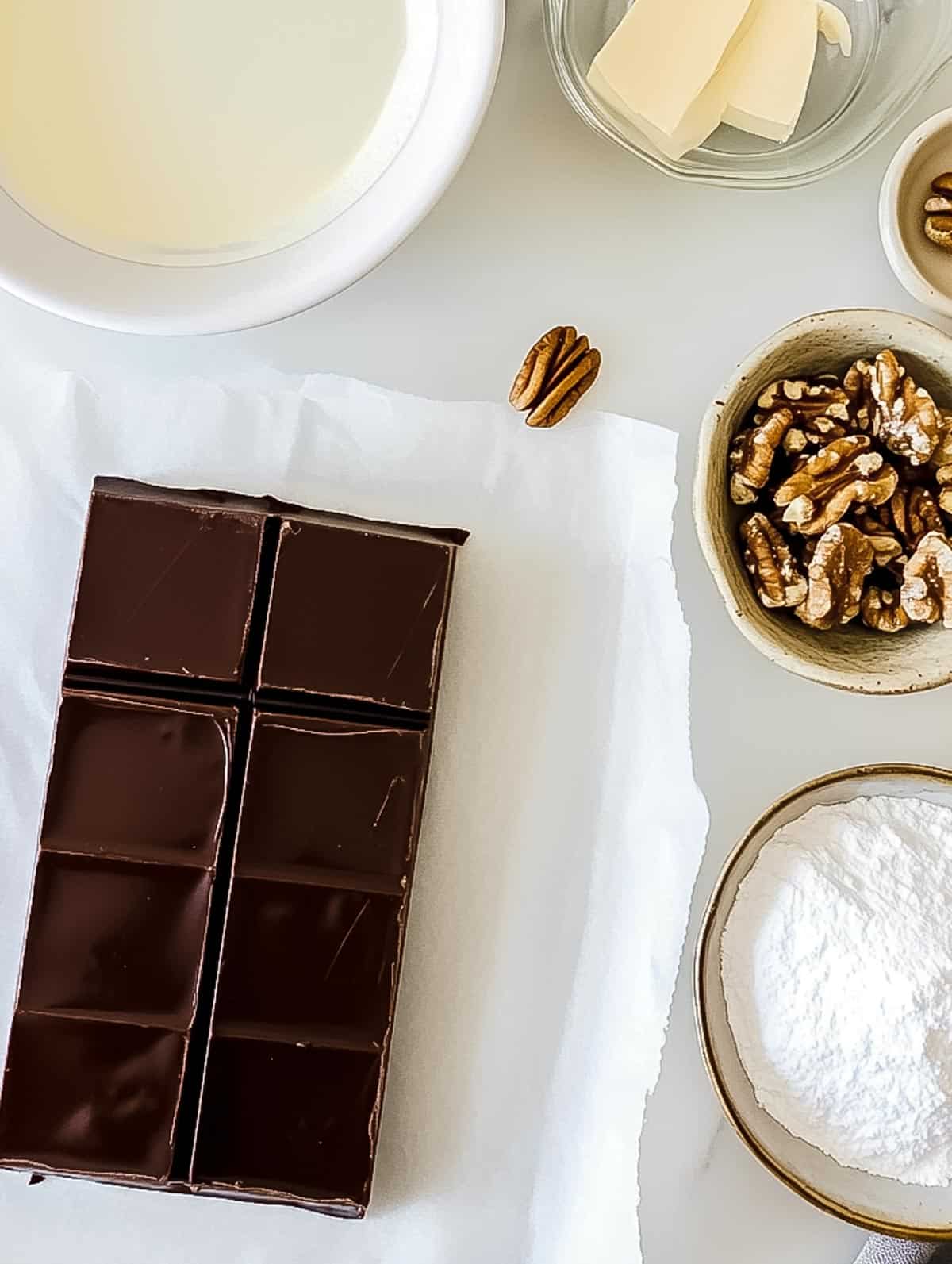
Ingredients for chocolate walnut fudge, including chocolate, walnuts, butter, and cream.
  • Here's your ingredient list without quantities:
  • Corn syrup
  • Sugar
  • Heavy cream
  • Unsweetened baking chocolate
  • Unsalted butter (room temperature)
  • Vanilla extract
  • Salt
  • Walnuts (chopped and roasted)

See recipe card for quantities.

Instructions

Use this section for process shots, alternating between the step and image showing the step. Users don't like seeing process shots cluttering up the recipe card, so include your process shots here.

Cream heating in a saucepan, gently bubbling on the stove.
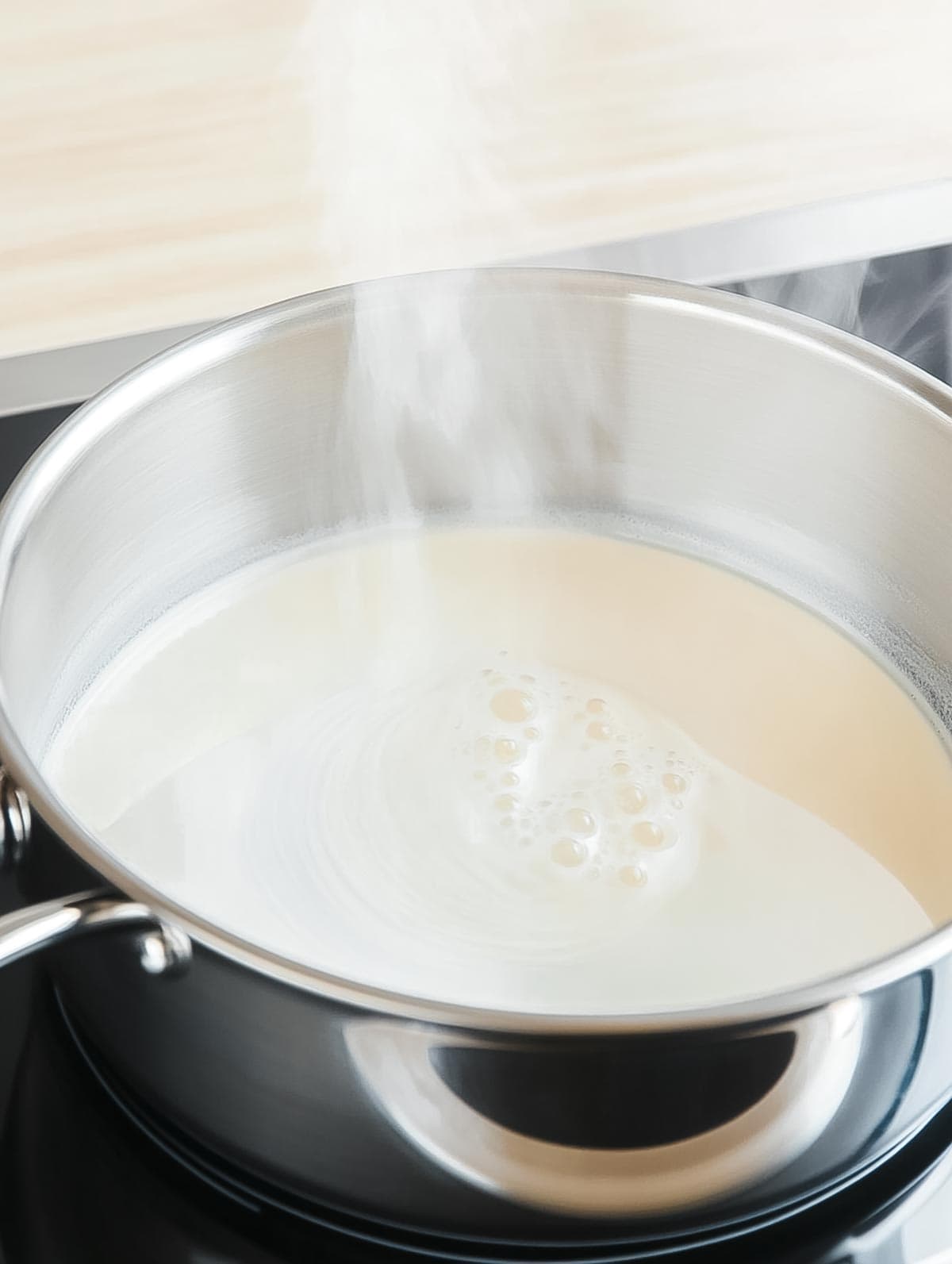
  1. Step 1: In a medium saucepan, combine the heavy cream, sugar, and corn syrup. Heat over medium, slowly swirling the pan to dissolve the sugar evenly into the cream. Swirling helps prevent the sugar from sticking to the sides of the pan, which could lead to crystallization. Heat until the mixture reaches 240°F, or the hard-ball stage. Use a candy thermometer to monitor the temperature closely. If the mixture begins to rise and bubble too much, briefly remove it from heat until it calms down, then return it to the burner.
Swirls of melted chocolate in a mixing bowl being stirred.
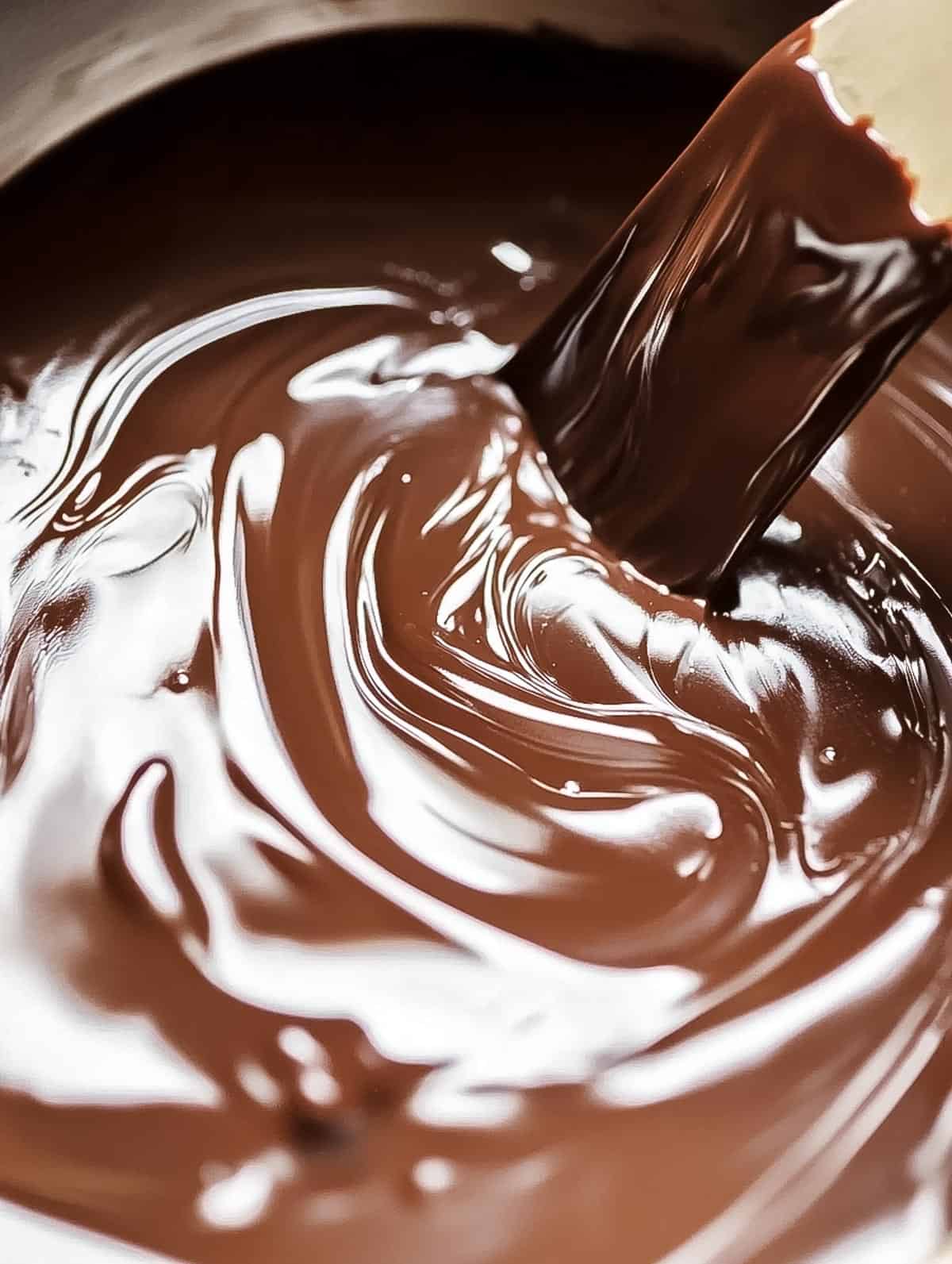
  1. Step 2: Once the sugar mixture reaches 240°F, remove the saucepan from the heat. Immediately stir in the unsweetened baking chocolate. Stir continuously until the chocolate has completely melted and the mixture is smooth and uniform. Be sure to mix well, as any unmelted chocolate can cause lumps in the final fudge. The chocolate will give the fudge its rich cocoa flavor, perfectly balancing the sweetness.
Melted chocolate cooling in a metal mixing bowl.
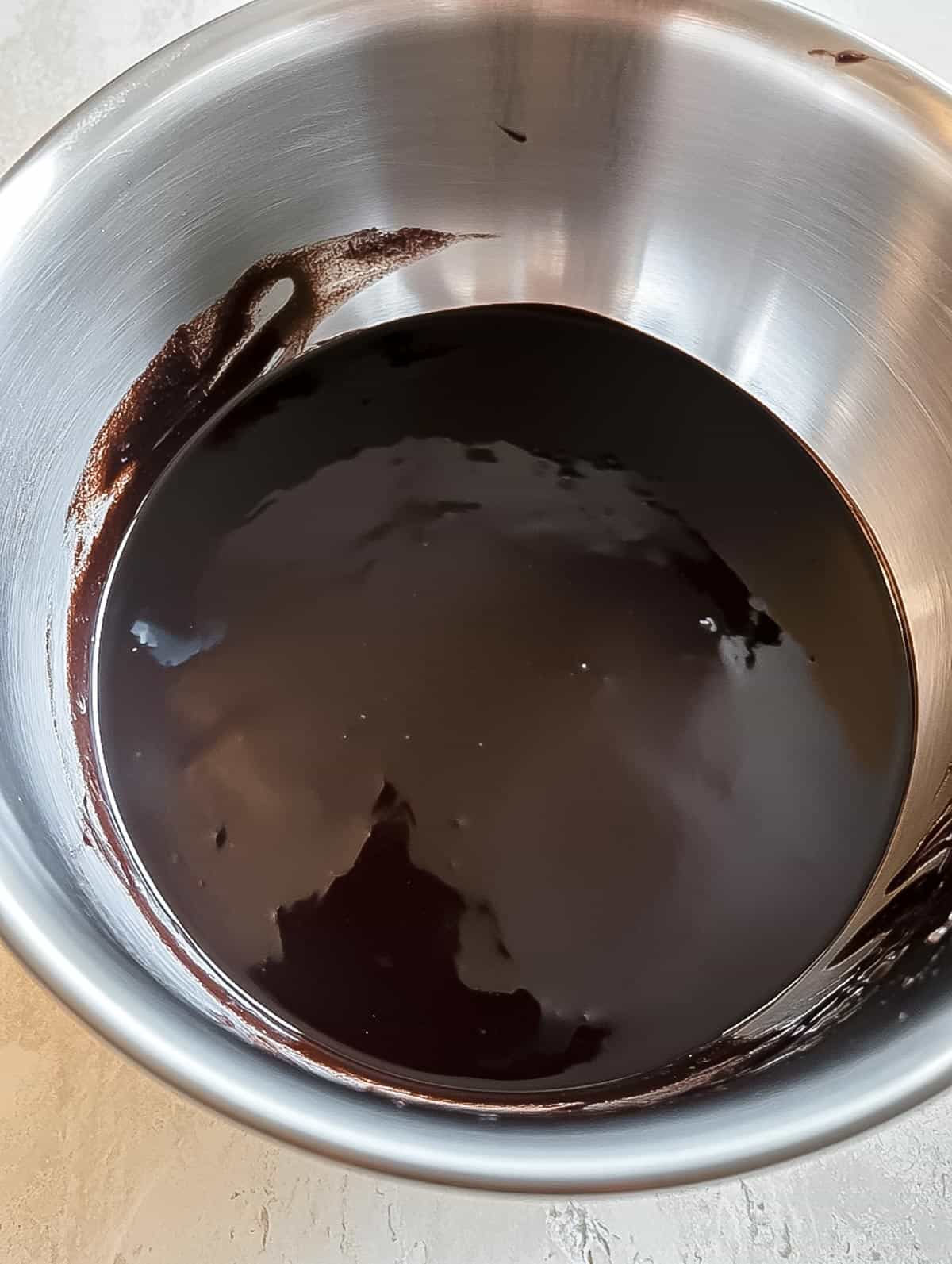
  1. Step 3: After stirring in the chocolate, let the mixture cool undisturbed until it reaches 110°F. This cooling phase is crucial for stabilizing the sugar and preventing crystallization, which ensures your fudge will have a smooth texture. Avoid stirring during this time, as it can cause premature sugar crystallization and result in grainy fudge. Cooling can take around 20-30 minutes, so be patient. Use a candy thermometer to check the temperature, ensuring the mixture has cooled properly before moving to the next step.
Walnuts roasting on a baking sheet lined with parchment paper.
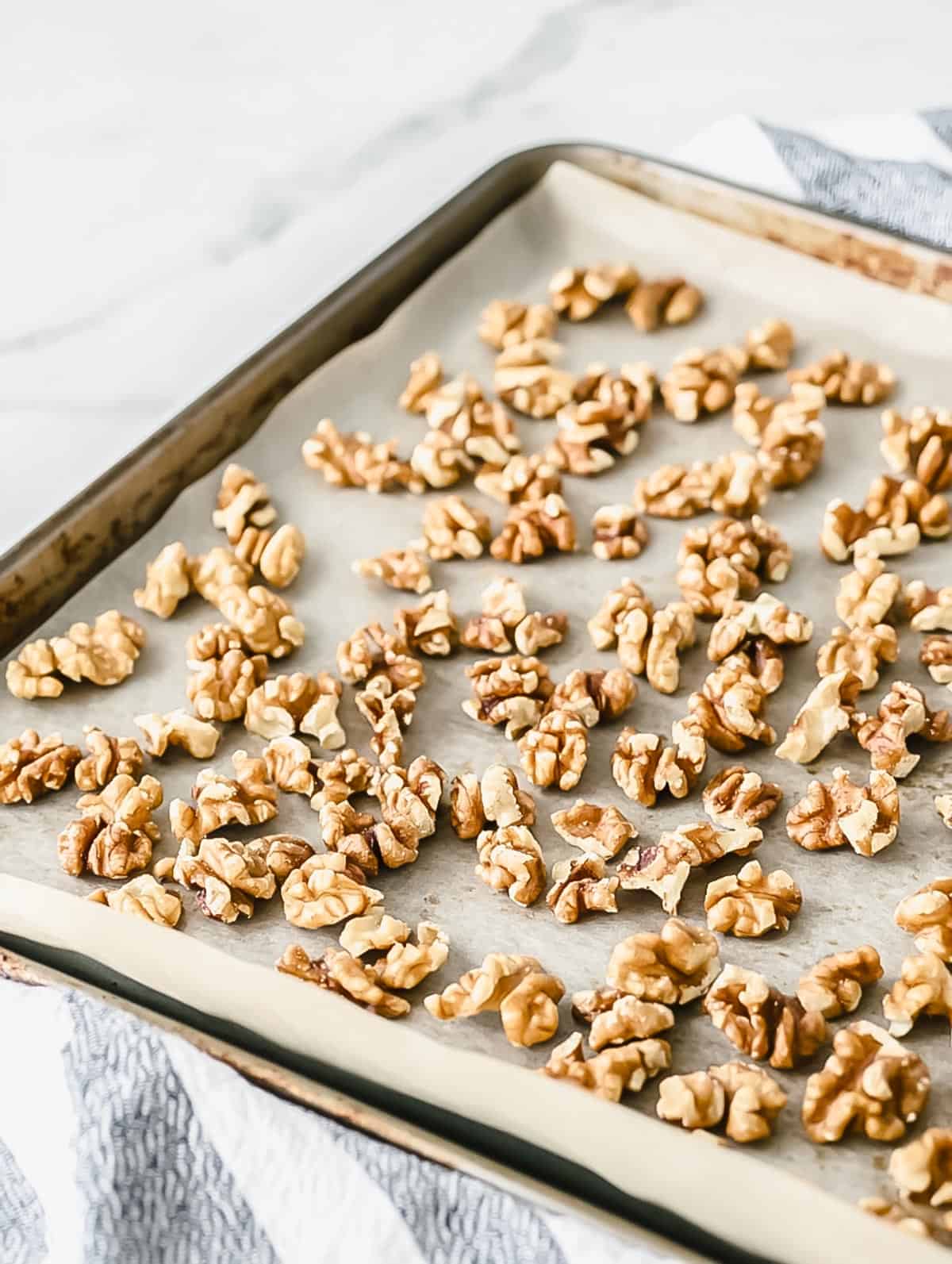
  1. Step 4: While the fudge mixture is cooling, preheat your oven to 350°F. Spread the chopped walnuts evenly on a baking sheet and roast for 7-10 minutes, tossing halfway through to ensure even browning. Roasting the walnuts enhances their flavor, giving them a toasty, rich depth that complements the sweetness of the fudge. Once they're fragrant and golden, remove them from the oven and let them cool slightly before chopping, if necessary.
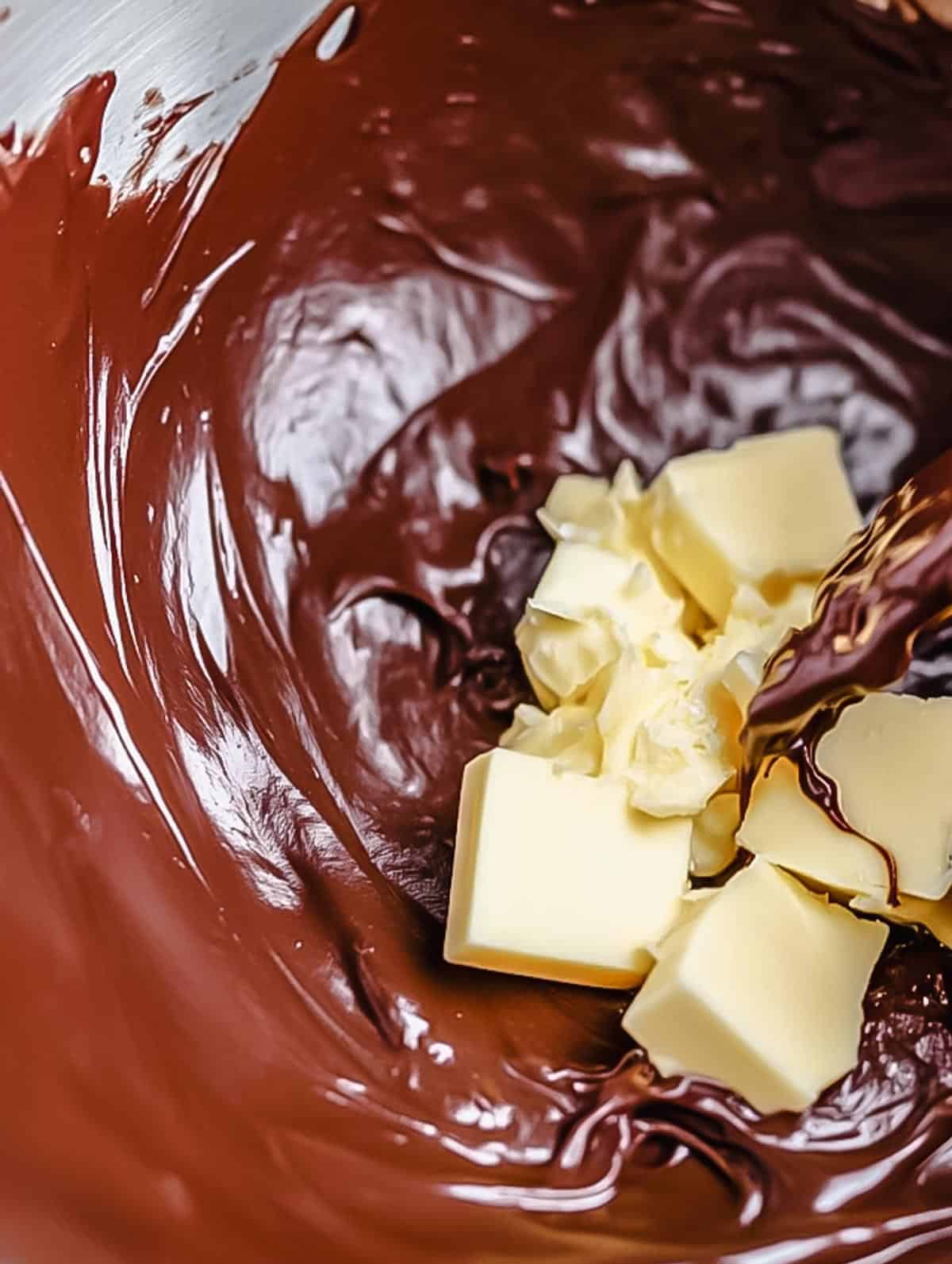
Chopped butter being added to melted chocolate in a mixing bowl.
  1. Step 5: Once the mixture has cooled to 110°F, transfer it to a mixing bowl with a paddle attachment. Add the room-temperature butter, vanilla extract, and salt. Begin mixing on low speed to avoid splattering. As the fudge mixes, air is slowly incorporated, which helps lighten the texture and gives the fudge its smooth, melt-in-your-mouth consistency. Continue mixing until the fudge thickens and loses its glossy appearance, turning matte and firm. This process usually takes about 5-8 minutes, and you'll notice the fudge becoming easier to handle.
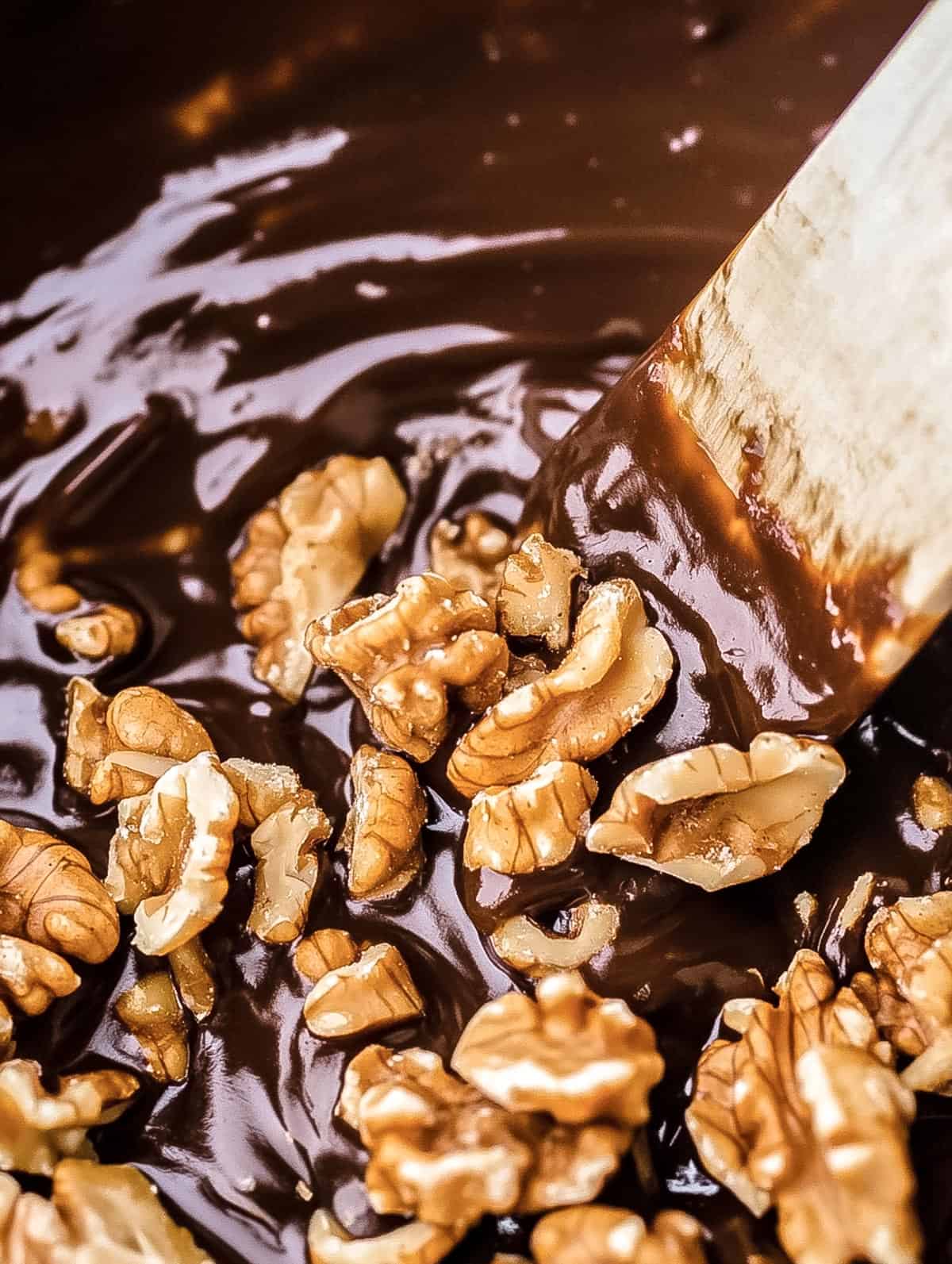
Roasted walnuts being stirred into melted chocolate fudge mixture.
  1. Step 6: Once the fudge has thickened and turned matte, gently fold in the roasted walnuts. Be careful not to overmix, as you want the walnuts to be evenly distributed without breaking up the fudge's smooth consistency. The roasted walnuts add a delightful crunch that contrasts with the creamy fudge, bringing out a nutty flavor that enhances the richness of the chocolate.
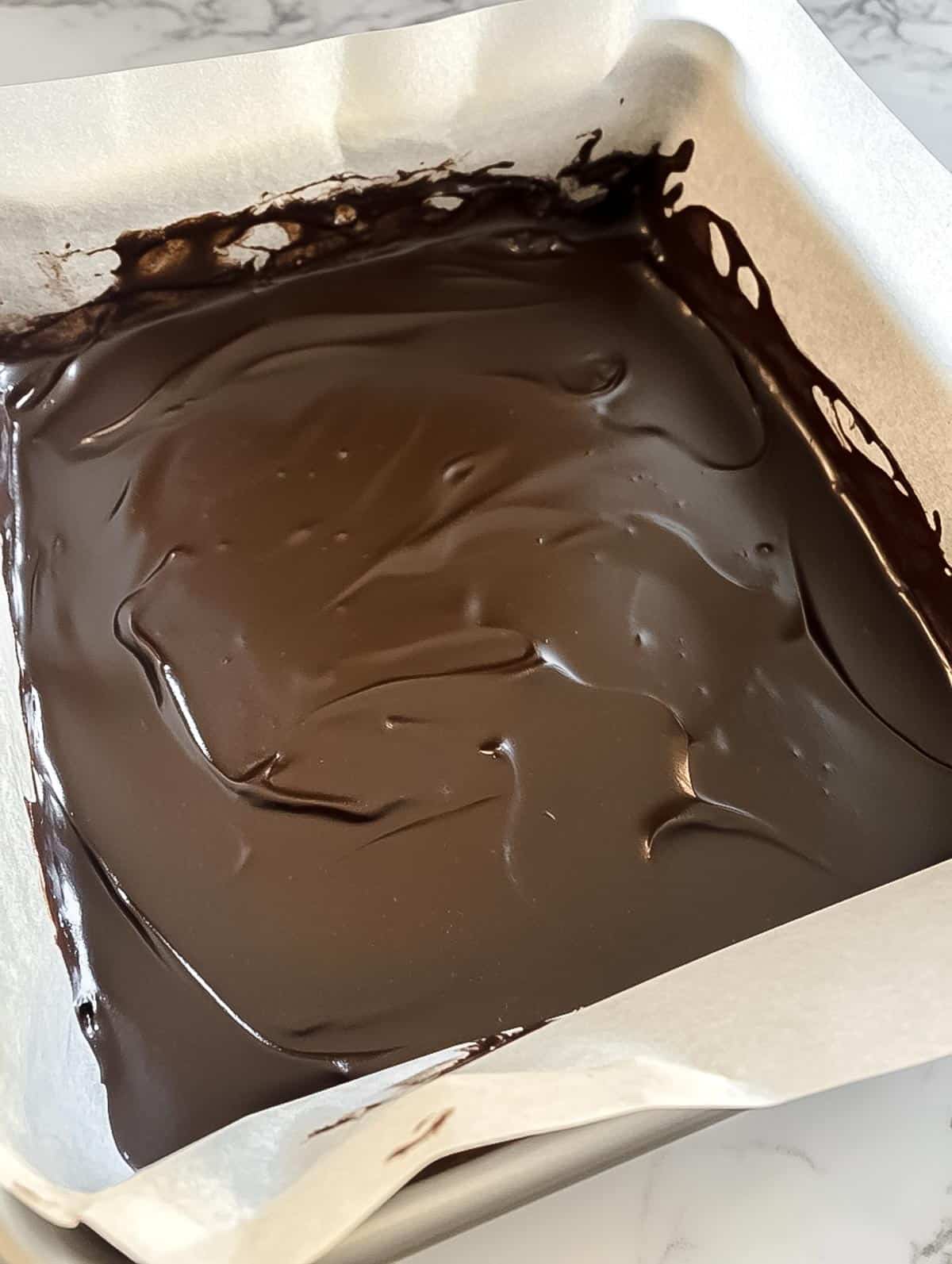
Chocolate fudge spread evenly in a parchment-lined baking pan.
  1. Step 7: Line an 8x8-inch baking pan with parchment paper, leaving an overhang on the sides for easy removal later. Pour the fudge mixture into the pan, using a spatula to spread it out evenly and smooth the top. Let the fudge sit at room temperature for 2-3 hours until it's fully set. Avoid refrigerating during this step, as it can alter the texture of the fudge, making it too firm or grainy.
Finished squares of chocolate walnut fudge with walnuts on top.
Neatly cut squares of chocolate walnut fudge on a marble surface, topped with whole walnuts, showcasing the rich texture and nutty topping.
  1. Step 8: Once the fudge is firm and fully set, use the parchment paper overhang to lift it out of the pan. Place the block of fudge on a cutting board, and cut it into squares with a sharp knife. For clean edges, you can warm the knife slightly before slicing. Enjoy your creamy, chocolate walnut fudge, and store any leftovers in an airtight container at room temperature for up to two weeks.

Hint: Lightly chop your baking chocolate into small, even pieces before adding it to the hot fudge mixture. This helps it melt more quickly and uniformly, preventing clumps and ensuring a smooth, glossy consistency. The finer and more uniform the pieces, the faster they'll blend seamlessly into your mixture, saving you time and ensuring a perfectly creamy fudge texture!

Substitutions

If you need to make substitutions in this fudge recipe, several options work well without compromising flavor or texture. When replacing corn syrup, golden syrup or honey can be used, but note that these will add a slight flavor difference. To substitute unsweetened baking chocolate, use bittersweet or semisweet chocolate and reduce the sugar accordingly: about 1 tablespoon per ounce for bittersweet and 1.5 tablespoons per ounce for semisweet. If you're using evaporated milk in place of heavy cream, substitute it at a 1:1 ratio. This won't change the cooking method but may result in a slightly lighter texture. For nuts, feel free to swap walnuts with pecans, almonds, or hazelnuts to suit your taste.

Variations

This classic chocolate walnut fudge recipe is highly versatile, allowing you to get creative with flavors and mix-ins. For a holiday touch, stir in crushed peppermint or drizzle with white chocolate. If you're a coffee lover, add espresso powder or mix in a splash of Baileys for a mocha kick, similar to Espresso Fudge with Baileys. Nut alternatives, like hazelnuts or pecans, work beautifully, adding extra crunch, or try swirling in caramel or peanut butter for a layered effect.

For even more exciting flavors, explore Pumpkin White Chocolate Fudge for a seasonal twist or Salted Caramel Bourbon Banana Fudge for a boozy treat. You can also experiment with more refined flavors like Earl Grey Fudge, which adds a sophisticated, floral note to the rich texture. For those craving something nutty, the indulgent Hazelnut Praline Chocolate Fudge or Honeycomb Fudge with Pistachio Crumble offers the perfect combination of sweet and crunchy.

Feeling festive? Opt for Chocolate Gingerbread Fudge or swirl in some peppermint bark for a holiday spin. There's no limit to the creativity when making fudge, so don't be afraid to explore!

Equipment

To make this classic chocolate walnut fudge, you'll need some essential equipment. Start with a medium saucepan for heating the sugar and cream. For accuracy, a candy thermometer is key-this traditional version clips to the edge of the pan, or try the digital option for faster readings. A mixing bowl with a paddle attachment will help achieve that creamy texture. Use a spatula to transfer the fudge into an 8x8-inch baking pan lined with parchment, and toast your walnuts in an oven preheated to 350°F.

Storage

To store your chocolate walnut fudge, keep it in an airtight container at room temperature for up to two weeks. Avoid refrigeration, as it can cause the fudge to harden or become grainy. If you need to store it longer, wrap the fudge tightly in plastic wrap and place it in a freezer-safe bag. It can be frozen for up to three months. When ready to enjoy, allow the fudge to come to room temperature for the best texture and flavor.

Top Tip

For perfectly creamy fudge, make sure to let the mixture cool undisturbed to 110°F before mixing. This step stabilizes the sugar, preventing unwanted crystallization and ensuring a smooth, melt-in-your-mouth texture. Skipping or rushing this cooling phase can lead to grainy fudge, so patience is key!

FAQ

Why is my fudge grainy?

Grainy fudge is caused by premature sugar crystallization. To prevent this, make sure to let the mixture cool before stirring and avoid agitating it while it's still hot.

Can I refrigerate my fudge to set it faster?

It's best to let fudge set at room temperature. Refrigeration can alter the texture, making it too firm or grainy.

How long does fudge last?

Stored at room temperature in an airtight container, fudge lasts up to two weeks. It can also be frozen for up to three months.

What can I use instead of corn syrup?

Golden syrup or honey can be used, but they may slightly alter the flavor. Corn syrup helps prevent sugar crystallization for a smoother texture.

Can I make this recipe nut-free?

Absolutely! Simply omit the walnuts or substitute them with seeds or dried fruit for a different twist.

Related

Looking for other recipes like this? Try these:
Pairing

These are my favorite dishes to serve with the Best Homemade Chocolate Walnut Fudge:

Chocolate walnut fudge stacked on a plate, showing walnut pieces inside.

Best Homemade Chocolate Walnut Fudge Recipe

Taylor @ Cain Kitchen
This Best Homemade Chocolate Walnut Fudge recipe delivers a rich, creamy chocolate treat with the perfect balance of crunchy roasted walnuts. With step-by-step guidance, you'll learn how to prevent grainy textures by properly cooling the fudge mixture, and how to incorporate roasted walnuts for added flavor. The result is an indulgent, smooth fudge that's perfect for gifting, holiday parties, or simply satisfying your sweet tooth!
Print Recipe Pin Recipe
Prep Time 5 minutes mins
Cook Time 10 minutes mins
Resting Time 20 minutes mins
Total Time 35 minutes mins
Course Dessert
Cuisine American
Servings 16 servings
Calories 150 kcal

Equipment

  • medium saucepan
  • rubber spatula
  • candy thermometer
  • electric mixer with paddle attachment
  • 8x8 pan or dish
  • baking sheet
  • parchment paper

Ingredients
  

  • 1 tablespoon corn syrup
  • 1 cup sugar
  • ½ cup heavy cream
  • 1 cup unsweetened baking chocolate chopped
  • ¼ cup unsalted butter room temperature
  • 1 teaspoon vanilla extract
  • ½ teaspoon salt
  • ½ cup walnuts chopped and roasted

Instructions
 

Heat and Dissolve the Sugar:

  • In a medium saucepan, combine the heavy cream, sugar, and corn syrup. Heat over medium, slowly swirling the pan to dissolve the sugar evenly into the cream. Swirling helps prevent the sugar from sticking to the sides of the pan, which could lead to crystallization. Heat until the mixture reaches 240°F, or the hard-ball stage. Use a candy thermometer to monitor the temperature closely. If the mixture begins to rise and bubble too much, briefly remove it from heat until it calms down, then return it to the burner.
    1 tablespoon corn syrup, 1 cup sugar, ½ cup heavy cream

Add the Chocolate:

  • Once the sugar mixture reaches 240°F, remove the saucepan from the heat. Immediately stir in the unsweetened baking chocolate. Stir continuously until the chocolate has completely melted and the mixture is smooth and uniform. Be sure to mix well, as any unmelted chocolate can cause lumps in the final fudge. The chocolate will give the fudge its rich cocoa flavor, perfectly balancing the sweetness.
    1 cup unsweetened baking chocolate

Cool the Fudge:

  • After the chocolate is fully incorporated, let the mixture sit undisturbed to cool to 110°F. Cooling the fudge without stirring is essential to avoid the formation of large sugar crystals, which can make the fudge gritty. This step allows the sugar to stabilize, helping to create a smooth, creamy texture. Use a candy thermometer to check the temperature, and expect the cooling process to take around 20-30 minutes. Make sure the mixture has reached 110°F before moving on, as cooling too quickly or stirring prematurely can disrupt the texture.

Roast the Walnuts:

  • While the fudge mixture is cooling, preheat your oven to 350°F. Spread the chopped walnuts evenly on a baking sheet and roast for 7-10 minutes, tossing halfway through to ensure even browning. Roasting the walnuts enhances their flavor, giving them a toasty, rich depth that complements the sweetness of the fudge. Once they're fragrant and golden, remove them from the oven and let them cool slightly before chopping, if necessary.
    ½ cup walnuts

Mix and Aerate the Fudge:

  • Once the fudge mixture has cooled to 110°F, transfer it to a mixing bowl with a paddle attachment. Add the room-temperature butter, vanilla extract, and salt. Begin mixing on low speed. As you mix, air is incorporated into the fudge, which helps give it a creamy, light texture. The mixture will gradually thicken and lose its glossy appearance, turning matte and firm. This process usually takes about 5-8 minutes. Keep an eye on the texture-when it starts to stiffen and become harder to stir, the fudge is ready for the next step.
    ¼ cup unsalted butter, 1 teaspoon vanilla extract, ½ teaspoon salt

Fold in the Walnuts:

  • Once the fudge has thickened and turned matte, gently fold in the roasted walnuts. Be careful not to overmix, as you want the walnuts to be evenly distributed without breaking up the fudge's smooth consistency. The roasted walnuts add a delightful crunch that contrasts with the creamy fudge, bringing out a nutty flavor that enhances the richness of the chocolate.

Set the Fudge:

  • Line an 8x8-inch baking pan with parchment paper, leaving an overhang on the sides for easy removal later. Pour the fudge mixture into the pan, using a spatula to spread it out evenly and smooth the top. Let the fudge sit at room temperature for 2-3 hours until it's fully set. Avoid refrigerating during this step, as it can alter the texture of the fudge, making it too firm or grainy.

Slice and Serve:

  • Once the fudge is firm and fully set, use the parchment paper overhang to lift it out of the pan. Place the block of fudge on a cutting board, and cut it into squares with a sharp knife. For clean edges, you can warm the knife slightly before slicing. Enjoy your creamy, chocolate walnut fudge, and store any leftovers in an airtight container at room temperature for up to two weeks.
Keyword Best homemade fudge, Chocolate walnut fudge, Classic fudge with walnuts, Creamy fudge recipe, Easy fudge recipe, Fudge without grainy texture, Homemade candy recipe, Smooth chocolate fudge, Traditional fudge recipe, Walnut fudge for holidays

Behind the Ingredients: Exploring Chocolate and Cocoa

September 29, 2024 by Taylor @ Cain Kitchen Leave a Comment

A Chef's Deep Dive Into Their Origins, Processing, and Culinary Applications

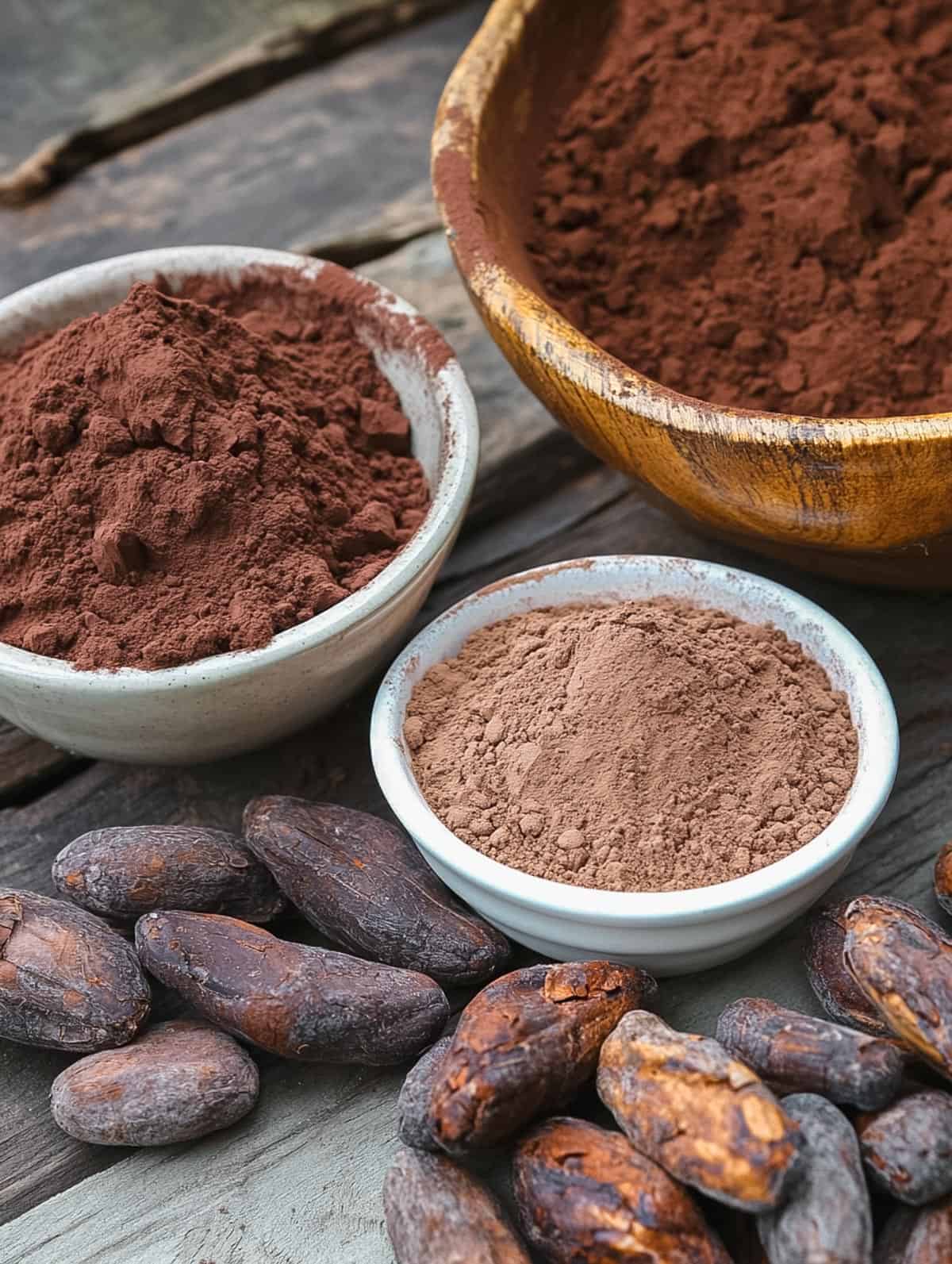
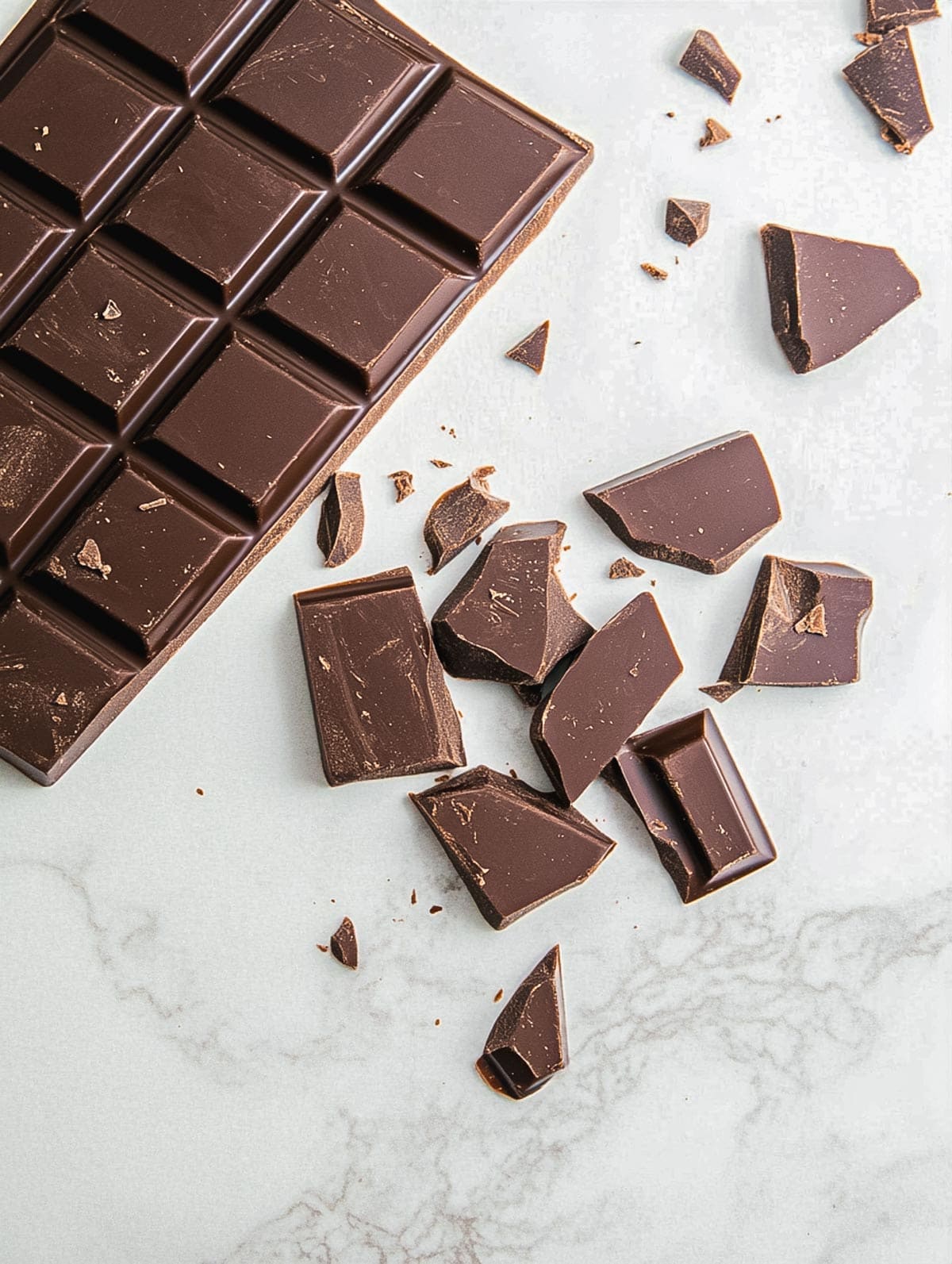
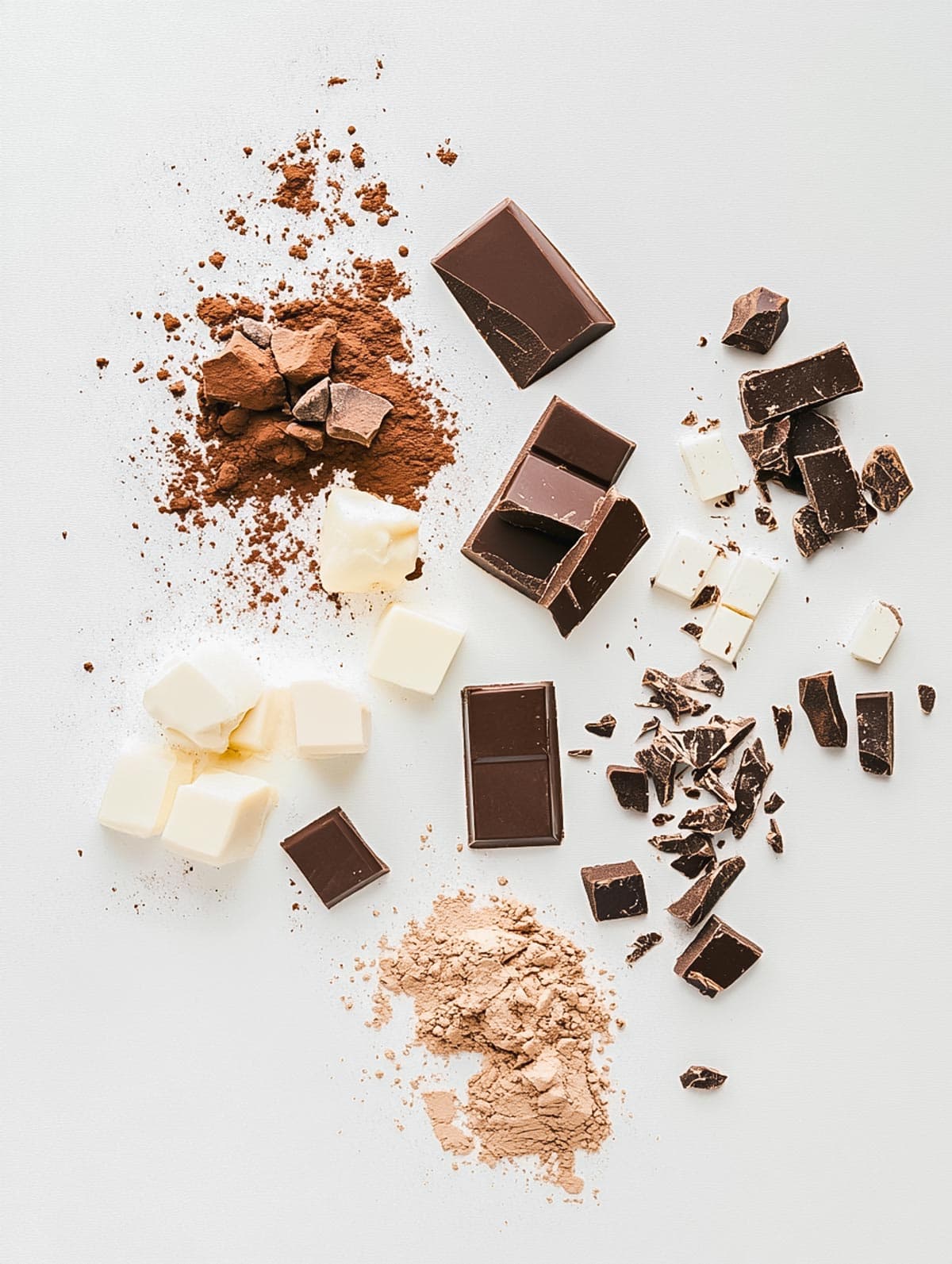
Chocolate is one of the most beloved ingredients in baking and cooking, but have you ever wondered how it's made or why different types of chocolate behave differently in recipes? In this first installment of "Behind the Ingredients: Exploring the Building Blocks of Baking and Cooking," we'll dive into Exploring Chocolate and Cocoa and the journey of chocolate-from its humble beginnings as a cacao bean to the different varieties we use in the kitchen today.


Origins & Production

Chocolate originates from the Theobroma cacao tree, which thrives in tropical regions of Central and South America, West Africa, and Southeast Asia. The chocolate-making process begins with the harvesting of cacao pods. Inside these pods are cacao beans, which are fermented to develop their rich flavors, then dried and roasted. Roasting times vary depending on the desired flavor, but this step is crucial to reducing the beans' natural bitterness.

Once roasted, the beans are cracked open to reveal cacao nibs, which are ground into cocoa mass (or cocoa liquor). This paste is the base of all chocolate products, containing both cocoa solids and cocoa butter. Depending on how these elements are processed, we get different types of chocolate used in baking and cooking.

Let's take a closer look at the origins of chocolate and cocoa, break down the processing timeline that turns cacao beans into the chocolates we know, and explore the regional differences that make chocolate from different parts of the world so distinctive.

Close-up of cacao pods still hanging from a cacao tree. The pods range from deep red to pale yellow, illustrating the natural beauty and vibrant colors of the cacao plant before harvesting.

The Historical Origins of Chocolate and Cocoa

Chocolate's story begins over 3,000 years ago in the tropical regions of the Americas, where the Maya and Aztec civilizations cultivated the cacao tree (Theobroma cacao). In these cultures, cacao beans were so highly valued that they were used as currency and in religious ceremonies. The beans were fermented, roasted, and ground to make a thick, bitter beverage often flavored with spices like vanilla and chili-a drink reserved for the elite and used in sacred rituals.

When Spanish explorers encountered cacao in the 16th century, they brought it back to Europe, where it was quickly adapted to European tastes. By adding sugar and cinnamon, the once-bitter cacao drink became a luxurious sweet beverage. Over the centuries, technological innovations in chocolate processing led to the production of solid chocolate as we know it today.


From Bean to Bar: The Chocolate Processing Timeline

The transformation of cacao beans into chocolate is a complex process that requires precision at every step. Each stage plays a crucial role in determining the flavor, texture, and quality of the final product.

1. Harvesting and Fermentation

The cacao tree produces large pods, each containing seeds or beans. Once harvested, the beans are removed from the pods and fermented for several days. This fermentation process is essential as it reduces bitterness and begins to develop the deep flavors characteristic of chocolate.

2. Drying and Roasting

After fermentation, the beans are dried in the sun and shipped to chocolate processors. At the factory, the beans are roasted to further enhance flavor, similar to how coffee beans are roasted. The roasting process varies depending on the bean variety and the desired flavor profile.

3. Grinding and Chocolate Liquor

Roasted beans are cracked open to separate the nibs from the husks. The nibs are ground into a thick paste known as chocolate liquor (despite its name, it contains no alcohol). Chocolate liquor is the base for all chocolate products, as it consists of both cocoa solids and cocoa butter.

4. Pressing and Separation

To make cocoa powder, part of the cocoa butter is removed from the chocolate liquor. The remaining solids are pressed and ground into cocoa powder, used in baking. For chocolate bars, the chocolate liquor is blended with varying amounts of sugar, additional cocoa butter, and sometimes milk, depending on whether the final product will be dark, milk, or white chocolate.

A close-up of cacao nibs held in both hands, showcasing the raw material used in chocolate production.

Regional Differences in Chocolate Production

While chocolate and cocoa share universal processes of fermentation, roasting, and grinding, regional differences in cacao cultivation, processing techniques, and even flavor preferences create a wide variety of chocolate profiles worldwide. Each region's terroir-the unique combination of soil, climate, and farming methods-significantly influences the flavor and quality of the final product. Understanding these regional differences helps chefs select the right type of chocolate for specific culinary applications.

1. Latin America: The Birthplace of Cacao

Latin America, particularly countries like Ecuador, Peru, Venezuela, and Mexico, is home to the ancient origins of cacao. These regions produce some of the most highly prized cacao beans in the world, particularly Criollo and Arriba Nacional varieties, known for their complex and floral flavor profiles. Venezuelan chocolate, for instance, is often described as having delicate notes of red fruit, nuts, and caramel.

The region's approach to chocolate production is deeply rooted in tradition. In Mexico, cacao beans are still used to make traditional drinking chocolate, often flavored with cinnamon, vanilla, and chili-echoing the methods used by the Aztecs and Mayans centuries ago. Mexican chocolate is often less refined than European counterparts, with a coarser texture and more intense flavors, making it ideal for savory dishes like mole as well as rich desserts.

2. Africa: The Powerhouse of Cacao Production

Africa, particularly countries like Côte d'Ivoire, Ghana, and Nigeria, dominates the global cacao market, producing over 70% of the world's cacao beans. West African cacao, primarily Forastero beans, is known for its robustness, with deep chocolate flavors but often lacking the nuanced complexity of Latin American cacao. This makes it the backbone of mass-produced chocolate, used in commercial brands around the world.

However, recent efforts to improve fermentation and drying techniques in Africa have started to enhance the quality of these beans, leading to more single-origin African chocolates that boast nutty, earthy flavors with hints of dried fruit. The influence of local culture also plays a role in African chocolate production, with a growing emphasis on sustainable farming practices and fair trade initiatives aimed at improving the livelihood of cacao farmers.

A display case filled with assorted gourmet chocolates, including dark, milk, and white chocolate truffles with decorative toppings.

3. Europe: The Art of Refinement

Although cacao does not grow in Europe, the continent excels in refining chocolate. Countries like Belgium and Switzerland have become synonymous with high-quality chocolate, famous for their smooth textures, precise tempering techniques, and perfect balance of cocoa solids and butter.

In the 19th century, Rodolphe Lindt revolutionized chocolate-making with the conching process. This method involves grinding and kneading chocolate liquor for extended periods-sometimes for days-significantly improving texture and flavor. As a result, conching breaks down larger particles while evenly distributing cocoa butter, producing the velvety, melt-in-your-mouth chocolate we now associate with European excellence. Switzerland, in particular, shines with its creamy milk chocolate, while Belgium is well-known for its indulgent truffles and pralines.

Meanwhile, France and Italy focus on dark chocolate and high cocoa content, crafting rich, bittersweet confections. French chocolatiers often incorporate bold flavors like spices and coffee, enhancing the complexity of their creations. In Italy, the Piedmont region has perfected gianduja, a delightful blend of chocolate and hazelnut paste, highlighting Italy's tradition of balancing flavor and texture.


4. Asia: Emerging Chocolate Regions

Although Asia was not traditionally known for chocolate production, countries like Vietnam, the Philippines, and Indonesia are quickly making a mark in the cacao world. Vietnam, in particular, has gained international recognition for its high-quality cacao, characterized by bright, fruity flavors ideal for fine chocolate making. These regions are also focusing on sustainable farming practices and improving post-harvest techniques, which has helped them increase their share in the premium chocolate market.

Meanwhile, Japan has embraced chocolate innovation in unique ways. Japanese chocolatiers frequently experiment with creative flavor combinations, infusing chocolate with local ingredients like matcha, yuzu, and sake. These bold choices result in umami-rich confections that perfectly reflect Japan's taste for innovation and tradition.


A beautifully arranged selection of luxury chocolates, showcasing various types of truffles and bonbons. The assortment includes chocolates with smooth, glossy finishes in dark, milk, and white varieties, with decorative toppings like swirls and nuts.

Exploring Chocolate and Cocoa: Cooking and Baking Comprehensive Guide

While chocolate and cocoa may seem like interchangeable ingredients, their diverse forms require specific handling to achieve the best results in the kitchen. Understanding the differences between natural cocoa and Dutch-process cocoa, how to temper couverture chocolate, and when to use baking chocolate will elevate your baking and cooking to a professional level.

Choosing the Right Cocoa: Natural vs. Dutch-Process Cocoa

Cocoa powder is an essential ingredient in many baked goods, from rich chocolate cakes to cookies and brownies. However, not all cocoa powders are created equal. The two main types-natural cocoa and Dutch-process cocoa-behave differently in recipes due to their acidity and how they interact with leavening agents.

Bowls of cocoa powder and raw cacao beans on a rustic wooden table, representing the raw ingredients used in chocolate production.

1. Natural Cocoa

Natural cocoa is the purest form of cocoa powder, produced by removing cocoa butter from chocolate liquor. It is naturally acidic and has a robust, bitter flavor. Because of its acidity, natural cocoa reacts with baking soda, which helps leaven baked goods by releasing carbon dioxide.

  • Best Uses: Recipes that call for baking soda as the leavening agent, such as brownies, chocolate cookies, and devil's food cake.
  • Flavor Profile: Intense, somewhat bitter, with a fruity undertone and a lighter reddish-brown color.

2. Dutch-Process Cocoa

Dutch-process cocoa, or alkalized cocoa, is treated with an alkali to neutralize its natural acidity. This results in a smoother flavor and a darker color. Because Dutch-process cocoa is not acidic, it does not react with baking soda. Instead, it requires baking powder as a leavening agent.

  • Best Uses: European-style cakes and pastries. Dutch-process cocoa provides a deep, rich color and flavor, perfect for sachertorte, opera cake, or chocolate sponge cake. Also best used in creamy desserts. Its mild flavor and fine texture are well-suited for smooth, luxurious desserts like chocolate puddings, custards, and ice creams.
  • Flavor Profile: Milder and earthier than natural cocoa, with a deep, dark color.

Substitution Tip: If you're swapping one cocoa type for another, adjust the leavening agents accordingly. When using Dutch-process cocoa in a recipe that calls for natural cocoa, replace baking soda with baking powder.


Baking Chocolate vs. Couverture: Understanding Their Roles in the Kitchen

Chocolate comes in many forms, but when it comes to baking and professional confectionery, knowing the difference between baking chocolate and couverture chocolate is essential. Each serves a specific purpose, and understanding when and how to use these chocolates will greatly improve the texture, flavor, and finish of your creations. Additionally, we'll explore how semisweet, bittersweet, unsweetened, and compound chocolate fit into the equation, helping you choose the right chocolate for your needs.


What is Baking Chocolate?

Baking chocolate is a term that generally refers to unsweetened chocolate or semisweet chocolate that is used primarily for cooking and baking rather than eating out of hand. It is sold in bars or blocks and is designed to melt into recipes, where other ingredients like sugar, butter, or cream balance out its intense flavor.

Chocolate bars and cocoa powder on a countertop, next to molds, showcasing different stages of the chocolate-making process.

Types of Baking Chocolate

  1. Unsweetened Baking Chocolate
    • Cocoa content: 100% chocolate liquor with no added sugar.
    • Flavor profile: Intensely bitter, as it contains no sugar. The strong chocolate flavor is ideal for recipes where sweetness is controlled by the baker.
    • Best Uses: Brownies, chocolate cakes, ganache, and recipes where sugar and fat are added separately. It provides the purest form of chocolate for baking, allowing the recipe to dictate sweetness.
  2. Semisweet Baking Chocolate
    • Cocoa content: Typically around 35-50% chocolate liquor, with added sugar.
    • Flavor profile: Balanced chocolate flavor with moderate sweetness. It's less bitter than unsweetened chocolate and can be eaten on its own but is mostly used for baking.
    • Best Uses: Chocolate chip cookies, cakes, and frostings. It's versatile and works well in any recipe that calls for a combination of chocolate flavor and sweetness.
  3. Bittersweet Baking Chocolate
    • Cocoa content: Usually 50-70% chocolate liquor, with less sugar than semisweet.
    • Flavor profile: A deeper, more intense chocolate flavor than semisweet, but with a slight sweetness. It's commonly used in recipes where a richer chocolate taste is preferred.
    • Best Uses: Tarts, chocolate mousse, ganache, and chocolate fondants. Bittersweet chocolate shines in recipes that require a strong cocoa flavor without too much sweetness.

What is Couverture Chocolate?

Couverture chocolate is a premium type of chocolate used by professional chocolatiers and pastry chefs. It has a higher percentage of cocoa butter (32-39%) compared to regular baking chocolate, which gives it a luxuriously smooth texture and superior workability when melted.

Types of Couverture Chocolate

  1. Dark Couverture
    • Cocoa content: Typically 50-85% chocolate liquor.
    • Flavor profile: Rich, intense chocolate flavor with a smooth, luxurious mouthfeel due to the high cocoa butter content.
    • Best Uses: Truffles, dipped chocolates, molded chocolate bars, and decorations. Its fluidity makes it perfect for coating and dipping after tempering, while its flavor shines in ganache and fine confections.
  2. Milk Couverture
    • Cocoa content: Usually 25-40% chocolate liquor, along with added milk solids and sugar.
    • Flavor profile: Creamy, sweet, and smooth, with a less intense chocolate flavor compared to dark couverture.
    • Best Uses: Chocolate-dipped fruits, milk chocolate truffles, and ganache fillings where a sweeter, creamier chocolate flavor is desired.
  3. White Couverture
    • Cocoa content: Contains no cocoa solids, only cocoa butter (at least 20%) along with milk solids and sugar.
    • Flavor profile: Sweet and creamy with a buttery texture.
    • Best Uses: Chocolate decorations, drizzles, and pairing with fruit flavors. White couverture works well for tempering and decorative applications but doesn't have the deep chocolate flavor of dark or milk varieties.
Close-up of gourmet chocolate truffles with various designs, including chocolate drizzle and ripple textures.

The Key Differences Between Baking Chocolate and Couverture

The major differences between baking chocolate and couverture chocolate revolve around cocoa butter content, fluidity, and how they are used. Each type has distinct characteristics that influence how they should be handled in the kitchen.

AspectBaking ChocolateCouverture Chocolate
Cocoa Butter ContentLow (18-20%)High (32-39%)
TextureFirm, melts into recipesSmooth, fluid when melted, excellent for coating
Best UsesBaked goods (cakes, brownies, cookies)Dipping, molding, coating, ganache
Tempering Required?NoYes
Flavor IntensityRanges from bitter (unsweetened) to sweet (semisweet)More intense flavor due to high cocoa solids
Melting BehaviorTends to be thicker when meltedExtremely fluid, perfect for detailed work
CostGenerally less expensiveMore expensive due to high cocoa butter

Other Types of Chocolate to Consider

In addition to baking and couverture chocolate, there are other types that are important to consider, especially when recipes call for specific textures or flavors.

An overhead view of assorted chocolate pieces, cocoa powder, and white chocolate, representing various forms of chocolate in baking and cooking.

1. Compound Chocolate

Compound chocolate substitutes vegetable fats (like palm or coconut oil) for cocoa butter, making it easier to handle because it does not require tempering. However, it lacks the smooth mouthfeel and rich flavor of couverture or baking chocolate.

  • Cocoa Butter Content: None; contains vegetable fats instead.
  • Flavor Profile: Often waxy with a muted chocolate flavor.
  • Best Uses: Quick coatings for cookies, candies, or cake pops, where flavor is less important than appearance.
  • Pros: Easier to handle; no tempering required.
  • Cons: Less flavor, waxy texture, not ideal for fine confections.

2. Sweet Chocolate (Including Semisweet and Bittersweet)

Sweet chocolate is often used interchangeably with semisweet and bittersweet chocolate in baking. The sugar content is higher than that of couverture or unsweetened chocolate, making it suitable for recipes that need a balance of sweetness and chocolate intensity.

  • Cocoa Butter Content: Moderate, around 18-20%.
  • Flavor Profile: Sweet, with varying degrees of chocolate flavor depending on the cocoa content.
  • Best Uses: Cookies, brownies, cakes, or melted into batters. Semisweet chocolate is also used for frostings and glazes where sweetness is needed.

3. White Chocolate

Though technically not a true chocolate (it contains no cocoa solids), white chocolate can be used in a variety of baking and confectionery applications. White chocolate contains cocoa butter, giving it a rich, creamy texture.

  • Cocoa Butter Content: At least 20%.
  • Flavor Profile: Buttery and sweet, with no chocolate flavor.
  • Best Uses: Pairing with fruit flavors, creating visual contrast in decorations, or as a base for flavored ganache.

When to Choose Baking Chocolate vs. Couverture Chocolate

Understanding when to use baking chocolate versus couverture depends largely on what you're making:

  • Baking Chocolate is ideal for recipes where chocolate is melted into the batter, like cakes, brownies, or cookies. It provides intense chocolate flavor without needing to temper or worry about a shiny finish. For example, unsweetened chocolate allows bakers to control the sweetness of the recipe, while semisweet and bittersweet varieties strike a balance between sweetness and richness.
  • Couverture Chocolate is the gold standard for professional dipping, coating, and molding because of its high cocoa butter content, which makes it exceptionally fluid when melted. It must be tempered to achieve a beautiful, glossy finish and firm snap. If you're making truffles, chocolate-dipped strawberries, or molded chocolates, couverture is the best choice due to its workability and premium texture.

The Art of Tempering Chocolate: A Detailed Guide

Tempering is an essential technique for any chef or chocolatier working with couverture chocolate. Properly tempered chocolate gives you that beautiful, glossy finish and a clean "snap" when broken-qualities that are especially important in professional confections. It also ensures the chocolate will set correctly, avoiding the dreaded bloom (a whitish coating caused by unstable cocoa butter crystals).

Tempering is the process of carefully heating and cooling chocolate to control the formation of stable cocoa butter crystals. Without tempering, chocolate can appear dull, streaky, and have a crumbly or grainy texture.

A chocolatier spreads melted chocolate on a marble slab with a spatula during the tempering process.

Why Tempering is Necessary

Cocoa butter, which makes up a significant portion of couverture chocolate, can form six different types of crystals when cooled. These crystal types-ranging from unstable forms I-IV to the stable forms V and VI-are what determine the chocolate's final texture and shine. The goal of tempering is to encourage the formation of Form V crystals, which provide the best structure for tempered chocolate. Form VI crystals are stable as well, but they take too long to form and are not practical in kitchen settings.

  • Without tempering: The chocolate will set too slowly, become dull or streaky, and develop a crumbly or brittle texture.
  • With proper tempering: Chocolate will set quickly, with a glossy finish, smooth texture, and a clean snap when broken.

Step-by-Step Guide to Tempering

There are several methods for tempering chocolate, but the two most common techniques in professional kitchens are the seeding method and the tabling method. Both methods focus on heating chocolate to a high temperature to melt all cocoa butter crystals, cooling it to encourage the formation of stable crystals, and then slightly reheating it to make the chocolate workable.

1. The Seeding Method (Beginner-Friendly)

The seeding method is one of the easiest and most reliable tempering techniques for small batches. It involves adding unmelted tempered chocolate to melted chocolate to introduce the right type of crystals.

Step-by-Step Instructions:

  1. Chop the chocolate: Start by finely chopping your couverture chocolate (you'll need about ⅓ of the total chocolate as "seed").
  2. Melt the chocolate: In a heatproof bowl, melt about ⅔ of the chocolate over a double boiler. Stir frequently and make sure the water doesn't touch the bottom of the bowl to avoid overheating. Use the following temperature guidelines depending on the type of chocolate:
    • Dark chocolate: Heat to 45-50°C (113-122°F).
    • Milk chocolate: Heat to 40-45°C (104-113°F).
    • White chocolate: Heat to 40°C (104°F).
    The goal here is to completely melt all the cocoa butter crystals, including the stable ones.
  3. Cool the chocolate: Remove the bowl from the heat and gradually add the remaining chopped chocolate (the "seed"). Stir constantly as the chocolate cools, encouraging the formation of stable Form V crystals. Continue adding the seed chocolate until the temperature drops to:
    • Dark chocolate: 27-28°C (80.6-82.4°F).
    • Milk chocolate: 26-27°C (78.8-80.6°F).
    • White chocolate: 25-26°C (77-78.8°F).
    At this stage, the chocolate will thicken and begin to cool.
  4. Reheat to working temperature: Gently reheat the chocolate over the double boiler, being careful not to exceed the following temperatures:
    • Dark chocolate: 31-32°C (87.8-89.6°F).
    • Milk chocolate: 29-30°C (84.2-86°F).
    • White chocolate: 28-29°C (82.4-84.2°F).
    Stir constantly and check the temperature frequently. Once you reach the correct temperature, your chocolate is tempered and ready to use for dipping, coating, or molding.

2. The Tabling Method (More Advanced)

The tabling method is a more traditional approach used by professionals. This method involves spreading and cooling chocolate on a marble slab to bring it to the correct temperature. It requires more space and tools but produces consistently tempered chocolate.

Step-by-Step Instructions:

  1. Chop and melt the chocolate: Just as in the seeding method, chop your couverture chocolate and melt it over a double boiler. Follow the same temperature guidelines for melting:
    • Dark chocolate: Heat to 45-50°C (113-122°F).
    • Milk chocolate: Heat to 40-45°C (104-113°F).
    • White chocolate: Heat to 40°C (104°F).
  2. Pour two-thirds of the chocolate onto a marble slab: Once melted, pour two-thirds of the chocolate onto a clean, cool marble slab. Use a metal scraper or palette knife to spread and work the chocolate across the slab. Continuously scrape and spread the chocolate to cool it evenly.
  3. Cool the chocolate: As you work the chocolate on the marble, it will begin to cool and thicken. The goal is to reduce the temperature to:
    • Dark chocolate: 27-28°C (80.6-82.4°F).
    • Milk chocolate: 26-27°C (78.8-80.6°F).
    • White chocolate: 25-26°C (77-78.8°F).
  4. Combine with the remaining melted chocolate: Scrape the cooled chocolate from the marble slab and add it back into the bowl with the remaining melted chocolate. Stir until everything is fully combined.
  5. Reheat to working temperature: Gently reheat the chocolate over the double boiler to the following working temperatures:
    • Dark chocolate: 31-32°C (87.8-89.6°F).
    • Milk chocolate: 29-30°C (84.2-86°F).
    • White chocolate: 28-29°C (82.4-84.2°F).
    Once at this temperature, the chocolate is ready to be used.

Tips for Successful Tempering

  • Use a thermometer: Precision is key in tempering. A digital thermometer ensures you're hitting the correct temperatures for melting, cooling, and reheating.
  • Avoid water contact: Water is chocolate's enemy! Even a small amount of moisture can cause the chocolate to seize and become grainy.
  • Work in a cool environment: The ideal room temperature for tempering is 18-21°C (65-70°F). Too much warmth in your kitchen can make it difficult for the chocolate to set properly.

How to Test if Your Chocolate is Tempered

To ensure your chocolate is properly tempered, perform a simple test:

  1. Dip a small piece of parchment paper or a knife into the chocolate.
  2. Let it sit at room temperature for 3-5 minutes.
  3. If the chocolate sets evenly with a glossy surface and snaps cleanly, it's properly tempered.
  4. If the chocolate remains soft, dull, or streaky, it needs to be reheated and tempered again.

Common Tempering Issues and How to Fix Them

  • Bloom: If your chocolate develops a whitish streak (known as bloom) after it sets, it means the cocoa butter has separated due to improper tempering. To fix this, melt the chocolate again and re-temper it.
  • Grainy texture: This can happen if moisture gets into the chocolate or if it overheats. Start by melting and cooling the chocolate slowly to avoid seizing. If seized, you can try adding a small amount of warm cocoa butter or vegetable oil to smooth it out, but the flavor and texture might not be as optimal.
  • Chocolate too thick at working temperature: If your tempered chocolate is too thick, it may have cooled too much. Gently rewarm it to the correct working temperature, or thin it slightly by adding a small amount of melted cocoa butter.

A close-up of melted chocolate being poured, with a rich, glossy texture.

Ready to explore chocolate and cocoa more?

If you're eager to explore the world of chocolate in greater depth, there's no shortage of excellent resources. Whether you're fascinated by the history of cacao, want to perfect your tempering skills, or are looking to dive into chocolate-making from bean to bar, these books and online resources will guide you every step of the way.

Books on Chocolate

  1. The Art of the Chocolatier: From Classic Confections to Sensational Showpieces by Ewald Notter
    A comprehensive guide for serious hobbyists or professionals, this book covers advanced techniques for crafting chocolates and creating stunning chocolate showpieces. Perfect for those looking to elevate their chocolate skills.
  2. Chocolates and Confections: Formula, Theory, and Technique for the Artisan Confectioner by Peter P. Greweling
    A go-to resource for aspiring chocolatiers, offering detailed insights into the science and art behind perfecting chocolate-based confections.
  3. The True History of Chocolate by Sophie D. Coe and Michael D. Coe
    A fascinating look at the journey of chocolate from its origins in ancient Mesoamerica to its status as a beloved global treat today.
  4. Making Artisan Chocolates by Andrew Garrison Shotts
    For those ready to try their hand at making chocolates at home, this book offers approachable recipes and techniques for creating handmade chocolate truffles, bars, and more.
  5. Chocolate: History, Culture, and Heritage by Louis E. Grivetti and Howard-Yana Shapiro
    Dive into the rich history and cultural significance of chocolate with this detailed exploration, perfect for history buffs and chocolate lovers alike.
  6. Chocolate: Indulge Your Inner Chocoholic by Dom Ramsey
    A beautifully designed guide to the world of chocolate, including tasting notes, history, and insights into chocolate production-perfect for anyone with a sweet tooth!
  7. Bean-to-Bar Chocolate: America's Craft Chocolate Revolution by Megan Giller
    This book celebrates the modern craft chocolate movement in America, offering a behind-the-scenes look at some of the most exciting small-scale chocolate makers in the country.

Online Resources

  1. The Chocolate Academy™
    A network of chocolate schools around the world, offering workshops and online courses for chocolatiers of all skill levels. Visit the Chocolate Academy
  2. Ecole Chocolat
    A leading online school for professional chocolatier programs and chocolate-making courses. Visit Ecole Chocolat
  3. Fine Chocolate Industry Association (FCIA)
    A resource for connecting with chocolate artisans and learning about the latest trends in the fine chocolate industry. Visit FCIA
  4. Chocolate Alchemy
    Learn the process of making chocolate from scratch, starting with cacao beans, with recipes and tutorials. Visit Chocolate Alchemy

Check out my latest Chocolate Recipes

Bringing It All Together: Your Chocolate Cheat Sheet

In the world of chocolate, there's no one-size-fits-all. It's all about knowing your chocolate sidekicks and when to call them into action. Baking chocolate is the reliable workhorse-straightforward and always there when you need it. Couverture? That's the fancy stuff, a bit more effort but oh-so-worth it when you want to impress. And then there's compound chocolate, the quick-fix superhero that's perfect for when you need results right now.

Once you understand who's who in the chocolate family, you'll be making the perfect pick every time, so go ahead-whether you're keeping it simple or getting creative, you've got this. Now, it's just you, your whisk, and a world of chocolate possibilities. Happy baking!

Maple Brown Sugar Pecan Cookies with Maple Fudge

September 22, 2024 by Taylor @ Cain Kitchen Leave a Comment

Craving a cookie that's both indulgent and packed with comforting flavors? These Maple Brown Sugar Pecan Cookies with Maple Fudge are the perfect treat. Combining the nutty richness of browned butter and bourbon vanilla with the sweetness of maple fudge and the crunch of pecans, these cookies are a delicious twist on classic flavors. They offer a chewy, buttery texture with just the right amount of maple sweetness.

Maple brown sugar pecan cookies drizzled with caramel and sprinkled with sea salt, stacked on a wooden board.

As soon as the air starts to cool and the leaves begin to turn, I find myself craving these Maple Brown Sugar Pecan Cookies with Maple Fudge. The flavors of maple, brown sugar, and pecans feel like they were made for fall. There's something about the combination of the nutty browned butter and sweet maple fudge that makes these cookies the perfect treat on a crisp autumn day. Whether I'm enjoying them with a cup of tea or sharing them with friends, this is the recipe I return to every year when fall arrives.

There's nothing quite like the warm, comforting flavors of maple and pecans baked into a chewy, buttery cookie. These Maple Brown Sugar Pecan Cookies with Maple Fudge are a twist on a classic, combining the nutty richness of browned butter with the sweet, caramel-like flavor of maple fudge. The pecans add a satisfying crunch, while the maple syrup gives just the right amount of sweetness. Whether you're a fan of traditional cookies or looking for something new, this recipe will surely become a favorite.

[feast_advanced_jump_to]

Ingredients

This recipe combines simple, high-quality ingredients to create a cookie that's both chewy and full of flavor. Browned butter adds a rich, nutty depth, while maple syrup and maple fudge provide sweetness and texture. Chopped pecans offer a satisfying crunch, perfectly balanced by the sprinkle of flaky sea salt that brings out the caramel-like flavors of the brown sugar and maple. Each ingredient works together to give these cookies a unique, fall-inspired twist.

Making Your Own Vanilla Extract:

For an extra special touch, consider using homemade vanilla in this recipe. Making your own vanilla extract allows you to control the quality and flavor, and it's surprisingly easy to do. I love using my Aged Bourbon Vanilla, which adds a smooth, slightly smoky note that pairs perfectly with the brown sugar and maple syrup in these cookies. All you need are vanilla beans and bourbon-then let time do the rest! Once you've tasted the richness of homemade vanilla, you'll never want to go back to store-bought.

The Importance of Maple:

Maple syrup is the key to unlocking the deep, sweet flavors in these cookies. Not all maple syrups are the same, though-there are different grades that vary in flavor and color. Grade A Light Amber is the most delicate, offering a subtle sweetness that's perfect for drizzling over pancakes or using in light recipes. Grade A Medium Amber and Grade A Dark Amber have more pronounced flavors, with hints of caramel that deepen the overall richness of the cookies. I prefer using Grade A Dark Amber in this recipe for its robust, full-bodied maple flavor.

Besides syrup, maple fudge adds an extra layer of sweetness and texture to these cookies. The combination of real maple syrup and gooey, melted maple fudge gives it a smooth, melt-in-your-mouth quality that pairs beautifully with the crunchy pecans. For a fun fall activity, you can make your own maple fudge. I found some at my local farmers market and had to make some cookies with it. You can also find it at Trader Joe's come fall or other specialty stores.

All ingredients for maple pecan cookies, including flour, butter, pecans, and maple fudge, arranged on a marble counter.

For an extra layer of flavor, you can always make your own maple fudge and bourbon vanilla at home. Both add a rich, homemade touch to these cookies. Check out my recipe for Maple Fudge and Aged Bourbon Vanilla for that special, handcrafted taste. Your cookies will be packed with even more irresistible flavor!
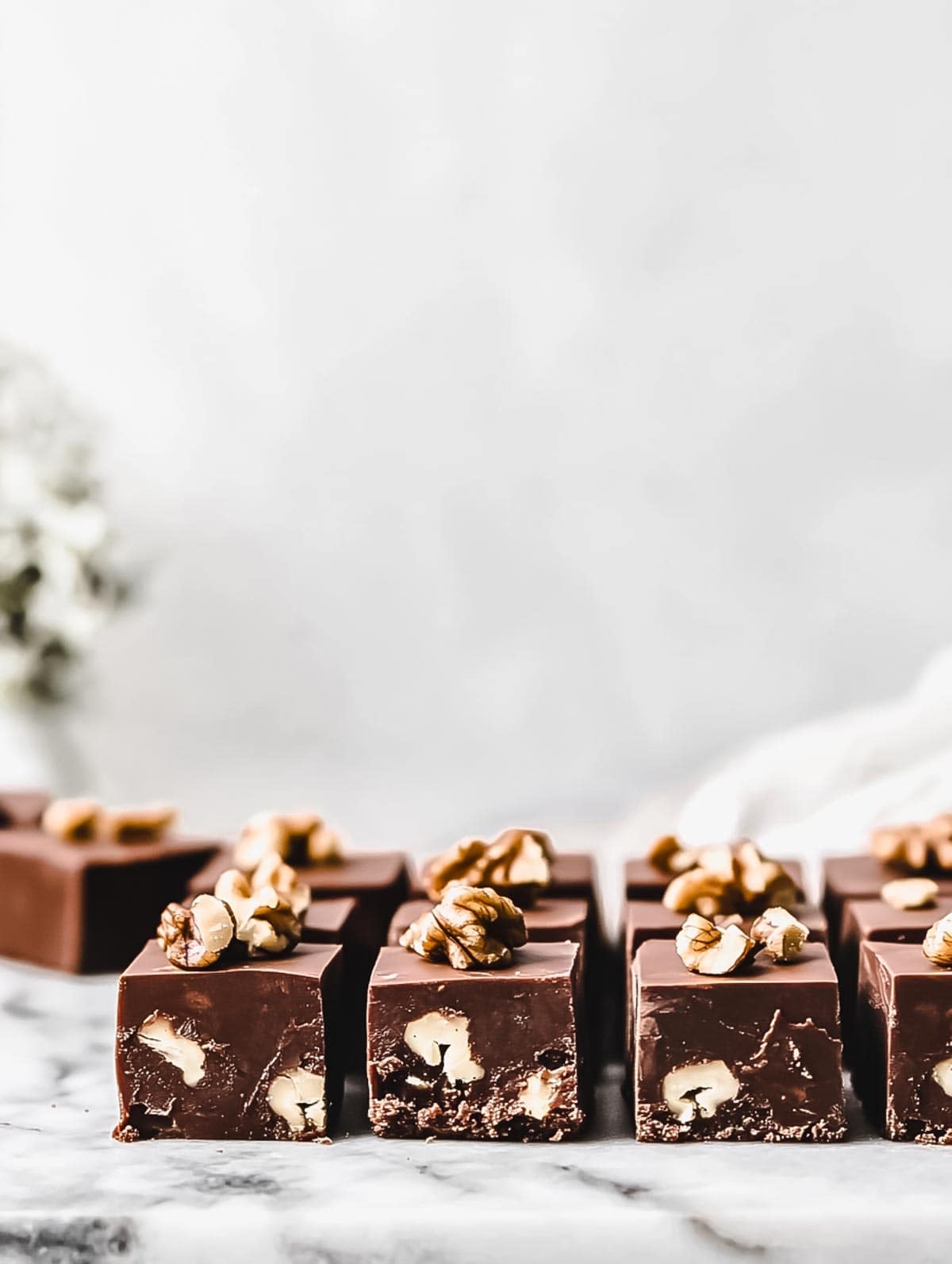
  • All-purpose flour
  • Baking soda
  • Salt
  • Browned butter
  • Brown sugar
  • Egg
  • Maple syrup
  • Bourbon vanilla
  • Chopped pecans
  • Chopped maple fudge
  • Flaky sea salt

See recipe card for quantities.

Instructions for Maple Brown Sugar Pecan Cookies

Preheat Your Oven
Before you start mixing ingredients, preheat your oven to 350°F (175°C). This will give the oven enough time to reach the right temperature so your cookies bake evenly.

  1. Prepare Your Baking Sheet- Line a baking sheet with parchment paper or a silicone baking mat. This helps prevent the cookies from sticking and ensures even baking. If you don't have either, lightly grease the baking sheet with butter or cooking spray.
  2. Brown the Butter- Place 7 tablespoons of butter in a small pot or saucepan over medium heat. The wider the pot or pan base, the faster it will brown. Keep watch carefully! Stir occasionally until the butter melts and begins to foam. Keep an eye on it as the color changes from yellow to golden brown, and you start to smell a nutty aroma. Once the butter turns brown and has small brown bits at the bottom of the pan, remove it from the heat immediately. Let the browned butter cool before using it in the dough.
Butter browning in a saucepan with a wooden spoon stirring, creating a golden foam.
  1. Mix the Dry Ingredients- In a medium-sized bowl, whisk together the all-purpose flour, baking soda, and salt. This ensures that the baking soda and salt are evenly distributed throughout the flour so the cookies rise properly.
  2. Cream the Brown Sugar and Butter- In a small mixing bowl, combine the cooled browned butter and brown sugar. Use a whisk, hand mixer, or stand mixer on medium speed to 'cream' them together until the mixture is lighter in color and is all one texture. I think of it as being creamed when it all looks 'creamy'. Creaming the butter and sugar creates air pockets that will make the cookies soft and chewy.
  3. Mix the Wet Ingredients- Next, beat in the egg until fully incorporated. Then, add the maple syrup and bourbon vanilla, mixing until everything is smooth and well combined. Be sure to scrape down the sides of the bowl with a spatula to make sure all ingredients are mixed in.
  4. Combine the Wet and Dry Ingredients-
    Gradually add the flour mixture to the wet ingredients, mixing at a low speed. It's important not to overmix at this stage-mix just until the flour is fully incorporated and no dry streaks remain. Overmixing can lead to tough cookies.
A stainless steel bowl filled with maple pecan cookie dough, ready for shaping.
  1. Fold in the Pecans and Maple Fudge- Using a spatula or wooden spoon, gently fold in the chopped pecans and maple fudge. Make sure they are evenly distributed throughout the dough but don't overmix.
  2. Scoop and Shape the Dough-Use a cookie scoop or tablespoon to portion out the dough into even-sized balls (about 1 ½ tablespoons each). Place the dough balls onto the prepared baking sheet, leaving about 2 inches of space between each cookie to allow them to spread during baking.
Raw cookie dough balls spaced evenly on a silicone baking mat, ready for the oven.
  1. Chill the Dough- Pop the tray in the fridge and chill the dough for at least 30 minutes. Chilling the dough solidifies the fat (butter), which slows the melting process during baking. When the butter remains solid longer in the oven, it allows the dough to set around the fat before it fully melts, creating a thicker cookie with a more defined shape. This slow melt also helps retain moisture within the dough, resulting in a better crumb structure-producing cookies that are soft and chewy in the center with crisp edges.
  2. Bake the Cookies- Place the baking sheet in the preheated oven and bake for 10-12 minutes, or until the edges are golden brown and the centers are still slightly soft. Every oven is different, so keep an eye on the cookies as they bake. Cookies harden after cooling, so pull them prior to your preferred level of chewiness.
  3. Optional- Sprinkle with Flaky Sea Salt
    As soon as you take the cookies out of the oven, sprinkle a pinch of flaky sea salt on top of each one. The heat from the cookies will help the salt stick and enhance the sweetness of the maple and brown sugar.
Maple brown sugar pecan cookies with flaky sea salt cooling on a wire rack.

Hint: Freeze for On-Demand Cookies
If you want freshly baked cookies anytime, you can freeze the dough balls after shaping. Place the dough balls on a baking sheet and freeze until firm, then transfer them to an airtight container or freezer bag. When you're ready for cookies, take out as many dough balls as you need and let them sit at room temperature for about 15-20 minutes before baking. This allows the dough to relax and ensures even baking. You can enjoy fresh cookies anytime without making a full batch!

Substitutions

This cookie recipe is flexible, allowing for several substitutions based on your preferences or what you have on hand. If you don't have pecans, walnuts or almonds are great alternatives, adding a similar crunch and flavor.

For a gluten-free version, substitute the all-purpose flour with a 1:1 gluten-free flour blend. Many gluten-free flour packages will provide the appropriate substitution ratios, ensuring the cookies maintain the right texture.

For a vegan option/ dairy-free option, substitute the browned butter with an equal amount of melted coconut oil.

If maple fudge isn't available, you can replace it with white chocolate chips for a different but equally delicious texture. You can also swap bourbon vanilla for regular vanilla extract, though the bourbon adds a deeper flavor.

Variations

There are plenty of ways to switch up these Maple Brown Sugar Pecan Cookies to suit your taste or the season. For an autumn-inspired twist, add ½ teaspoon of cinnamon or nutmeg to the dry ingredients for a warm, spiced flavor. If you prefer a sweeter bite, try folding in white chocolate chips alongside the maple fudge for an extra creamy texture. You can also swap the maple fudge for caramel pieces if you're a caramel lover-it melts into the cookie for a gooey surprise! Want to boost the protein content? Substitute ¼ cup of the flour with BEAM Brown Sugar Vegan Protein Powder for added nutrition. To take these cookies up a notch, drizzle them with a simple icing made from powdered sugar and milk for a sweet finish.

Equipment

For this recipe, having the right tools ensures the best results. A stand mixer, like the KitchenAid Stand Mixer, is perfect for creaming the butter and sugar, creating a smooth and even dough. You'll also need two mixing bowls-one for dry ingredients and one for wet. A whisk is helpful for thoroughly combining your dry ingredients, while a cookie scoop will allow you to portion out even-sized cookies. For baking, I recommend using Silpat silicone baking mats to prevent sticking and ensure even browning. Sturdy baking sheets and a wire cooling rack are essential for achieving perfectly baked cookies with a great texture.

Storage

To keep your cookies fresh, store them in an airtight container at room temperature for up to 3 days. If you want to enjoy them later, the dough can also be frozen. Scoop the dough into individual balls and place them on a parchment-lined baking sheet. Freeze the dough balls until firm, then transfer them to a freezer-safe bag or container. When you're ready to bake, simply thaw the dough at room temperature for about 15-20 minutes before baking as usual. This method allows you to have freshly baked cookies on demand whenever you like.

Top Tip

Tip: When browning butter, it will first get foamy-don't skim off the foam, as this is a natural part of the process. Keep the butter on medium heat and stir it slowly and constantly. After foaming, the butter will begin to brown quickly, so watch closely. You'll know it's ready when it turns golden brown, and you smell a nutty aroma. Be careful not to let it burn, as it can go from brown to burnt very fast.

FAQ for Maple Brown Sugar Pecan Cookies

Can I freeze the cookie dough?

Yes! You can freeze the dough by scooping it into individual balls, freezing them on a baking sheet until firm, and then transferring them to a freezer-safe bag or container. Thaw for 15-20 minutes before baking.

Why do I need to chill the dough before baking?

Chilling the dough solidifies the butter, which helps the cookies hold their shape while baking. It also enhances the flavor and improves the cookie's chewy texture.

Can I use other nuts besides pecans?

Absolutely! Walnuts or almonds are great substitutes for pecans if you want to switch up the flavor or use what you have on hand.

Related

Looking for other recipes like this? Try these:

Pairing

These are my favorite dishes to serve with Maple Brown Sugar Pecan Cookies with Maple Fudge:

A stack of maple pecan cookies topped with chopped pecans and flaky sea salt, with a bite taken out of the top cookie.

Maple Brown Sugar Pecan Cookies with Maple Fudge

Taylor @ Cain Kitchen
These Maple Brown Sugar Pecan Cookies are the perfect fall treat, combining the rich flavors of browned butter, maple fudge, and toasted pecans. With a sprinkle of flaky sea salt, these chewy cookies bring a sweet and salty balance that's utterly irresistible.
Print Recipe Pin Recipe
Prep Time 15 minutes mins
Cook Time 10 minutes mins
Chilling Time 30 minutes mins
Course Dessert
Cuisine American
Servings 24 cookies
Calories 150 kcal

Equipment

  • stand mixer
  • mixing bowls
  • whisk
  • silicone baking mat
  • cookie scoop
  • baking sheets
  • wire cooling rack

Ingredients
  

  • 2 ¼ cups all-purpose flour
  • 7 tablespoons butter
  • ¾ cup brown sugar
  • 4 tablespoons maple syrup
  • 1 teaspoon bourbon vanilla
  • ½ cup pecans chopped
  • ½ cup maple fudge chopped
  • 1 teaspoon baking soda
  • ½ teaspoon salt
  • 1 large egg
  • Flaky sea salt Optional: for topping

Instructions
 

Step 1: Preheat Your Oven

  • Before you start mixing ingredients, preheat your oven to 350°F (175°C). This will give the oven enough time to reach the right temperature so your cookies bake evenly.

Step 2: Prepare Your Baking Sheet

  • Line a baking sheet with parchment paper or a silicone baking mat. This helps prevent the cookies from sticking and ensures even baking. If you don't have either, lightly grease the baking sheet with butter or cooking spray.

Step 3: Brown the Butter

  • Place 7 tablespoons of butter in a saucepan over medium heat. Stir occasionally until the butter melts and begins to foam. Keep an eye on it as the color changes from yellow to golden brown and you start to smell a nutty aroma. Once the butter turns brown and has small brown bits at the bottom of the pan, remove it from the heat immediately. Let the browned butter cool slightly before using it in the dough.
    7 tablespoons butter

Step 4: Mix the Dry Ingredients

  • In a medium-sized bowl, whisk together the all-purpose flour, baking soda, and salt. This ensures that the baking soda and salt are evenly distributed throughout the flour, so the cookies rise properly.
    2 ¼ cups all-purpose flour, 1 teaspoon baking soda, ½ teaspoon salt

Step 5: Cream the Brown Sugar and Butter

  • In a large mixing bowl, combine the cooled browned butter and brown sugar. Use a hand mixer or stand mixer on medium speed to cream them together until the mixture is light and fluffy, about 2-3 minutes. Creaming the butter and sugar creates air pockets that will make the cookies soft and chewy.
    ¾ cup brown sugar

Step 6: Add the Wet Ingredients

  • Next, beat in the egg until fully incorporated. Then, add the maple syrup and bourbon vanilla, mixing until everything is smooth and well-combined. Be sure to scrape down the sides of the bowl with a spatula to make sure all ingredients are mixed in.
    4 tablespoons maple syrup, 1 teaspoon bourbon vanilla, 1 large egg

Step 7: Combine the Wet and Dry Ingredients

  • Gradually add the flour mixture to the wet ingredients, mixing on low speed. It's important not to overmix at this stage-mix just until the flour is fully incorporated and no dry streaks remain. Overmixing can lead to tough cookies.

Step 8: Fold in the Pecans and Maple Fudge

  • Using a spatula or wooden spoon, gently fold in the chopped pecans and maple fudge. Make sure they are evenly distributed throughout the dough, but don't overmix.
    ½ cup pecans, ½ cup maple fudge

Step 9: Chill the Dough

  • Cover the bowl with plastic wrap and chill the dough in the refrigerator for at least 30 minutes. Chilling is crucial because it allows the butter to solidify again after being melted during the browning process. When the fat (butter) is cold, the cookies will spread more slowly in the oven, helping them maintain their shape and giving them a chewier texture. This step also helps build a good crumb in the cookie, creating that perfect balance between soft and crisp edges.

Step 10: Scoop and Shape the Dough

  • Use a cookie scoop or tablespoon to portion out the dough into even-sized balls (about 1 ½ tablespoons each). Place the dough balls onto the prepared baking sheet, leaving about 2 inches of space between each cookie to allow them to spread during baking.

Step 11: Bake the Cookies

  • Place the baking sheet in the preheated oven and bake for 10-12 minutes, or until the edges are golden brown and the centers are still slightly soft. Every oven is different, so keep an eye on the cookies as they bake. If you like chewier cookies, pull them out when they are just set in the middle.

Step 12: Sprinkle with Flaky Sea Salt

  • As soon as you take the cookies out of the oven, sprinkle a pinch of flaky sea salt on top of each one. The heat from the cookies will help the salt stick and enhance the sweetness of the maple and brown sugar.
    Flaky sea salt

Step 13: Cool and Enjoy

  • Allow the cookies to cool on the baking sheet for about 5 minutes before transferring them to a wire rack to cool completely. This will help them set and develop their chewy texture. Once cooled, dig in and enjoy your perfectly sweet and nutty Maple Brown Sugar Pecan Cookies!

Notes

Tip: When browning butter, it will first get foamy-don't skim off the foam, as this is a natural part of the process. Keep the butter on medium heat and stir it slowly and constantly. After foaming, the butter will begin to brown quickly, so watch closely. You'll know it's ready when it turns golden brown, and you smell a nutty aroma. Be careful not to let it burn, as it can go from brown to burnt very fast.
Keyword Brown Sugar Cookie Recipe, Fall Cookie Recipe, Maple Fudge Cookies, Maple Pecan Cookies, Salted Pecan Cookies

Homemade Whipped Cream: Easy & Customizable

September 14, 2024 by Taylor @ Cain Kitchen Leave a Comment

Making whipped cream at home is easier than you think! This simple recipe allows you to control the sweetness level so you can customize it exactly to your taste. Whether you like it light or decadent, homemade whipped cream is a quick, versatile addition to your favorite desserts.

A slice of pie topped with a generous swirl of fresh whipped cream, served on a white plate with a spoon.

Fresh homemade whipped cream is a versatile treat that pairs perfectly with a variety of desserts, drinks, and even breakfast. Whether you're topping a pie or adding a dollop to hot chocolate. The ability to control the sweetness or add a pop of flavor makes it even more delicious.

Try my Lemon Blueberry Tart with Lemon Whipped Cream for a zesty twist. Or, add a spoonful to the classic Fresh Ripe Strawberry Shortcake. In the summer, it's a match made in heaven with Grilled Peaches with Basil Honey Whipped Cream. And when the holidays roll around, nothing beats a cozy Spiced Christmas Hot Chocolate with Peppermint Whipped Cream. For breakfast lovers, don't forget to add some to my Brown Sugar Protein Pancakes for an extra indulgent touch!

As a professional chef, I love sharing my knowledge with home cooks. My whipped cream recipe is all about versatility, from adjusting sweetness to pairing it with a variety of seasonal dishes. Whether you're a beginner or a seasoned cook, you can trust this recipe to elevate your favorite desserts.

[feast_advanced_jump_to]

Ingredients for Homemade Whipped Cream

The beauty of homemade whipped cream is in its simplicity. You only need a few basic ingredients, and each one plays an important role. Let's talk a little more about each of these; simple recipes often rely heavily on the quality of the ingredients.

Understanding Sugar

Sugar is a crucial ingredient in whipped cream, as it adds sweetness and helps balance the rich fat content. However, not all sugars are created equal. Choosing the right type can make a big difference in your final product. Powdered sugar, also known as confectioners' sugar, is made by finely grinding granulated sugar. It also has a small amount of cornstarch to prevent clumping. This ultra-fine texture allows it to dissolve quickly into cold liquids like cream. It ensures a velvety texture with no grittiness, and the added cornstarch provides extra stability. This helps the whipped cream hold its shape for longer periods.

In contrast, granulated sugar is much coarser. While it's the go-to for most baking and sweetening applications, it doesn't dissolve as easily in cold liquids like cream. Using granulated sugar in a whipped cream can leave behind tiny, undissolved crystals, resulting in a grainy texture. It's best to reserve granulated sugar for recipes where it can dissolve fully.

Other sugars like brown sugar and turbinado sugar are less commonly used in whipped cream. Their molasses content imparts a deeper, more caramelized flavor and color. However, in some specialized recipes, a touch of brown sugar can add a unique, complex flavor to the whipped cream.


Understanding Cream and Fat Content

Cream is the rich, high-fat layer that rises to the top of milk before it's homogenized (the process of mixing until the liquid becomes uniform). In modern dairy production, cream is separated from milk using centrifuges and is categorized based on its fat content. There are several types of cream: half-and-half (10%-18% fat), light cream-often labeled as coffee creamer or table cream-(18%-30%), whipping cream (30%-36%), and heavy cream (36%-40%).

When you whip cream, the fat molecules trap air, forming a light, fluffy foam. The higher the fat content, the more stable and fluffy the whipped cream will be. Professional kitchens often use 40% heavy cream. It holds its shape longer and is more resistant to over-whipping. Which helps prevent turning it into butter during the whipping process.

Cream's fat content also affects its versatility in other recipes. Besides whipping, heavy cream is excellent for thickening soups, enriching sauces, and creating creamy desserts like ice cream or custards. The fat in cream contributes to the overall texture and mouthfeel, enhancing the richness of any dish. Understanding the fat content of different creams helps you know why certain creams work better for some recipes.


Exploring Vanilla Extract

Vanilla extract is one of the most common flavorings used in whipped cream. It adds depth and warmth to the light, airy texture of the cream. The extract is made by soaking vanilla beans in alcohol, usually vodka. This allows the flavor compounds from the beans to infuse into the liquid. The primary component responsible for vanilla's characteristic flavor is vanillin. True vanilla extract also contains hundreds of subtle flavor compounds that give it depth and complexity.

Pure Vanilla Extract

There are several types of vanilla extract available, each with its own flavor profile and uses. Pure vanilla extract is made from real vanilla beans, typically from Madagascar, Mexico, or Tahiti, and contains no artificial additives. It's the most common type of vanilla extract used in home baking and cooking, prized for its authentic flavor. The strength of pure vanilla can vary based on the origin of the beans. For instance, Madagascar vanilla is known for its rich, creamy flavor, while Tahitian vanilla has more floral notes.

Vanilla Bean Paste

Another option is vanilla bean paste, which is a thick syrup made from vanilla beans and extract. This paste contains the actual seeds of the vanilla bean, giving it a more intense flavor and visual appeal. Think of those iconic vanilla specks in your whipped cream. It's my personal favorite, it gives a stronger vanilla presence and a luxurious look.

Imitation Vanilla Extract

Imitation vanilla extract is made from synthetic vanillin. It's more budget-friendly, but it lacks the complexity of pure vanilla extract. It's best to use imitation vanilla in recipes where vanilla isn't the star flavor. However, for something as simple as whipped cream, every ingredient shines. It's best to stick with pure vanilla extract or paste for the most authentic flavor.

A flat lay of whipped cream ingredients, including a small bowl of powdered sugar, a bowl of cream, and vanilla beans on a marble surface.
  • heavy cream (40% fat preferred)
  • powdered sugar
  • vanilla bean paste (I use this one)

See recipe card for quantities.

Instructions

A stainless steel mixing bowl placed on a marble kitchen countertop.
  1. Chill the Equipment: Place your mixing bowl and whisk attachment in the freezer for 10 minutes before you begin. Cold equipment helps the cream whip more easily and maintain its structure.
A flat lay of whipped cream ingredients, including a small bowl of powdered sugar, a bowl of cream, and vanilla beans on a marble surface.
  1. Prepare the Ingredients: Pour 1 cup of cold heavy cream (preferably 40% fat) into the mixing bowl. Add 1-3 tablespoons of powdered sugar, depending on your sweetness preference. Add 1 teaspoon of vanilla bean paste for a richer taste and those beautiful vanilla flecks.
A stand mixer whisking heavy cream in a metal bowl, creating light and fluffy whipped cream, with flowers in the background.
  1. Begin Whisking: Using a stand mixer with the whisk attachment, start whipping the cream at medium speed. It's important to start slow to prevent splattering and gradually increase the speed as the cream thickens.
Soft peaks of whipped cream forming on a metal whisk, showing the smooth, airy texture of freshly whipped cream.
  1. Whip to Soft Peaks: As you continue whisking, it will begin to thicken in texture. Look for "soft peaks." To check if you've reached this stage, stop the mixer and lift the whisk out of the cream. If soft peaks have formed, they will hold a shape, but the tips will fold over instead of standing straight up. At this stage, taste the whipped cream to see if you're happy with the sweetness. If you want it sweeter, you can add a little more powdered sugar and whisk it in.
A close-up of stiff peaks of whipped cream on a whisk, showing the smooth and firm texture of perfectly whipped cream.
  1. Whip to Stiff Peaks: Continue whisking the cream until it reaches the stiff peaks stage. Stiff peaks will stand straight up when you lift the whisk out of the cream. Be careful not to over-whip-once you reach stiff peaks, stop whisking immediately to avoid turning the cream into butter.
A slice of pie topped with a generous swirl of fresh whipped cream, served on a white plate with a spoon.
  1. Serve or Store: Your fresh whipped cream is now ready! Use it immediately to top your favorite desserts, drinks, or breakfasts like my Chocolate Protein Pancakes. If you don't plan to use it right away, transfer the whipped cream to an airtight container. You can store it in the fridge for up to 24 hours. If needed, you can re-whip it slightly before serving.

Hint: If you're out of powdered sugar, you can use granulated sugar by making a simple syrup. Dissolve ¼ cup granulated sugar in ¼ cup water over low heat in a small saucepan. Let the syrup cool completely before adding it to the cream. This method won't leave any gritty texture, giving you a silky, sweet whipped cream!

Substitutions

This whipped cream recipe is flexible and can be adapted to suit what you have on hand. If you're out of powdered sugar, you can use granulated sugar by making a simple syrup (see the hint above). For a sugar free version, you can use a sugar substitute like stevia or monk fruit, though the texture may be slightly different.

If you prefer a stronger vanilla flavor or want a pure white color, swap out the vanilla bean paste for an equal amount of pure vanilla extract.

For a dairy-free version, you can use coconut cream. Be sure to chill the can of coconut milk overnight and scoop out only the thick, creamy portion for whipping.

Variations

Whipped cream is endlessly customizable, allowing you to create a version that perfectly suits your dish. For a citrusy twist, try adding a teaspoon of lemon zest to your cream-like my Lemon Blueberry Tart with Lemon Whipped Cream. You can also swap out the vanilla bean paste for peppermint extract to create a holiday whipped cream, ideal for Spiced Christmas Hot Chocolate with Peppermint Whipped Cream. If you're looking for a fresh summer flavor, fold in some finely chopped basil and a drizzle of honey instead of sugar to complement Grilled Peaches with Basil Honey Whipped Cream. Feeling adventurous? Mix in a little cinnamon powder for a cinnamon whipped cream-perfect on top of Brown Sugar Protein Pancakes for a decadent breakfast treat.

Equipment

To achieve perfectly whipped cream, you'll need just a few essential tools. A stand mixer is ideal for this recipe, as it makes the process quick and hands-free. I recommend using the KitchenAid Stand Mixer. It is durable enough to last generations and comes in various colors to match your kitchen. If you're looking for a more budget-friendly option, refurbished versions are also available.

If you don't have a stand mixer, a hand mixer or even just a whisk can work. Just keep in mind that it will take a bit longer by hand. Finally, a rubber spatula will come in handy for gently folding or transferring your whipped cream.

Storage

Whipped cream is best fresh, but you can place it in an airtight container in the refrigerator for up to 24 hours. Before serving, you may need to re-whip it briefly to restore its fluffy texture.

Frozen whipped cream lasts up to 2 months. To do this, scoop individual dollops of whipped cream onto a parchment-lined baking sheet and freeze them until solid. Once frozen, transfer the dollops to a freezer-safe bag or container.

These frozen dollops are perfect for single servings. Simply take out one or two as needed and let them thaw for a few minutes at room temperature. You can place them directly on desserts or hot drinks, where they will slowly soften and melt.

Top Tip

For the fluffiest whipped cream, always start with cold ingredients and equipment. Chill your mixing bowl and whisk the attachment in the freezer for 10 minutes. This helps the cream thicken faster and hold its shape longer. This is especially important if you're working in a warm kitchen.

FAQ for Homemade Whipped Cream

Can I make whipped cream without a mixer?

Yes, you can make whipped cream without a mixer by using a hand whisk. It will take more effort and time, but it's possible to achieve the same results with patience and vigorous whisking.

How long does homemade whipped cream last?

Homemade whipped cream lasts up to 24 hours in the refrigerator when stored in an airtight container. You may need to re-whip it slightly before serving to restore its texture.

Can I freeze homemade whipped cream?

Yes, you can freeze whipped cream. Place dollops on a parchment-lined baking sheet, freezing them until solid, and then storing them in a freezer-safe container for up to 2 months.

What's the difference between heavy cream and whipping cream?

Heavy cream contains 36-40% fat, while whipping cream has 30-36% fat. I prefer heavy cream for whipped cream because it holds its shape better and is more stable.

Related

Looking for other recipes like this? Try these:

Pairing

These are my favorite dishes to serve with Homemade Whipped Cream:

A slice of pie topped with a generous swirl of fresh whipped cream, served on a white plate with a spoon.
Print

Homemade Whipped Cream: Easy & Customizable

Fresh whipped cream is a simple yet versatile addition to any dish and the best part? You can control exactly how sweet you want it. Unlike the overly sweet versions from the store, this homemade whipped cream lets you add just enough sugar to suit your taste.
Prep Time10 minutes mins
Chilling Time10 minutes mins
Total Time20 minutes mins
Course: Dessert
Cuisine: French
Keyword: Best whipped cream for desserts, Easy whipped cream with heavy cream, Homemade whipped cream recipe, How to make whipped cream from scratch, Whipped cream with vanilla bean paste
Yield: 2 cups
Author: Taylor @ Cain Kitchen

Equipment

  • stand mixer I recommend the KitchenAid Stand Mixer
  • rubber spatula
  • measuring cups and spoons

Materials

  • 1 cup heavy cream 40% fat preferred
  • 1-3 tablespoons powdered sugar adjust to your desired sweetness
  • 1 teaspoon vanilla bean paste

Instructions

Chill the Equipment

  • For the best results, place your mixing bowl and whisk attachment in the freezer for about 10 minutes before you begin. Cold equipment helps the cream whip more easily and maintain its structure.

Prepare the Ingredients

  • Once your bowl and whisk are chilled, remove them from the freezer. Pour 1 cup of cold heavy cream (preferably 40% fat) into the mixing bowl. Add 1-3 tablespoons of powdered sugar, depending on your sweetness preference. If you'd like a subtle vanilla flavor, add 1 teaspoon of vanilla bean paste (I recommend this one) for a richer taste and those beautiful vanilla flecks.

Begin Whisking

  • Using a stand mixer with the whisk attachment (or a hand mixer), start whipping the cream on medium speed. It's important to start slow to prevent splattering, and gradually increase the speed as the cream thickens.

Whip to Soft Peaks

  • As you continue whisking, the cream will begin to thicken and take on a lighter, fluffier texture. You'll want to look for what's called "soft peaks." To check if you've reached this stage, stop the mixer and lift the whisk out of the cream. If soft peaks have formed, the cream will hold a soft shape but the tips of the peaks will gently fold over, instead of standing straight up. If the cream still looks too liquidy, keep whisking for another 30 seconds and check again. At this stage, taste the whipped cream to see if you're happy with the sweetness. If you want it sweeter, you can add a little more powdered sugar and whisk it in.

Whip to Stiff Peaks

  • Continue whisking the cream until it reaches the stiff peaks stage. Stiff peaks will stand straight up when you lift the whisk out of the cream. Be careful not to over-whip-once you reach stiff peaks, stop whisking immediately to avoid turning the cream into butter.

Serve or Store

  • Your fresh whipped cream is now ready! Use it immediately to top your favorite desserts, drinks, or breakfasts like my Chocolate Protein Pancakes. If you don't plan to use it right away, transfer the whipped cream to an airtight container and store it in the fridge for up to 24 hours. If needed, you can re-whip it slightly before serving.

Notes

Be careful not to over-whip your cream! Once you reach the stiff peaks stage, stop whisking immediately. Over-whipping can quickly turn your whipped cream into butter, resulting in a dense texture. If you accidentally over-whip the cream, you can try to save it by gently folding in a small amount of unwhipped cream to restore its smooth, fluffy consistency.

Chocolate Protein Pancakes

September 13, 2024 by Taylor @ Cain Kitchen Leave a Comment

Rich, Fluffy, and Healthy

Craving a healthy, indulgent breakfast? These chocolate protein pancakes are rich, fluffy, and packed with over 25g of protein, perfect for fueling your day.

Who says you can't have chocolate for breakfast? These chocolate protein pancakes are the perfect blend of indulgence and nutrition, made with Isopure Dutch Chocolate Whey Isolate for a rich cocoa flavor and a healthy 25g of protein per serving. Whether you're looking for a post-workout treat or a decadent start to your day, these pancakes won't disappoint.

Stack of chocolate protein pancakes topped with berries, whipped cream, and syrup drizzle.

As a chef, I've spent years perfecting recipes that don't sacrifice taste for nutrition. These chocolate protein pancakes are the perfect example-rich in flavor, fluffy in texture, and packed with the protein you need to stay energized throughout the day. I use Isopure Dutch Chocolate Whey Isolate, which provides 25g of protein per serving and is low carb, keto-friendly, and packed with vitamins like C and Zinc to support immune health.

Whether you're a fitness enthusiast or just someone who loves a healthy yet indulgent breakfast, this recipe has you covered. These chocolate protein pancakes were inspired by my Fluffy Protein Pancakes, a recipe that became a favorite for its light, airy texture and high protein content. I wanted to create a version that had the same fluffiness but added a rich, chocolatey twist. By using Isopure Dutch Chocolate Whey Isolate, I was able to keep the nutritional benefits while incorporating that deep cocoa flavor. The result is a decadent yet healthy pancake that gives you the same satisfying start to your day, with a chocolate lover's twist.

[feast_advanced_jump_to]

Ingredients for Chocolate Protein Pancakes

The secret to these rich and fluffy chocolate protein pancakes lies in a balanced mix of wholesome ingredients. The base is made with all-purpose flour and Isopure Dutch Chocolate Whey Isolate Protein Powder, which provides a deep chocolate flavor. Buttermilk and Greek yogurt give the pancakes their signature light and airy texture, while a blend of melted coconut oil and butter adds moisture and richness. A hint of vanilla extract and a touch of maple syrup enhance the sweetness without overpowering the chocolate, creating a perfect harmony of flavors. These ingredients come together to form a deliciously indulgent yet healthy breakfast that's ideal for any time of day.

Ingredients for chocolate protein pancakes laid out on a marble countertop.
  • All-purpose flour
  • Isopure Dutch Chocolate Whey Isolate Protein Powder
  • White sugar
  • Baking powder
  • Baking soda
  • Salt
  • Buttermilk
  • Plain Greek yogurt
  • Coconut oil, melted
  • Unsalted butter, melted
  • Vanilla extract
  • Maple syrup
  • Eggs

See recipe card for quantities.

Instructions

Use this section for process shots, alternating between the step and image showing the step. Users don't like seeing process shots cluttering up the recipe card, so include your process shots here.

Mixing dry ingredients for chocolate protein pancakes with a whisk.
  1. Mix Dry Ingredients: In a large bowl, whisk together the all-purpose flour, Isopure Dutch Chocolate Whey Isolate, baking powder, baking soda, and salt.
Mixing bowl with wet ingredients being whisked for protein pancakes, surrounded by eggs.
  1. Prepare Wet Ingredients: In a separate bowl, start by whisking the sugar with the melted coconut oil and melted butter until smooth. Add the eggs one at a time, mixing well between each addition. Once the eggs are incorporated, add the buttermilk, Greek yogurt, vanilla extract, and maple syrup, mixing between each addition to ensure a smooth consistency.
Glass bowl with chocolate pancake batter being stirred with a wooden spoon.
  1. Combine and Mix: Gradually add the wet ingredients to the dry ingredients, stirring gently until just combined. Avoid overmixing to keep the pancakes fluffy.
Chocolate protein pancake batter bubbling in a non-stick skillet.
  1. Cook the Pancakes: Preheat a non-stick skillet or griddle over medium heat. Lightly grease with butter or cooking spray, and pour about ¼ cup of batter for each pancake. Cook until bubbles form on the surface, then flip and cook until golden brown.

Hint: Preheating the Pan

Preheating your pan is essential for getting perfectly cooked pancakes. Make sure to heat your skillet or griddle over medium heat for a few minutes before adding any batter. A properly preheated pan ensures that your pancakes cook evenly, with a golden-brown exterior and a fluffy interior.

To test if your pan is ready, sprinkle a few drops of water on the surface-if they "dance" and evaporate quickly, you're good to go! Just be careful not to hear the music; if they sizzle too loudly, the pan might be too hot, so adjust the heat slightly before cooking.


Substitutions

This chocolate protein pancake recipe is flexible, so feel free to make adjustments based on what you have on hand. If you don't have Isopure Dutch Chocolate Whey Isolate, you can use any chocolate protein powder you like. Just keep in mind that different powders may affect the flavor and texture slightly, so choose one that suits your taste.

If you don't have buttermilk, you can easily make your own by mixing 1 cup of milk with 1 teaspoon of lemon juice or vinegar. Let the mixture sit for 5 minutes, and it will thicken into a perfect buttermilk substitute. Whether you're tweaking the recipe to fit your ingredients or preferences, these pancakes will still turn out delicious!

Variations of Chocolate Protein Pancakes

This recipe is easily adaptable to your preferences. For an even richer chocolate flavor, add a tablespoon of unsweetened cocoa powder to the dry ingredients. You can also fold in chocolate chips for a double chocolate treat. If you're feeling adventurous, drizzle some almond butter or peanut butter over the pancakes for an extra protein boost. And don't forget to check out my Brown Sugar Protein Pancakes or my Fluffy Protein Pancakes for more delicious variations!

Equipment

To make these chocolate protein pancakes, you'll need a few basic tools to ensure everything comes together smoothly. A good non-stick skillet or griddle is essential for cooking the pancakes evenly without sticking. If you prefer, a well-seasoned cast iron skillet can also work to give your pancakes a nice, crispy edge while keeping the inside fluffy.

You'll also need a few mixing bowls-one for the dry ingredients and one for the wet ingredients-as well as a whisk and spoon for mixing everything together. A spatula will come in handy for flipping the pancakes, and don't forget a measuring cup for portioning the batter onto the pan. With these tools, you're all set for a perfect pancake-making session! Check out The Best Pans for Every Kitchen for all my favorite tools.

Storage

To keep your Chocolate Protein Pancakes fresh, store any leftovers in an airtight container in the refrigerator for up to three days. This helps maintain their moisture and flavor. If you'd like to keep them longer, you can freeze the pancakes by placing them in a single layer on a baking sheet to freeze them initially, then transferring them to a freezer-safe bag or container. Using this method prevents the pancakes from sticking together, making it easy to grab just a few at a time. To reheat, simply pop them in the oven at 350 for 5-7 minutes or microwave until warmed through.
Top Tip

For the fluffiest pancakes, it's crucial not to overmix the batter. Overmixing can cause the gluten in the flour to develop too much, resulting in dense, tough pancakes instead of light, airy ones. Stir the ingredients until just combined; leaving a few lumps in the batter is okay to ensure your pancakes turn out perfectly tender and fluffy.

FAQ

Can I use a different chocolate protein powder?

Yes, you can use any chocolate protein powder you have on hand. Just be aware that the flavor and texture may vary slightly depending on the brand and type of protein powder used.

Can I freeze these pancakes?

Absolutely! These pancakes freeze well. Lay them flat in a single layer on a baking sheet to freeze them initially, then transfer them to a freezer-safe container or bag. Reheat in the toaster or oven whenever you're ready to enjoy them!

How do I prevent my pancakes from sticking to the pan?

Make sure your skillet or griddle is preheated before adding the batter. Lightly grease the surface with butter or oil, and ensure the heat is set to medium to avoid burning the pancakes or making them stick.

How can I make my own buttermilk?

If you don't have buttermilk on hand, simply mix 1 cup of milk with 1 teaspoon of lemon juice or vinegar. Let it sit for 5 minutes, and it will thicken into a perfect substitute.
What toppings go well with chocolate protein pancakes?

A: Chocolate protein pancakes pair well with a variety of toppings such as fresh berries, peanut butter, fresh whipped cream, or even chocolate chips for an extra indulgent touch.

Related

Looking for other recipes like this? Try these:

Pairing

These are my favorite dishes to serve with chocolate protein pancakes:

Stack of chocolate protein pancakes with whipped cream, berries, and chocolate chips.

Chocolate Protein Pancakes

Taylor @ Cain Kitchen
Craving a rich, chocolatey breakfast? These chocolate protein pancakes are fluffy, delicious, and packed with nutrients. Made with Isopure Dutch Chocolate Whey Isolate and Greek yogurt, they're the perfect high-protein, low-carb start to your day.
Print Recipe Pin Recipe
Prep Time 10 minutes mins
Cook Time 10 minutes mins
Resting Time 20 minutes mins
Total Time 40 minutes mins
Course Breakfast
Cuisine American
Servings 4 servings
Calories 704 kcal

Equipment

  • non-stick skillet or griddle
  • mixing bowls
  • whisk
  • spatula
  • wooden spoon
  • measuring cups
  • measuring spoons

Ingredients
  

Dry Ingredients:

  • 2 cups all-purpose flour
  • 2 scoops Isopure Dutch Chocolate Whey Isolate Protein Powder
  • 1 tablespoon baking powder
  • 2 teaspoons baking soda
  • 1 teaspoon salt

Wet Ingredients:

  • ¼ cup white sugar
  • 1 cup buttermilk or 1 cup milk with 1 teaspoon lemon juice as a substitute
  • ¾ cup plain Greek yogurt
  • 5 tablespoons coconut oil melted
  • 5 tablespoons unsalted butter melted
  • ½ teaspoon vanilla extract
  • ½ tablespoon maple syrup
  • 2 eggs

Instructions
 

  • Mix Dry Ingredients: In a large bowl, whisk together the all-purpose flour, Isopure Dutch Chocolate Whey Isolate, baking powder, baking soda, and salt.
  • Prepare Wet Ingredients: In a separate bowl, whisk the sugar with the melted coconut oil and melted butter. Add the eggs one at a time, mixing well between each addition. Once combined, add the buttermilk, Greek yogurt, vanilla extract, and maple syrup, mixing between each addition.
  • Combine and Mix: Gradually add the wet ingredients to the dry ingredients, stirring gently until just combined. Be careful not to overmix to keep the pancakes fluffy.
  • Cook the Pancakes: Preheat a non-stick skillet or griddle over medium heat. Lightly grease with butter or cooking spray, and pour about ¼ cup of batter for each pancake. Cook until bubbles form on the surface, then flip and cook until golden brown on both sides.
Keyword easy protein pancake recipe, fluffy protein panckaes, greek yogurt pancakes, healthy protein pancakes recipe, homemade protein pancakes, how to make protein pancakes, low sugar protein pancakes, protein pancakes with coconut oil

Fluffy Protein Pancakes: Better Than Box

September 5, 2024 by Taylor @ Cain Kitchen 2 Comments

I've always been a pancake lover, but the traditional recipes never quite aligned with my health goals. That's why I created these fluffy protein pancakes-they're packed with the nutrients you need to start your day right without sacrificing the delicious taste and texture you crave. Using high-quality ingredients like Isopure Whey Isolate Protein Powder and Greek yogurt, this recipe is designed to keep you full and energized all morning. Plus, it's better than anything you'll find in a box. Once you try these protein-packed pancakes, you'll never go back!

Maple syrup being poured over a stack of fluffy pancakes

Are you tired of store-bought protein pancakes that lack flavor and texture? As a professional chef with years of experience, I've learned how to create recipes that satisfy both your taste buds and health goals. With a focus on using wholesome ingredients and balanced nutrition, I've perfected these fluffy protein pancakes to be better than any boxed mix. By using high-quality ingredients like Isopure Whey Isolate Protein Powder and Greek yogurt, I ensure these pancakes are not only delicious but also packed with the protein and nutrients you need to fuel your day. Trust me, once you try these, you'll never look back.

One of the great things about this protein pancake recipe is its versatility. If you prefer a flavored protein powder, like vanilla or chocolate, simply swap out the unflavored protein powder for your favorite flavor. This small change can add a whole new dimension to your pancakes, making them perfect for any craving. For a sweeter twist, check out my Brown Sugar Protein Pancakes recipe, which uses brown sugar protein powder to create a rich, caramel-like flavor that pairs beautifully with a drizzle of maple syrup.

[feast_advanced_jump_to]

Ingredients for Fluffy Protein Pancakes

To make these fluffy protein pancakes, you'll need a mix of pantry staples and some quality ingredients that will boost both flavor and nutrition. The key components are all-purpose flour, Greek yogurt, and a bit of melted coconut oil and butter for richness. The real star of the show, however, is the protein powder. Paired with buttermilk and a touch of vanilla extract, these ingredients come together to create light, fluffy pancakes with just the right amount of sweetness. A dash of maple syrup adds a natural touch of flavor, making these pancakes perfect for breakfast or a post-workout treat.

Choosing the Right Protein Powder

When selecting a protein powder for baking, it's important to choose one that not only boosts the nutritional content but also integrates smoothly into your recipes. I use Isopure Whey Isolate Unflavored Protein Powder because it's a high-quality whey protein isolate that provides 25 grams of protein per serving, which supports muscle building and recovery. It's finely milled, ensuring a smooth batter without any chalky texture, and being unflavored, it keeps the pancakes versatile for any topping or addition you like.

But that's not all-this protein powder also offers a host of additional benefits. It's enriched with Vitamin C and zinc for immune support, along with Vitamin E, making it more than just a source of protein. With its zero/low carb options, it's perfect for those who are watching their calorie intake or following a keto lifestyle. Plus, it's gluten and lactose-free, so it fits many dietary requirements. Whether you're using it post-workout, between meals, or as part of a healthy breakfast, this protein powder helps you stay on track with your active lifestyle and nutritional goals.

Flat lay of ingredients for protein pancakes, including flour, sugar, Greek yogurt, butter, and eggs.
  • All-purpose flour
  • Isopure Whey Isolate Unflavored Protein Powder
  • White sugar
  • Baking powder
  • Baking soda
  • Salt
  • Buttermilk
  • Plain Greek yogurt
  • Coconut oil, melted
  • Unsalted butter, melted
  • Vanilla extract
  • Maple syrup
  • Eggs

See recipe card for quantities.

Instructions

White bowl with dry ingredients and a whisk, ready to be mixed for pancake batter.
  1. Mix Dry Ingredients: In a large bowl, combine the all-purpose flour, Isopure Whey Isolate Unflavored Protein Powder, baking powder, baking soda, and salt. Whisk together until well blended.
Mixing bowl with wet ingredients being whisked for protein pancakes, surrounded by eggs.
  1. Prepare Wet Ingredients: In a separate bowl, whisk together the buttermilk, plain Greek yogurt, melted coconut oil, melted unsalted butter, white sugar, vanilla extract, maple syrup, and eggs until smooth and well combined.
Bowl of pancake batter being mixed with a wooden spoon.
  1. Combine Ingredients: Gradually add the wet ingredients to the dry ingredients, gently stirring until just combined. Be careful not to overmix the batter; a few lumps are okay.
Preheated non-stick skillet with water droplets, ready for cooking pancakes.
  1. Preheat the Skillet: Heat a non-stick skillet or griddle over medium heat. If you're using a non-stick skillet, lightly grease it with a small amount of butter or cooking spray.
Four protein pancakes cooking on a skillet, with bubbles forming on the surface, ready to flip.
  1. Cook the Pancakes: Pour about ¼ cup of batter onto the skillet for each pancake. Cook until bubbles form on the surface and the edges look set, about 2-3 minutes. Flip the pancake and cook the other side until golden brown, about another 1-2 minutes.
Close-up of protein pancakes with maple syrup being drizzled from above.
  1. Serve and Enjoy: Serve the fluffy protein pancakes warm, topped with your favorite toppings like fresh berries, yummy peanut butter for extra protein, or just a drizzle of maple syrup.

Helpful Hint:

A good way to check if your pan is hot enough is to sprinkle a few drops of water onto the surface. If the water sizzles and evaporates quickly, the pan is ready for cooking. If the water just sits there, the pan needs to heat up a bit more. Too hot, and the water will evaporate instantly with lots of noise; lower the heat slightly to avoid burning the pancakes. This trick ensures your pancakes cook evenly without sticking.

Substitutions

This protein pancake recipe is versatile and can easily be adapted based on what you have in your pantry. If you don't have buttermilk on hand, don't worry-you can make a quick substitute by mixing 1 cup of milk with 1 teaspoon of lemon juice or vinegar. Let it sit for about 5 minutes until it thickens, and you'll have a perfect buttermilk replacement!

If you prefer using a flavored protein powder, like vanilla or chocolate, you can swap out the Isopure Whey Isolate Unflavored Protein Powder to add a different flavor twist to your pancakes. For a healthier option, you can use whole wheat flour instead of all-purpose flour. This will add extra fiber and nutrients, although it might make the pancakes a bit denser. Finally, if you don't have coconut oil, feel free to use melted butter instead. It will add a rich, buttery flavor to the pancakes while keeping them moist and delicious.

Making This Recipe Gluten-Free:

For those following a gluten-free diet, this protein pancake recipe can easily be adapted. Simply replace the all-purpose flour with a gluten-free flour blend. For the easiest substitution, use a 1:1 gluten-free flour blend that mimics the properties of regular all-purpose flour. Alternatively, check the package instructions on your gluten-free flour for the correct substitution ratio, as some blends may differ. With these simple swaps, you can enjoy fluffy, delicious pancakes that fit perfectly into a gluten-free lifestyle.

Variations

This fluffy protein pancake recipe is incredibly versatile, allowing you to customize it to your taste. If you enjoy a hint of fall spices, try adding a teaspoon of cinnamon or a dash of nutmeg to the batter for a warm, cozy flavor. You can also fold in fresh or frozen berries, like blueberries or strawberries, for a burst of natural sweetness. For a chocolate twist, sprinkle some dark chocolate chips into the batter or add a tablespoon of cocoa powder for a richer taste.

If you're looking for something sweeter, try my Brown Sugar Protein Pancakes recipe, which brings a delicious caramel-like flavor to your breakfast. Feel free to experiment with different flavors and mix-ins to make these pancakes uniquely yours!

Equipment

For the best results, use a non-stick skillet or griddle to cook your protein pancakes evenly without sticking. A well-seasoned cast iron skillet is also an excellent option for achieving a golden, crispy exterior while keeping the inside fluffy and tender. If you don't have a non-stick pan or griddle, a stainless steel or carbon steel skillet will work just fine; just make sure to preheat it properly and then grease it well with butter or oil to prevent sticking. No matter what equipment you choose, with a little care and attention, these pancakes will turn out perfectly every time!

Storage

Store any leftovers in an airtight container in the refrigerator for up to three days. This helps maintain their moisture and flavor. If you want to keep them longer, freeze the pancakes! Stop them from sticking by placing them in a single layer on a baking sheet to freeze, then transfer them to a freezer-safe bag or container. This method prevents the pancakes from sticking together, so you can easily grab just a few at a time. To reheat, simply pop them in the oven at 350°F for 5-7 minutes or microwave them until warmed through.

Top Tip for Fluffy Protein Pancakes

For the fluffiest protein pancakes, it's essential not to overmix the batter. Overmixing can cause the gluten in the flour to develop too much, leading to dense pancakes. Stir the ingredients until just combined. It's okay if there are a few lumps in the batter-and your pancakes turn out perfectly fluffy every time.

FAQ

Can I make protein pancakes without protein powder?

Yes, you can make protein pancakes without protein powder by substituting protein powder for almond flour. You'll still be getting some protein from ingredients like the greek yogurt and added almond flour.

How do I make protein pancakes fluffy?

To make your protein pancakes fluffy, be sure not to overmix the batter! Just stir until just combined and leave some lumps. Also, ingredients like Greek yogurt and buttermilk add moisture and also help get the perfect fluffy texture.

Can I freeze protein pancakes?

Absolutely! Protein pancakes freeze very well. Lay them flat in a single layer on a baking sheet to freeze, then transfer them to a freezer-safe bag or container. This prevents them from sticking together and allows you to reheat them one at a time.

What toppings go well with protein pancakes?

Protein pancakes pair well with fresh fruit, nut butter, or a drizzle of flavored syrup or honey. You can also add a sprinkle of nuts or seeds for an extra crunch and a boost of nutrients.

How can I make these protein pancakes gluten-free?

To make these pancakes gluten-free, replace the all-purpose flour with a 1:1 gluten-free flour blend. Make sure to follow the substitution ratio on the gluten-free flour packaging if it differs. The rest of the ingredients, including the Isopure Whey Isolate Protein Powder, are already gluten-free.

Can I use flavored protein powder in this recipe?

Yes, you can use flavored protein powders like chocolate or vanilla to add a different flavor profile to your pancakes. Just be mindful that it may alter the sweetness and overall taste of the pancakes, so adjust the sugar if needed.

Related

Looking for other recipes like this? Try these:

Pairing

These are my favorite dishes to serve with Fluffy Protein Pancakes:

Maple syrup being poured over a stack of fluffy pancakes

Fluffy Protein Pancakes: Better Than Box

Taylor @ Cain Kitchen
If you're looking for a healthy, delicious way to start your day, these fluffy protein pancakes are the answer. Packed with high-quality ingredients like Isopure Whey Isolate Unflavored Protein Powder and Greek yogurt, they offer a perfect blend of flavor and nutrition. Forget the box-once you taste these homemade protein pancakes, you'll be hooked!
5 from 2 votes
Print Recipe Pin Recipe
Prep Time 10 minutes mins
Cook Time 10 minutes mins
Resting Time 20 minutes mins
Total Time 40 minutes mins
Course Breakfast
Cuisine American
Servings 4 servings
Calories 704 kcal

Equipment

  • non-stick skillet or cast Iron skillet or griddle
  • 2 medium mixing bowl
  • 2 microwave safe bowl
  • whisk
  • spatula
  • sooden spoon

Ingredients
  

  • 2 cups all-purpose flour
  • 2 scoops Isopure Whey Isolate Unflavored Protein Powder
  • ¼ cup white sugar
  • 1 tablespoon baking powder
  • 2 teaspoon baking soda
  • 1 teaspoon salt
  • 1 cup buttermilk or 1 cup milk with 1 teaspoon lemon juice as a substitute
  • ¾ cup plain greek yogurt
  • 5 tablespoon coconut oil melted
  • 5 tablespoon unsalted butter melted
  • ½ teaspoon vanilla extract
  • ½ tablespoon maple syrup
  • 2 eggs

Instructions
 

  • Mix Dry Ingredients: In a large bowl, combine the all-purpose flour, Isopure Whey Isolate Unflavored Protein Powder, baking powder, baking soda, and salt. Whisk together until well blended.
    2 cups all-purpose flour, 2 scoops Isopure Whey Isolate Unflavored Protein Powder, 1 tablespoon baking powder, 2 teaspoon baking soda, 1 teaspoon salt
  • Prepare Wet Ingredients: In a separate bowl, whisk together the buttermilk, plain Greek yogurt, melted coconut oil, melted unsalted butter, white sugar, vanilla extract, maple syrup, and eggs until smooth and well combined.
    ¼ cup white sugar, 1 cup buttermilk, ¾ cup plain greek yogurt, 5 tablespoon coconut oil, 5 tablespoon unsalted butter, ½ teaspoon vanilla extract, ½ tablespoon maple syrup, 2 eggs
  • Combine Ingredients: Gradually add the wet ingredients to the dry ingredients, gently stirring until just combined. Be careful not to overmix the batter; a few lumps are okay.
  • Preheat the Skillet: Heat a non-stick skillet or griddle over medium heat. Lightly grease with butter or cooking spray.
  • Cook the Pancakes: Pour about ¼ cup of batter onto the skillet for each pancake. Cook until bubbles form on the surface and the edges look set, about 2-3 minutes. Flip the pancake and cook the other side until golden brown, about another 1-2 minutes.
  • Serve and Enjoy: Serve the pancakes warm, topped with your favorite toppings like fresh berries, a drizzle of maple syrup, or a dollop of Greek yogurt.

Notes

Storage Instructions:

To keep your Fluffy Protein Pancakes fresh, store any leftovers in an airtight container in the refrigerator for up to three days. This helps maintain their moisture and flavor. If you'd like to keep them longer, you can freeze the pancakes by placing them in a single layer on a baking sheet to freeze them initially, then transferring them to a freezer-safe bag or container. This method prevents the pancakes from sticking together, making it easy to grab just a few at a time. To reheat, simply pop them in the oven at 350 for 5-7 minutes or microwave until warmed through.
Keyword easy protein pancake recipe, fluffy protein panckaes, gluten free pancakes, greek yogurt pancakes, healthy protein pancakes recipe, high protein breakfast ideas, homemade protein pancakes, how to make protein pancakes, low sugar protein pancakes, protein pancakes with coconut oil

Hidden Veggie Carrot and Onion Puree

August 26, 2024 by Taylor @ Cain Kitchen 1 Comment

Looking for an easy way to add more veggies to your meals without compromising on flavor? My Hidden Veggie Carrot and Onion Puree is the perfect solution! I created this recipe to seamlessly incorporate vegetables into tomato sauces and soups, adding a hidden boost of nutrition while layering deep, rich flavors. Whether you're making a quick dinner or crafting a complex dish, this puree will elevate your cooking with minimal effort.

Frozen cubes of Hidden Veggie Carrot and Onion Puree in a container on a marble counter, surrounded by fresh carrots, garlic, and parsley.

The Hidden Veggie Carrot and Onion Puree is more than just a way to sneak in extra veggies; it's a secret weapon for creating deeply flavorful dishes with minimal effort. Perfect for busy weeknights or anytime you want to add a nutritious punch to your meals, this puree is sure to become a staple in your kitchen. Make a big batch, freeze it, and have it ready to enhance your sauces and soups with ease!

Nutritional Benefits

This puree is not only delicious but also packed with nutritional benefits. Carrots are rich in beta-carotene, an antioxidant that supports eye health, while onions and garlic provide a good source of vitamins C and B6, as well as folate. The addition of fresh herbs like parsley adds a dose of vitamin K and other micronutrients. Incorporating this puree into your meals is an easy way to boost your intake of essential vitamins and minerals without even noticing!

Versatility of Hidden Veggie Carrot and Onion Puree

You can easily incorporate this Hidden Veggie Carrot and Onion Puree into a variety of dishes to boost flavor and nutrition. For example, mix it into my Homemade Sloppy Joes to add a sweet and savory depth that enhances the sauce without anyone noticing the added veggies. It also pairs perfectly with a Classic Pomodoro Sauce, providing a subtle sweetness and richness that balances the acidity of the tomatoes while adding an extra layer of complexity. For a quick and delicious Kid-Friendly Weeknight Bolognese, this puree adds a smooth, velvety texture to the sauce, helping it cling beautifully to pasta and infusing every bite with a hidden nutritional boost. By using this puree in these recipes, you can effortlessly enhance the flavor and nutritional profile of your favorite meals.

Chef's Tip: Layering Flavors in Professional Kitchens

In professional kitchens, chefs often create "bases" or foundational elements that can be used across multiple dishes to save time without compromising on flavor. These bases, like this Hidden Veggie Carrot and Onion Puree, allow chefs to layer flavors deeply and efficiently, ensuring that every dish has a complex, well-rounded taste. By preparing these versatile components in advance, chefs can enhance various recipes quickly, maintaining high-quality standards and consistency in every bite.

[feast_advanced_jump_to]

Ingredients for Carrot and Onion Puree

I selected these ingredients to create a balanced and flavorful puree that adds depth to any dish. Carrots provide natural sweetness and vibrant color, while Vidalia onions and garlic offer a mild, aromatic base. Thyme and Italian parsley bring fresh herbal notes that enhance the overall flavor profile, and the extra virgin olive oil adds richness and smoothness. Salt and pepper are essential for seasoning, allowing the flavors to shine, while a bit of water ensures the puree blends to a smooth, creamy consistency. Together, these ingredients create a versatile puree that can elevate various dishes by adding hidden layers of flavor and nutrition.

Whole carrots, onions, garlic, thyme, parsley, olive oil, and peppercorns neatly arranged on a marble counter.

Ingredients:

  • Carrots
  • Vidalia onion
  • Garlic
  • Thyme
  • Italian parsley
  • Cooking oil or butter
  • Salt and pepper
  • Water

See recipe card for quantities.

Instructions

Use this section for process shots, alternating between the step and image showing the step. Users don't like seeing process shots cluttering up the recipe card, so include your process shots here.

Chopped carrots and onions on a wooden cutting board on a marble counter, with fresh parsley and thyme in the background.
  1. Step 1: Prepare the Vegetables- Start by chopping the carrots into rough pieces, slicing the Vidalia onion, and pealing and smashing the garlic. This helps everything cook evenly and brings out more flavor from the garlic.
Carrots, onions, garlic, and thyme being sautéed in a skillet with olive oil, emitting steam on a stove.
  1. Sauté- Heat a skillet, and once hot, add about 2 tablespoons of cooking oil or butter, then toss in everything. The chopped carrots, sliced onions, garlic, and herbs. Season in layers, meaning add a little and taste, wait, and repeat. Sauté until the carrots are tender and the onions turn translucent, around 10-15 minutes. Toss occasionally to prevent sticking. A little color never hurts anyone. It'll add flavor.
A blender on a marble counter blending cooked vegetables into a smooth, vibrant orange puree.
  1. Step 3: Blend- Transfer the sautéed vegetables and herbs (minus the thyme sprig) into a blender. Add about ¼ cup of water to aid the blending process. Blend on high until you reach a smooth, creamy puree. If the mixture seems too thick, add more water, a tablespoon at a time, until you achieve your desired consistency.
Close-up of frozen Hidden Veggie Carrot and Onion Puree cubes in a container on a marble counter, with fresh carrots around.
  1. Step 4: Use or Store: Your Hidden Veggie Carrot and Onion Puree is ready to use! This versatile puree can be used immediately or stored in an airtight container in the fridge for up to a week or freeze to use for months to come.

Hint: For easy use, freeze the puree in an ice cube tray. Once frozen, transfer the cubes to a freezer-safe bag or container. These cubes can be quickly added to sauces, soups, or stews for an instant boost of flavor and nutrition. Frozen puree cubes will keep well for up to six months.

Substitutions

Using Fresh vs. Dried Herbs:

While I prefer fresh herbs like thyme and parsley for their superior flavor and aroma, dried herbs are a suitable alternative if fresh ones aren't available. Keep in mind that dried herbs are more concentrated, so you'll need less of them-about one-third of the amount you'd use for fresh herbs.

Variations

For a spicier variation of this Hidden Veggie Carrot and Onion Puree, consider adding some chopped peppers, such as roasted poblanos, serranos, or even a bit of habanero, depending on your heat preference. The peppers will infuse the puree with a delightful kick that can elevate your dishes to a new level.

First, roast the peppers over an open flame to char them, then clean them by scraping away the skin, then slice and remove the seeds. Then, sauté the cleaned and sliced peppers along with the carrots, onions, and garlic to allow their flavors to meld together. This spicy version works wonderfully in chili, spicy pasta sauces, or even as a zesty addition to taco meat, giving you a versatile base that adds both heat and hidden vegetables to your meals.

Equipment

To make this Hidden Veggie Carrot and Onion Puree, you'll need a few essential pieces of kitchen equipment. A good cutting board and sharp knife are crucial for chopping the carrots and slicing the onions with ease. A large sauté pan is needed to cook the vegetables until they are soft and flavorful. You'll also might need a wooden spatula to stir the ingredients while they sauté. Finally, a blender or food processor is key to achieving a smooth, creamy puree. If you're planning to freeze the puree, having an ice cube tray on hand will make portioning and storing easy. With these basic tools, you'll be well-equipped to create a delicious and versatile puree to enhance your dishes.

Storage

To store the Hidden Veggie Carrot and Onion Puree, you can refrigerate it in an airtight container for ten days. For longer storage, freeze the puree in any airtight container. I recommend using an ice cube tray. Once frozen, transfer the cubes to a freezer-safe bag or container, where they can be kept for up to six months. These frozen cubes are perfect for quickly adding to sauces, soups, or stews for an easy boost of flavor and nutrition.

Top Tip

This puree is perfect for making in larger batches. You can easily double or triple the recipe, especially if you plan to use it frequently.

FAQ

Is carrot puree good for you?

Yes, carrots are very healthy! They are rich in beta-carotene, fiber, vitamin K1, potassium, and antioxidants, which support eye health, digestion, and overall wellness.

How long will this puree last?

The puree will last up to ten days in the refrigerator when stored in an airtight container. For longer storage, freeze it, where it can last for up to six months.

Is this Mirepoix?

Classically, mirepoix is diced celery, onion, and carrot gently cooked in fat. It can be used in soups, sauces, braising, and much more.

Can I blend this puree raw?

Blending the puree raw is not recommended because cooking the vegetables first helps develop their flavors and ensures a smooth, creamy texture in the final puree.

What do you do with this puree?

This puree can be added to tomato sauces, soups, stews, and other dishes to enhance flavor and nutrition. Check out my hidden veggie recipes to see more!

Related

Looking for other recipes like this? Try these:

Pairing

These are my favorite dishes to use Hidden Veggie Carrot and Onion Puree in:

Close-up of frozen Hidden Veggie Carrot and Onion Puree cubes in a container on a marble counter, with fresh carrots around.

Hidden Veggie Carrot and Onion Puree

Taylor @ Cain Kitchen
This simple puree combines sautéed carrots, onions, garlic, and fresh herbs, blended into a smooth mixture. Perfect for adding depth and hidden veggies to soups, sauces, and stews, it can be refrigerated or frozen for easy use in various dishes.
5 from 1 vote
Print Recipe Pin Recipe
Prep Time 5 minutes mins
Cook Time 15 minutes mins
Total Time 20 minutes mins
Course Main Course
Cuisine American
Servings 6 servings
Calories 68 kcal

Equipment

  • cutting board
  • knife
  • sauté pan
  • wooden spatula
  • blender
  • ice cube tray optional
  • airtight container

Ingredients
  

  • 3 carrots rough chop
  • 1 white onion rough chop
  • 2 cloves garlic peeled and smashed
  • 1 sprig thyme
  • ½ bunch Italian parsley
  • cooking oil or butter
  • salt and pepper to taste
  • water if needed

Instructions
 

  • Prepare the Vegetables- Start by chopping the carrots into rough pieces, slicing the Vidalia onion, and pealing and smashing the garlic. This helps everything cook evenly and brings out more flavor from the garlic.
    3 carrots, 2 cloves garlic, 1 white onion
  • Sauté- Heat a skillet, and once hot, add about 2 tablespoons of cooking oil or butter, then toss in everything. The chopped carrots, sliced onions, garlic, and herbs. Season in layers, meaning add a little and taste, wait, and repeat. Sauté until the carrots are tender and the onions turn translucent, around 10-15 minutes. Toss occasionally to prevent sticking. A little color never hurts anyone. It'll add flavor.
    1 sprig thyme, ½ bunch Italian parsley, cooking oil or butter, salt and pepper
  • Blend- Transfer the sautéed vegetables and herbs (minus the thyme sprig) into a blender. Add about ¼ cup of water to aid the blending process. Blend on high until you reach a smooth, creamy puree. If the mixture seems too thick, add more water, a tablespoon at a time, until you achieve your desired consistency.
    water
  • Use or Store: Your Hidden Veggie Carrot and Onion Puree is ready to use! This versatile puree can be used immediately or stored in an airtight container in the fridge for up to a week or freeze to use for months to come.
Keyword Carrot and onion puree, Healthy sauce base, Hidden veggie puree, Homemade soup enhancer, Vegetable puree recipe

Homemade Sloppy Joes

August 25, 2024 by Taylor @ Cain Kitchen 1 Comment

Quick and Tasty with Hidden Veggies- Perfect for Week Nights!

Craving something comforting yet simple for your next meal? These Homemade Sloppy Joes are just what you need! Packed with savory flavors and a hint of sweetness, these sandwiches offer a nostalgic taste that's hard to resist. Whether you're making them for a quick weeknight dinner or a casual weekend lunch, these Sloppy Joes will surely satisfy your hunger and delight your taste buds.

A close-up of a sloppy joe sandwich with a side of seasoned potato wedges on a ceramic plate.

Why Make Homemade Sloppy Joes?

As someone who loves creating delicious meals accessible for the home cook, I'm always on the lookout for recipes that bring comfort and convenience together. Sloppy Joes are a classic example of this. The combination of ground beef, rich tomato sauce, and a blend of spices creates a hearty and flavorful sandwich that's perfect for any occasion. Plus, making them from scratch allows you to control the ingredients, making it easy to adjust to your taste or dietary preferences. It's all about making this comfort food a little healthier and more delicious without any unnecessary additives.

Keeping It Simple and Tasty

Sloppy Joes can be healthy; don't think of canned mush microwaved and thrown together. Think packed with vegetables and flavor when you season in layers, and use my Hidden Veggie Carrot and Onion Puree to make this delicious meal in 30 minutes. Your family will love this recipe and beg for more!

Use lean ground beef or even substitute for ground turkey. The sauce, made with tomato paste, ketchup, Worcestershire sauce, dijon mustard, apple cider vinegar, garlic powder, onion powder, and a pinch of salt and pepper, brings that classic tangy-sweet flavor that makes Sloppy Joes so irresistible.

I developed this recipe to bring a delicious homemade touch to a beloved classic. For more tips on making your meals healthier without sacrificing flavor, check out my guide to healthy substitutions.

[feast_advanced_jump_to]

Building the Recipe

Ingredients

Each ingredient in this recipe is selected to ensure a perfect balance of flavor and texture. Lean ground beef or turkey provides a hearty base, while the onion adds a subtle sweetness and crunch. The sauce, a blend of my hearty Hidden Veggie Carrot and Onion Puree, tomato paste, Worcestershire sauce, and ketchup, gives that classic tangy-sweet flavor. I also add a touch of Dijon mustard for a bit of zing and a dash of salt and pepper for a balanced finish.

The secret ingredient? A splash of apple cider vinegar, which brightens up the sauce and balances the flavors perfectly. And don't forget the delectable mini Hawaiian rolls, lightly toasted, brushed with butter, and sprinkled with garlic salt, hold up against the deliciously messy filling.

An overhead view of ingredients for homemade sloppy joes, including carrots, garlic, onions, ground beef, and herbs.

Check Your Pantry

  • Lean ground beef
  • Vidalia Onion
  • Tomato paste
  • Hidden Veggie Carrot and Onion Puree
  • Worcestershire sauce
  • Ketchup
  • Dijon Mustard
  • Onion Powder
  • Garlic Powder
  • Brown Sugar
  • Hawaiian Rolls
  • Salt and pepper
  • Butter and Garlic Salt for rolls (optional)
  • Cooking Oil - (I love using avocado!)

See the recipe card for quantities.

Making Homemade Sloppy Joes

Ground beef browning in a skillet on a stovetop.

1 Step: Cook the Onion and Beef

  1. Heat a small amount of cooking oil (such as avocado oil) in a skillet over medium heat. Add the chopped onion and cook until translucent, about 3-4 minutes.
  2. Add the ground beef to the skillet with the onions. Season with salt and pepper. Cook until the beef is browned, breaking it apart with a spatula as it cooks, about 5-7 minutes.
  3. Drain excess fat from the skillet, and then set the beef and onion mixture aside.
Sloppy joe sauce simmering in a skillet with a wooden spoon resting on the side.

2 Step: Make it Sloppy

  1. In a bowl, mix together the tomato paste, Hidden Veggie Carrot and Onion Puree, water, Worcestershire sauce, ketchup, Dijon mustard, onion powder, garlic powder, and apple cider vinegar.
  2. Pour in the prepared sauce base to the beef and onion mixture. Stir well to coat evenly.
  3. Bring the mixture to a simmer over medium heat. Reduce the heat to low and let it cool slightly to allow the flavors to meld together for about 10 minutes.

3 Step: Assemble the Sloppy Joes

  1. While the sloppy joe mixture is simmering, slice the sweet Hawaiian rolls in half. Lightly toast them in a toaster oven or broil them in an oven until golden brown.
  2. Fill each toasted Hawaiian roll with a generous portion of the sloppy joe mixture.
  3. Brush the tops of the filled buns with melted butter and sprinkle with garlic salt for extra flavor.

4 Step: Serve

  1. Serve the sloppy joes with a side of sweet potato wedges and crispy parmesan brussels sprouts for a meal your family will love and ask for again and again.

Hint: For extra picky kiddos, skip the diced onion and add an extra teaspoon of onion powder.

Substitutions

Feel free to make substitutions based on your preferences or dietary needs! If you don't have ground beef, ground turkey or chicken works well as a leaner option. You can also make these Homemade Sloppy Joes vegetarian by using lentils or a plant-based meat substitute instead. And if you like a bit of heat, add a dash of hot sauce or a pinch of cayenne pepper.

Variations

There are so many ways to customize these Homemade Sloppy Joes to suit your taste! For a smoky twist, add a few drops of liquid smoke or smoked paprika. You could also mix in some shredded cheese for a gooey, cheesy Sloppy Joe. For a more veggie-packed version, try adding grated carrots, diced zucchini, or mushrooms to the meat mixture. The possibilities are endless, so don't be afraid to get creative!

Equipment

To make these Sloppy Joes, you'll need a large skillet or sauté pan. A wooden spoon or spatula works well for breaking up the meat and stirring the sauce. You might want to use a set of measuring spoons for seasoning. A toaster oven will do the trick of toasting the buns, or I always prefer to broil them in the oven. For more on how versatile your oven really is, check out my guide to all the ways you can use your oven. Last but not least, a cutting board and knife; I've linked my recommendations for these as well!

Storage

To store any leftover Sloppy Joes, transfer the meat mixture to an airtight container and refrigerate for up to 7 days. The flavors actually improve over time, making for great leftovers! You can also freeze the meat mixture in a freezer-safe container for up to 3 months. To reheat, simply thaw in the refrigerator overnight and warm on the stove over medium heat, adding a splash of water if needed to loosen the sauce. Toast fresh buns just before serving for the best texture and flavor.

Top Tip

For an extra flavor boost, sauté your beef and onions in a little bit of bacon fat instead of avocado oil. This adds a smoky, savory note that complements the rest of the ingredients perfectly. Just remember to adjust the salt if you're using bacon fat, as it can be quite salty on its own.

FAQ for Homemade Sloppy Joes

Can I use ground turkey instead of beef for Sloppy Joes?

Absolutely! Ground turkey is a leaner option and works perfectly in this recipe. It absorbs the flavors of the sauce just as well, making for a delicious and lighter Sloppy Joe.

Can I use tomato sauce instead of tomato paste for Sloppy Joes?

The short answer is yes; just replace the tomato paste with sauce and omit the water. However, most canned tomato sauces contain extra seasoning and might change the flavor of your sloppy joes.

Can Sloppy Joes be made in advance?

Yes, Sloppy Joes can be made in advance. In fact, they often taste better the next day as the flavors have more time to meld together. Store the meat mixture in an airtight container in the refrigerator and reheat before serving.

Related

Looking for other recipes like this? Try these:

Pairing

These are my favorite dishes to serve with Homemade Sloppy Joes:

Two homemade sloppy joes on a plate, accompanied by sweet potato wedges.

Homemade Sloppy Joes

Taylor @ Cain Kitchen
Quick and tasty sloppy joes with hidden veggies, ready in under 30 minutes! Perfect for a speedy, wholesome meal on toasted Hawaiian rolls.
5 from 1 vote
Print Recipe Pin Recipe
Prep Time 10 minutes mins
Cook Time 20 minutes mins
Total Time 30 minutes mins
Course Main Course
Cuisine American
Servings 12 sandwiches
Calories 107 kcal

Equipment

  • large skillet or sauté pan
  • wooden spatula
  • measuring cups and spoons
  • cutting board
  • knife
  • small bowl optional
  • small sheet tray for toasting buns in the oven

Ingredients
  

  • 1 lb lean ground beef
  • ½ Vidalia onion finely chopped
  • 3 tablespoon tomato paste
  • ¼ cup Hidden Veggie Carrot and Onion Puree
  • ⅛ cup water
  • 1 tablespoon Worcestershire sauce
  • 2 tablespoon ketchup
  • 2 tablespoon Dijon mustard
  • 1 teaspoon onion powder
  • 1 teaspoon garlic powder
  • 1 tablespoon brown sugar
  • 1 package sweet Hawaiian rolls
  • Salt and pepper to taste
  • Butter for brushing rolls
  • Garlic salt optional to season buns
  • Cooking oil e.g., avocado oil

Instructions
 

Step 1: Cook the Onion and Beef:

  • Heat a small amount of cooking oil (such as avocado oil) in a skillet over medium heat. Add the chopped onion and cook until translucent, about 3-4 minutes.
    1 lb lean ground beef, ½ Vidalia onion, Cooking oil
  • Add the ground beef to the skillet with the onions. Season with salt and pepper. Cook until the beef is browned, breaking it apart with a spatula as it cooks, about 5-7 minutes.
    Salt and pepper
  • Drain excess fat from the skillet, and then set the beef and onion mixture aside.

Step 2: Make it Sloppy:

  • In a bowl, mix together the tomato paste, Hidden Veggie Carrot and Onion Puree, water, Worcestershire sauce, ketchup, Dijon mustard, onion powder, garlic powder, and apple cider vinegar.
    3 tablespoon tomato paste, ¼ cup Hidden Veggie Carrot and Onion Puree, ⅛ cup water, 1 tablespoon Worcestershire sauce, 2 tablespoon ketchup, 2 tablespoon Dijon mustard, 1 teaspoon onion powder, 1 teaspoon garlic powder, 1 tablespoon brown sugar
  • Pour in the prepared sauce base to the beef and onion mixture. Stir well to coat evenly.
  • Bring the mixture to a simmer over medium heat. Reduce the heat to low and let it cool slightly to allow the flavors to meld together for about 10 minutes.

Step 3: Assemble the Sloppy Joes:

  • While the sloppy joe mixture is simmering, slice the sweet Hawaiian rolls in half. Lightly toast them in a toaster oven or broil them in an oven until golden brown.
    1 package sweet Hawaiian rolls
  • Fill each toasted Hawaiian roll with a generous portion of the sloppy joe mixture.
  • Brush the tops of the filled buns with melted butter and sprinkle with garlic salt for extra flavor.
    Butter, Garlic salt

Step 4: Serve:

  • Serve the sloppy joes with a side of sweet potato wedges, and crispy parmesan brussels sprouts for a meal your family will love and ask for again and again.

Notes

For a Crowd: This recipe can easily be doubled or tripled to feed a larger group. Prepare the mixture in a large pot or Dutch oven, and keep it warm in a slow cooker if serving buffet-style.
Meat Substitutes: Ground turkey or chicken can be used in place of ground beef for a leaner option. For a vegetarian version, consider using lentils, chickpeas, or a plant-based ground meat substitute.
Keyword 30-minute dinner recipes, easy dinner recipe, family-friendly meals, hawaiian rolls sloppy joes, healthy sloppy joes, homemade sloppy joes, kid-approved meals, quick sloppy joes recipe, savory sloppy joes recipe, sloppy joes with hidden veggies

Brown Sugar Protein Pancakes

August 25, 2024 by Taylor @ Cain Kitchen 3 Comments

Nutritious, Fluffy, and Perfect for Breakfast

Are you craving a breakfast that's both indulgent and nutritious? These Brown Sugar Protein Pancakes are the perfect solution, offering the fluffy, delicious texture of traditional pancakes with a wholesome twist. Packed with protein powder and whole wheat flour and sweetened with brown sugar, these pancakes will satisfy your cravings and keep you energized throughout the day.

Stack of brown sugar protein pancakes topped with whipped cream and a drizzle of syrup on a ceramic plate

Why Brown Sugar Protein Pancakes?

As a professional chef, I've always loved adapting recipes to fit new situations. Most commonly, to adapt them into my routine diet, I need to make them healthier. There is nothing better than nutritious comfort food; I'm always looking for ways to transform classic dishes into healthier versions without sacrificing flavor. This recipe was created to provide a delicious yet wholesome breakfast option.

Staying Health Conscious

When you incorporate ingredients like Greek yogurt and coconut oil in place of traditional fats and use whole wheat flour, these pancakes offer added benefits like lower calories, higher protein, and increased fiber. Coconut oil, in particular, is shown to improve heart health by lowering LDL (bad) cholesterol and raising HDL (good) cholesterol levels. Additionally, replacing butter with Greek yogurt not only reduces the fat content but also adds calcium, protein, and B vitamins. Lastly, whole grains like those in whole wheat flour are rich in fiber and essential nutrients that help manage cholesterol levels, weight, and blood pressure while also reducing the risk of diabetes and heart disease.

I developed this recipe to provide a decadent and delicious solution for those who, like me, want to enjoy a comforting meal without compromising on health. To learn more about how to make healthy substitutions in your baking, check out my detailed guide here.

[feast_advanced_jump_to]

Building the Recipe

Ingredients

First, each ingredient in this recipe is carefully selected to provide both nutritional benefits and the delicious taste and texture of classic pancakes. Whole wheat flour adds a hearty texture and is rich in fiber, which helps with digestion and keeps you feeling full longer. I added my favorite protein at the moment, BEAM Brown Sugar Oatmeal Vegan Protein Powder. It boosts the protein content, making these pancakes a great option for a post-workout meal or a protein-packed breakfast.

Brown sugar provides a deep, caramel-like sweetness that pairs perfectly with the nutty flavor of whole grains. Buttermilk adds a tangy richness and acts as an extra leavener, ensuring the pancakes are tender and moist. Plain Greek yogurt is a healthy substitute for traditional fats, providing creaminess and a dose of protein without the added calories. Also, coconut oil offers a subtle sweetness and is known for its potential heart health benefits.

Ingredients for Brown Sugar Protein Pancakes - Butter, Eggs, and Cinnamon

Check Your Pantry

  • Whole wheat flour
  • All-purpose flour
  • BEAM Brown Sugar Oatmeal Vegan Protein Powder
  • Brown sugar
  • Baking powder
  • Baking soda
  • Salt
  • Buttermilk
  • Plain Greek yogurt
  • Coconut oil
  • Unsalted butter
  • Vanilla extract
  • Maple syrup
  • Eggs

See the recipe card for quantities.

Making Brown Sugar Protein Pancakes

A bowl of flour with a whisk on a marble countertop, ready for making brown sugar protein pancakes
  1. In a large mixing bowl, sift together the whole wheat flour, all-purpose flour, BEAM Brown Sugar Oatmeal Vegan Protein Powder, brown sugar, baking powder, baking soda, and salt.
Ingredients for Brown Sugar Protein Pancakes - Butter, Eggs, and Cinnamon
  1. In a separate medium-sized bowl, combine the eggs, melted coconut oil, melted unsalted butter, plain Greek yogurt, vanilla extract, maple syrup, and buttermilk. Next, mix until fully combined and smooth; if using a stand mixer, use a paddle attachment.
Thick brown sugar protein pancake batter in a ceramic bowl being mixed with a wooden spoon.
  1. Gradually pour the wet ingredients into the dry ingredients. Next, gently fold the mixture until just combined. Do not overmix; a few lumps are okay. It will be a fairly thick batter; don't worry.
Close-up of bubbly brown sugar protein pancake batter in a mixing bowl with ingredients on the side
  1. Let the pancake batter rest at room temperature for 20-30 minutes to allow the buttermilk to create air bubbles, making your pancakes extra fluffy. So sit, enjoy a cup of coffee, slice some fresh fruit, and relax.
Brown sugar protein pancake with bubbles on a hot skillet, ready to be flipped, with a bowl of butter in the background.
  1. After the batter has rested, heat a non-stick skillet or griddle over medium heat. Lightly grease with butter or oil.
Golden-brown brown sugar protein pancake cooking in a cast iron skillet with a blurred butter dish in the background.
  1. Pour ½ cup of batter onto the skillet for each pancake. Next, cook until the top is covered in bubbles and starts to look dry; the edges are slightly golden and look set, then flip and cook the other side until golden brown.
  1. Serve the pancakes hot off the skillet with a generous sliver of butter and a drizzle of maple syrup. If you're feeling fancy, top with delicious cinnamon whipped cream and a sprinkle of cinnamon for a picture-perfect stack of pancakes!

Hint: To check if your griddle or skillet is hot enough, wet your finger and flick a drop of water onto the pan. If the water "dances" on the surface and quickly evaporates, the pan is ready to go!

Substitutions

There is no issue making some substitutions to fit your preference and what's available in your pantry; I always encourage some experimentation! In fact, this recipe is versatile and can be easily adapted to suit your preferences or what's available to you. Don't worry if you don't have access to buttermilk; you can make your own by mixing regular milk with a tablespoon of vinegar or lemon juice and letting it sit for 5 minutes.

If you prefer, you can use all unsalted butter instead of coconut oil or swap out the Greek yogurt for more buttermilk. An easy switch if you don't have whole wheat flour on hand or want a more traditional pancake, you can use all-purpose flour. Additionally, feel free to experiment with different types of protein powder to match your taste or dietary needs. For a classic take, try our Fluffy Protein Pancakes: better than box, which are another delicious and nutritious option!

Variations

There are endless ways to customize these Brown Sugar Protein Pancakes to suit your taste! For a fruity twist, try adding fresh or frozen blueberries, sliced bananas, or a handful of chopped nuts to the batter. You could also mix in a spoonful of peanut butter or a dash of cinnamon for an extra burst of flavor. If you're a chocolate lover, check out our Chocolate Protein Pancakes recipe that's sure to satisfy your sweet tooth while still keeping things healthy!

Equipment

For the best results, use a non-stick skillet or griddle to cook your pancakes evenly without sticking. A well-seasoned cast iron skillet can also be a great choice for achieving a golden, crispy exterior while keeping the inside fluffy. If you don't have a griddle or non-stick pan, a stainless or carbon steel skillet will work; just be sure to pre-heat properly and grease it well with butter or oil to prevent sticking. If you want a deep dive into pans, affordable and heirloom options, and how to use them properly, check out The Best Pans for Every Kitchen. Whichever equipment you use, these pancakes are sure to turn out delicious with a little bit of care and attention!

Storage

To keep your Brown Sugar Protein Pancakes fresh, store any leftovers in an airtight container in the refrigerator for up to three days. This helps maintain their moisture and flavor. If you'd like to keep them longer, you can freeze the pancakes by placing them in a single layer on a baking sheet to freeze them initially, then transferring them to a freezer-safe bag or container. Using this method prevents the pancakes from sticking together, making it easy to grab just a few at a time. To reheat, simply pop them in the oven at 350 for 5-7 minutes or microwave until warmed through.

Top Tip

For the fluffiest pancakes, it's crucial not to overmix the batter. Overmixing can cause the gluten in the flour to develop too much, resulting in dense, tough pancakes instead of light, airy ones. Stir the ingredients until just combined; leaving a few lumps in the batter is okay to ensure your pancakes turn out perfectly tender and fluffy.

FAQ for Brown Sugar Protein Pancakes

Can I substitute brown sugar for white sugar in pancakes?

Yes, you can substitute white sugar for brown sugar in this recipe. However, keep in mind that brown sugar adds a hint of molasses flavor and more moisture. Although, changing may slightly alter the taste of your pancakes.

Is it safe to use protein powder in pancakes?

Yes, protein powder is safe to use in pancakes. It is a popular way to increase the protein content of your breakfast.

What to eat with protein pancakes?

Protein pancakes pair well with a variety of toppings and sides. Fresh fruits like berries, bananas, or just a cup of coffee on the go. Or enjoy them with a side of scrambled eggs and hashbrowns for a protein-packed meal.

Can protein pancakes be reheated?

Yes, pancakes can be easily reheated. You can use the oven at 350 for 5-7 minutes. Or, choose to quickly throw them in the microwave wrapped in a damp towel to conserve moisture. Lastly, you can pop them in the toaster for a crispy exterior. Any method will quickly bring back the warm, fresh taste of just-made pancakes.

Can you leave protein pancake mix in the fridge?

Yes, you can leave protein pancake mix in the fridge for up to 24 hours. This can be a great time-saver, allowing you to prepare the batter ahead of time.

Can I freeze protein pancakes?

Absolutely! Protein pancakes freeze well and make for a convenient, healthy breakfast option. First, let the pancakes cool completely, then layer them with parchment paper in a freezer-safe bag or container. They can be stored in the freezer for up to two months.

Related

Looking for other recipes like this? Try these:

Pairing

These are my favorite dishes to serve with Brown Sugar Protein Pancakes:

Stack of brown sugar protein pancakes topped with whipped cream and a drizzle of syrup on a ceramic plate

Brown Sugar Protein Pancakes

Taylor @ Cain Kitchen
Are you craving a breakfast that's both indulgent and nutritious? These Brown Sugar Protein Pancakes are the perfect solution, offering the fluffy, delicious texture of traditional pancakes with a wholesome twist. Packed with protein powder and whole wheat flour and sweetened with brown sugar, these pancakes will satisfy your cravings and keep you energized throughout the day.
5 from 3 votes
Print Recipe Pin Recipe
Prep Time 10 minutes mins
Cook Time 10 minutes mins
Resting Time 20 minutes mins
Total Time 40 minutes mins
Course Breakfast
Cuisine American
Servings 4 servings
Calories 656 kcal

Equipment

  • 1 large mixing bowl can be replaced with a stand mixer bowl
  • 1 medium mixing bowl
  • 1 whisk
  • 1 wooden spoon can be replaced with paddle attachment on stand mixer
  • 1 non-stick skillet or griddle
  • measuring cups and spoons

Ingredients
  

  • 1 cup whole wheat flour
  • 1 cup ap flour (all-purposed)
  • 1 scoop BEEM Brown Sugar Oatmeal Vegan Protein Powder
  • ⅛ cup brown sugar
  • 1 tablespoon baking powder
  • 2 teaspoon baking soda
  • 1 teaspoon salt
  • 1 cup buttermilk Look above for substitutions if you don't have buttermilk on hand!
  • ¾ cup plain greek yogurt
  • 5 tablespoon coconut oil, melted
  • 5 tablespoon unsalted butter, melted
  • ½ teaspoon vanilla extract
  • ½ tablespoon maple syrup
  • 2 eggs

Instructions
 

  • Step 1: In a large mixing bowl, sift together the whole wheat flour, all-purpose flour, BEEM Brown Sugar Oatmeal Vegan Protein Powder, baking powder, baking soda, and salt.
    1 cup whole wheat flour, 1 cup ap flour, 1 scoop BEEM Brown Sugar Oatmeal Vegan Protein Powder, 1 tablespoon baking powder, 2 teaspoon baking soda, 1 teaspoon salt
  • Step 2: In a separate medium-sized bowl, combine the eggs, melted coconut oil, melted unsalted butter, plain Greek yogurt, vanilla extract, brown sugar, maple syrup, and buttermilk. Mix until fully combined and smooth, if using a stand mixer use paddle attachment.
    ⅛ cup brown sugar, 1 cup buttermilk, ¾ cup plain greek yogurt, 5 tablespoon coconut oil, melted, 5 tablespoon unsalted butter, melted, ½ teaspoon vanilla extract, ½ tablespoon maple syrup, 2 eggs
  • Step 3: Gradually pour the wet ingredients into the dry ingredients. Gently fold the mixture until just combined. Do not overmix; a few lumps are okay. It will be a fairly thick batter, don't worry.
  • Step 4: Let the pancake batter rest at room temperature for 20-30 minutes to allow the buttermilk to create air bubbles, making your pancakes extra fluffy. During this time, enjoy a cup of coffee, slice some fresh fruit, and relax.
  • Step 5: After the batter has rested, heat a non-stick skillet or griddle over medium heat. Lightly grease with butter or oil.
  • Step 6: Pour ½ cup of batter onto the skillet for each pancake. Cook until the top is covered in bubbles and starts to look dry the edges are slightly golden and look set, then flip and cook the other side until golden brown.
  • Step 7: Serve the pancakes hot off the skillet with a generous sliver of butter and a drizzle of maple syrup. If you're feeling fancy, top with delicious fresh whipped cream and a sprinkle of cinnamon for a picture-perfect stack of pancakes!
  • Hint: To check if your griddle or skillet is hot enough, wet your finger and flick a drop of water onto the pan. If the water "dances" on the surface and quickly evaporates, the pan is ready to go!

Notes

Storage Instructions:

To keep your Brown Sugar Protein Pancakes fresh, store any leftovers in an airtight container in the refrigerator for up to three days. This helps maintain their moisture and flavor. If you'd like to keep them longer, you can freeze the pancakes by placing them in a single layer on a baking sheet to freeze them initially, then transferring them to a freezer-safe bag or container. This method prevents the pancakes from sticking together, making it easy to grab just a few at a time. To reheat, simply pop them in the oven at 350 for 5-7 minutes or microwave until warmed through.
Keyword brown sugar protein pancakes, easy protein pancake recipe, fluffy protein panckaes, greek yogurt pancakes, healthy protein pancakes recipe, high protein breakfast ideas, how to make protein pancakes, low sugar protein pancakes, protein pancakes with coconut oil, whole grain protein pancakes

this is an image of taylor in a white chef coat and tan apron standing in a kitchen surrounded by vegetables

Hi, I'm Taylor! I share bold, cozy, chef-tested recipes made for real life. Let’s cook something delicious.

grab your freebies

Weekly meal planner. Pantry checklist. Pretty little recipe cards.

more cain kitchen

Start where your cravings are.

    reader favorites

    Footer

    ↑ back to top

    About

    • About Me
    • Privacy Policy
    • Terms & Conditions
    • Accessibility Policy

    Newsletter

    • Subscribe here

    Contact

    • Contact
    • FAQ

    As an Amazon Associate I earn from qualifying purchases.

    Copyright © 2023 Grafted Pro on the Foodie Pro Theme